
Lunchbreak workout results tracking is the process of systematically recording and analyzing specific workout data during short midday exercise sessions to measure real fitness progress. Without a structured log, you cannot tell whether you are getting stronger, maintaining, or spinning your wheels. The good news: 15-minute sessions three times per week are enough to drive meaningful results when you track them correctly. Tools like ForgeLogbooks, wearable devices, and the NSCA's percent of 1RM framework give busy professionals a clear, repeatable system for measuring progress without adding complexity to an already packed day.
What metrics to track for lunchbreak workout results
Progressive overload tracking is the industry term for what most people loosely call "seeing results." It means systematically increasing the demand placed on your muscles over time, and it only works when you record the right data points after every session.
ForgeLogbooks identifies five core data points as non-negotiable for detecting real progress: exercise name, date, weight used, sets completed, and reps per set. These five fields form the backbone of any midday exercise log. Without them, you are relying on memory, and memory consistently overestimates effort and underestimates rest.

Beyond raw numbers, Rating of Perceived Exertion (RPE) and Reps in Reserve (RIR) add a critical layer of context. An RPE score of 8 out of 10 on a set of squats tells you something a weight number alone cannot: how hard that set actually felt relative to your capacity. This distinction matters because the same weight lifted on a rested Monday and a depleted Friday represents two very different training stimuli.
Total training volume, calculated as sets multiplied by reps multiplied by weight, is the single most reliable indicator of weekly progress in short workouts. Tracking volume and intensity together reveals whether you are genuinely progressing or just feeling like you are.
- Exercise name and date: Creates a repeatable comparison point across sessions
- Weight, sets, and reps: The raw data that calculates volume
- RPE or RIR score: Captures session quality and fatigue level
- Total volume per session: Sets multiplied by reps multiplied by weight
- Percent of 1RM: Quantifies relative intensity across different exercises
Pro Tip: Log your workout immediately after the session ends, not hours later. Even a 30-minute delay introduces recall errors that corrupt your data over time.
How to use tracking tools for lunchbreak workouts
The choice between a paper logbook and a wearable device is not either/or. The most effective approach combines both, using each for what it does best.
ForgeLogbooks is designed specifically for progressive overload logging, with structured fields for every data point listed above. The physical act of writing also reinforces commitment in a way that tapping a phone screen does not. For professionals who want a quick, distraction-free record during a 20-minute gym session, a dedicated logbook beats a general notes app every time.
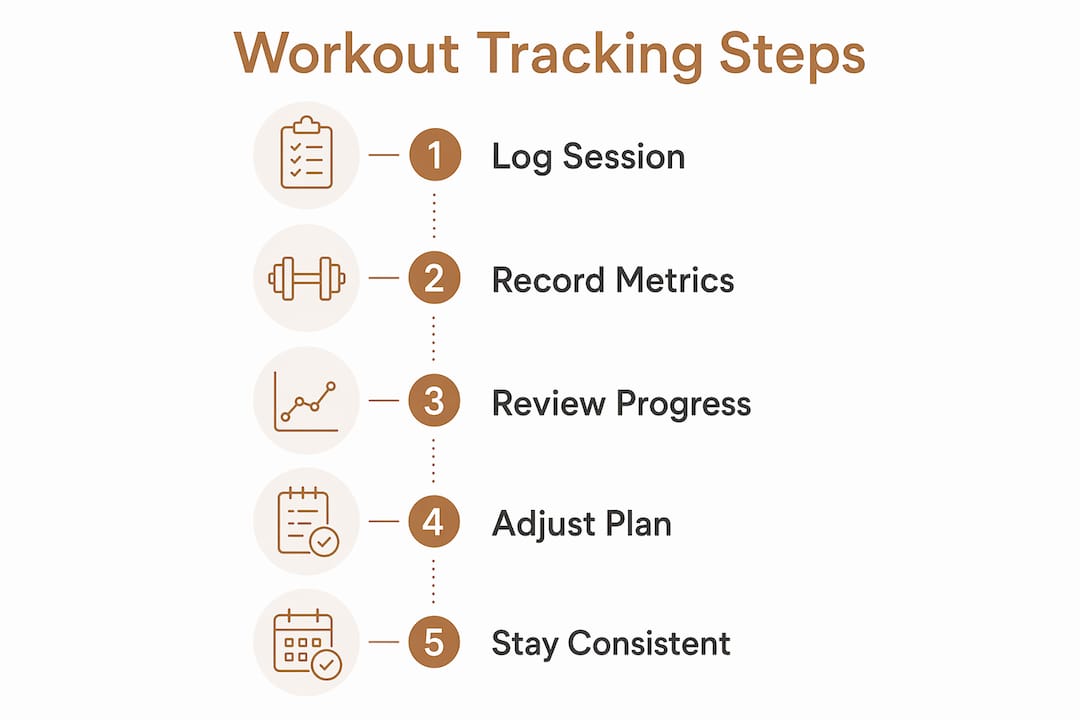
Wearable devices cover the metrics a logbook cannot: heart rate, active minutes, and step counts throughout the day. Wearable ownership reached 46% of health consumers in 2026, with 83% of owners wearing their devices five or more days per week. That level of consistent use means wearables generate reliable trend data, not just isolated snapshots.
| Tracking method | Best for | Limitation |
|---|---|---|
| Paper logbook (e.g., ForgeLogbooks) | Sets, reps, weight, RPE | No automatic data aggregation |
| Wearable device (e.g., Garmin, Apple Watch) | Heart rate, steps, active minutes | Cannot log exercise-specific load |
| Fitness app (e.g., Strong, Hevy) | Digital log with trend graphs | Requires consistent manual entry |
| Body composition scale (e.g., Uvirello) | Body fat %, BMI, weight trends | Measures outcome, not session load |
The real power comes from combining these tools. Your logbook captures what you did; your wearable captures how your body responded; a body composition scale like Uvirello captures what changed over weeks. Together, they give you a complete picture of your quick workout metrics without requiring hours of analysis.
- Set a recurring phone reminder for two minutes after your scheduled workout ends to prompt immediate logging
- Review your wearable's weekly summary every Sunday for five minutes to spot adherence gaps
- Use your body composition data monthly, not daily, to track meaningful body fat and BMI shifts
Pro Tip: Structure your weekly review as a three-question check: Did I hit my planned sessions? Did volume increase? Did RPE decrease at the same weight? Three "yes" answers mean you are progressing.
How to interpret your tracking data to evaluate progress
Data without interpretation is just numbers. The goal of reviewing your midday exercise log is to answer one question: is the stimulus increasing over time?
The clearest signal of progress is a small weekly volume increase of 2 to 5 percent, achieved by adding reps, adding weight, or completing the same work with a lower RPE. These changes are subtle enough that you would never notice them without a log, but they compound into significant strength gains over months.
Here is how to read four common data patterns:
- Volume increases, RPE stays the same. This is the ideal signal. You are getting stronger and adapting well to the training load. Continue the current progression.
- Volume stays flat, RPE increases. This is an overreaching signal. Your body is working harder to maintain the same output. Reduce load by 10 to 15 percent for one week before resuming progression.
- Volume increases, RPE decreases. The best possible outcome. The same work feels easier, which means your fitness has genuinely improved. Time to increase the challenge.
- Volume drops, RPE is high. A clear fatigue or recovery issue. Check sleep, nutrition, and stress before adjusting the program. Do not add load.
The NSCA recommends percent of 1RM as the most precise method for quantifying training intensity across sessions. If your 1RM on a goblet squat is 100 pounds and you are working at 70 pounds, you are training at 70% of 1RM. Tracking this percentage over time tells you whether your relative intensity is increasing, which is a more meaningful measure than the absolute weight alone.
The most common mistake professionals make is changing exercises too frequently. Standardizing your exercise selection is what makes your tracking data meaningful. If you swap goblet squats for Bulgarian split squats every other week, you cannot compare the numbers. Pick a core circuit and stick with it for at least six to eight weeks before making substitutions.
How to stay motivated using lunchbreak workout data
Motivation in fitness tracking follows a predictable pattern: high at the start, fragile in weeks three through six, and self-sustaining once you see your first clear data trend. The tracking system itself is what carries you through the fragile middle period.
Adherence trajectories predict long-term outcomes more reliably than any single workout metric. A 2025 mHealth study found that higher adherence to physical activity goals was directly linked to better 12-month weight loss results. Consistency, measured as sessions completed versus sessions planned, matters more than any individual session's intensity.
Research on step count data reinforces the same point. Increasing step count trajectories over 10 to 14 months significantly increased the odds of meaningful weight loss, while short-term spikes had little predictive value. The direction of your trend line over months is what counts, not the number on any given Tuesday.
Practical strategies for staying engaged with your tracking:
- Schedule a brief progress review every three to four weeks. Compare your current volume totals to your starting point and note any RPE improvements.
- Celebrate adherence wins, not just strength wins. Completing 10 out of 12 planned sessions is a result worth recording.
- Keep lunchbreak sessions low-sweat and time-efficient. 15-minute repeatable circuits using controlled movements remove the barrier of needing a shower, which is the most common reason professionals skip midday workouts.
- When you miss a session, log it as missed rather than leaving a blank. Honest records are more useful than optimistic ones.
Pro Tip: Set a minimum viable session rule: if you only have 10 minutes, do two exercises and log them. A partial session logged beats a skipped session every time.
Key takeaways
Effective lunchbreak workout results tracking requires consistent logging of volume, intensity, and adherence, not just showing up.
| Point | Details |
|---|---|
| Log five core metrics every session | Record exercise name, date, weight, sets, reps, and RPE to detect real progress. |
| Combine logbooks and wearables | Use paper logs for load data and wearables for heart rate and adherence trends. |
| Track adherence, not just performance | Consistency over weeks predicts outcomes better than any single session's numbers. |
| Interpret volume and RPE together | Flat volume with rising RPE signals overreaching; act by reducing load for one week. |
| Standardize your exercise selection | Keep the same core circuit for six to eight weeks so your data stays comparable. |
Why I stopped trusting how workouts "felt" and started trusting the log
For the first two years of fitting workouts into my lunch hour, I operated entirely on feel. Some days felt hard, some felt easy, and I assumed the hard days meant progress. They did not. When I finally started logging sets, reps, and RPE consistently, I discovered something uncomfortable: I had been repeating the same weights for months while convincing myself I was pushing harder.
The shift that changed everything was treating the logbook as the authority, not my perception. If the log showed the same volume as four weeks ago, I had not progressed, regardless of how the session felt. That objectivity is what makes tracking genuinely useful rather than just motivating.
I have also learned that the biggest tracking mistake is perfectionism. Professionals who try to log 12 variables per session burn out within three weeks. Start with five fields: exercise, date, weight, sets, and reps. Add RPE once that habit is solid. Add percent of 1RM calculations once you want to get precise. Build the system incrementally, and it will stick.
The other thing worth saying plainly: body composition data from a scale like Uvirello adds a dimension that workout logs alone cannot provide. Seeing body fat percentage shift over six weeks, even by one or two points, confirms that the training and nutrition are working together. That kind of objective feedback is what turns a tracking habit into a long-term practice.
— Jacob
Track every dimension of your progress with Uvirello
Workout logs capture what you lift. Wearables capture how you move. But neither tells you what is actually changing in your body composition over time.
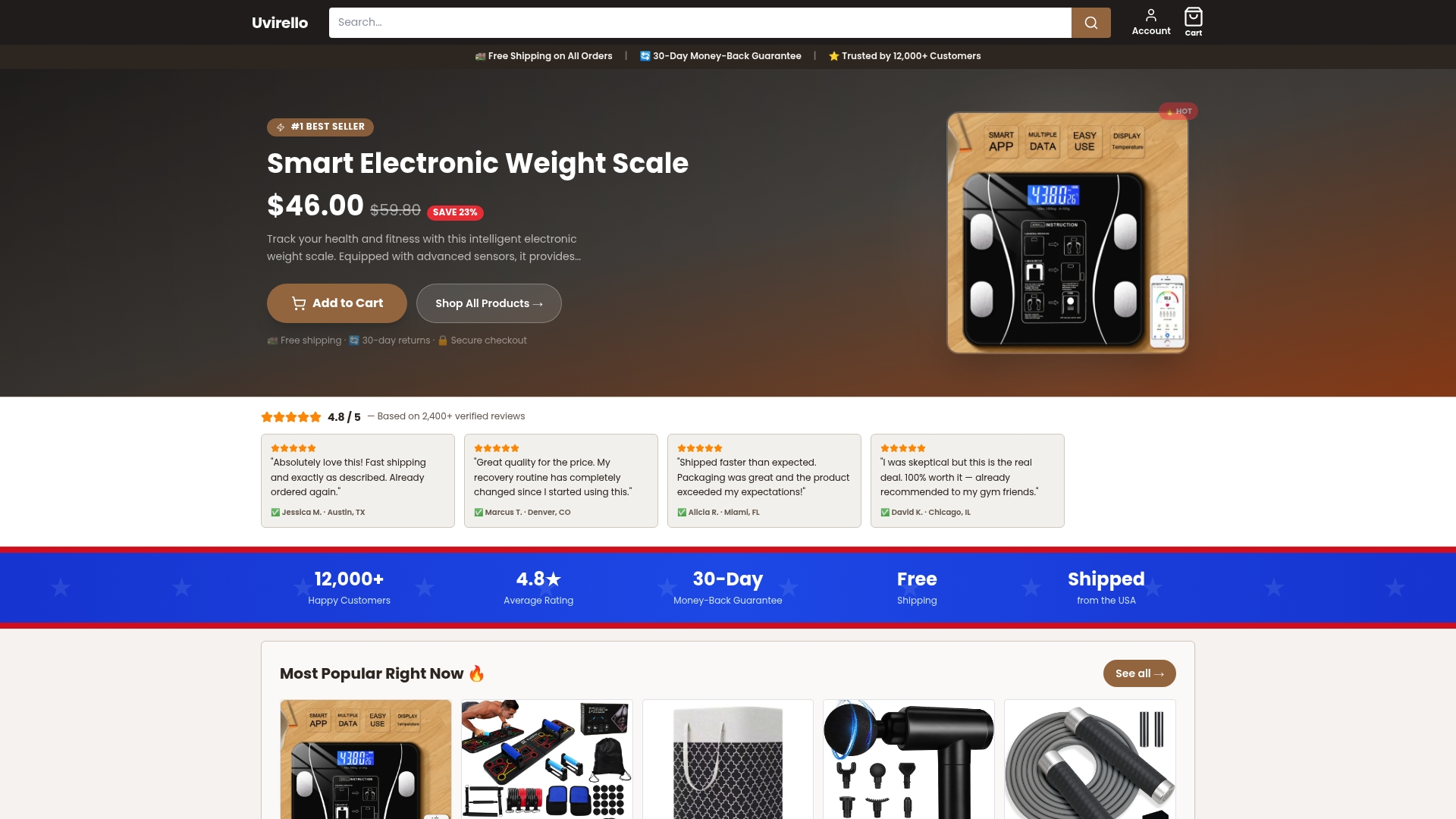
The Uvirello Smart Scale measures body fat percentage, BMI, and weight with high-precision sensors, giving you the outcome data that completes your tracking picture. Over 12,000 users rate it 4.8 out of 5, and the feedback consistently points to one thing: seeing body composition trends alongside workout logs makes progress undeniable. If you are already logging your lunchbreak sessions, adding a weekly weigh-in with Uvirello turns your data into a complete fitness record.
FAQ
What is lunchbreak workout results tracking?
Lunchbreak workout results tracking is the practice of recording specific exercise data, including sets, reps, weight, and RPE, during short midday sessions to measure fitness progress over time. It applies the same progressive overload principles used in full training programs to time-constrained workouts.
How long should a lunchbreak workout be to get trackable results?
A session of 15 to 30 minutes is sufficient for trackable strength and fitness improvements when exercises are repeatable and load is logged consistently. OffShift recommends 15-minute circuits three times per week as a practical and effective midday format.
What is the most important metric to track in short workouts?
Total training volume, calculated as sets multiplied by reps multiplied by weight, is the most reliable single metric for detecting progress in short workouts. A 2 to 5 percent weekly increase in volume indicates effective progression.
Should I use an app or a paper log for tracking?
Both work, and combining them is more effective than either alone. A dedicated logbook like ForgeLogbooks captures load data with no distractions, while a fitness app provides trend graphs and historical comparisons that are harder to see in a handwritten format.
How do I know if my lunchbreak workouts are actually working?
Progress shows up as increasing volume at the same or lower RPE, or the same volume at a meaningfully lower RPE over four to six weeks. If both volume and RPE are flat after six weeks of consistent logging, the program needs adjustment.