
Work-life balance is defined as managing professional and personal responsibilities in a way that protects your physical and mental health without one consistently undermining the other. The body impact of this balance is not abstract. Long work hours and chronic work-life conflict cause roughly 120,000 excess deaths per year in the United States alone. That figure, documented by researchers at the New America Foundation, signals that what is work-life balance body impact is a public health question, not a personal preference. The WHO and ILO have both confirmed that overwork kills at scale, and Mutual of Omaha has published research showing how stress hormones physically degrade your body over time.
What is work-life balance body impact on physical health?
Poor work-life balance triggers a physiological chain reaction that damages your body from the inside out. When you face chronic work stress, your adrenal glands flood your system with cortisol and adrenaline. Those hormones are useful in short bursts. Over weeks and months, they become destructive.
Chronic stress manifests physically as hypertension, immune suppression, digestive problems, and persistent muscle tension. Sutter Health Plan research confirms that stress from poor balance also produces chest pain, exhaustion, and recurring headaches. These are not minor inconveniences. They are your body signaling that its repair systems are failing.

The risks compound with hours worked. Working 55 or more hours weekly is directly linked to 745,000 global deaths from heart disease and stroke each year, according to WHO and ILO data. Researcher Emeran Mayer has documented how overwork also disrupts the gut microbiome, increases systemic inflammation, and impairs cognitive function, creating a loop where the harder you push, the less effective your body becomes.
The physical symptoms of imbalance include:
- Hypertension: Elevated cortisol raises blood pressure consistently over time.
- Weakened immunity: Stress hormones suppress white blood cell production, leaving you vulnerable to infection.
- Digestive issues: Chronic stress alters gut motility and microbiome composition.
- Muscle tension and pain: Sustained adrenaline keeps muscles in a semi-contracted state, causing neck, shoulder, and back pain.
- Sleep disruption: High cortisol at night blocks restorative sleep, compounding every other symptom.
Pro Tip: Watch for the early warning signs: waking up exhausted despite a full night of sleep, getting sick more than twice a year, and experiencing stomach issues on Sunday evenings before the workweek. These patterns are your body's first alerts, not random bad luck.
How does work-life balance affect mental health and cognition?
The mental health consequences of work-life imbalance are just as measurable as the physical ones. Chronic overwork produces anxiety, depression, burnout, and in severe cases, panic attacks. These are not personality weaknesses. They are predictable outcomes of a nervous system kept in overdrive too long.
Here is how the cognitive decline unfolds in stages:
- Attention narrows. Under sustained stress, the prefrontal cortex, the brain region responsible for focus and planning, begins to underperform. You notice you re-read the same paragraph multiple times.
- Memory degrades. Cortisol damages the hippocampus over time, reducing your ability to form and retrieve memories. Forgetting names, deadlines, and conversations becomes common.
- Decision quality drops. Fatigued brains default to reactive, short-term thinking. Strategic decisions made after 50-plus hours of work in a week are measurably worse than those made earlier.
- Burnout sets in. Burnout is a clinical state of emotional exhaustion, depersonalization, and reduced personal accomplishment. It does not resolve with a weekend off.
- Leisure sickness emerges. Leisure sickness strikes when your body finally drops its adrenaline reserves at the start of a vacation, and your immune system rebounds with a cold or flu. Mutual of Omaha research identifies this as a direct marker of adrenal exhaustion from chronic overwork.
The good news is that recovery works. Reducing work hours by 10–25% with full pay improved work-life balance and mental health outcomes in 81.8% of studies reviewed by the Scandinavian Journal of Work, Environment and Health. That is a strong signal that the damage is reversible when the conditions change.
Employees with fulfilling lives outside work show higher job satisfaction, resilience, and output quality despite working fewer hours. Leisure time fulfills psychological needs that work simply cannot. This is the core argument for balance as a performance strategy, not just a wellness perk.
Work hours, productivity, and the boundary-setting problem
The relationship between hours worked and results produced is not linear. Most people assume more hours equal more output. The evidence says the opposite.
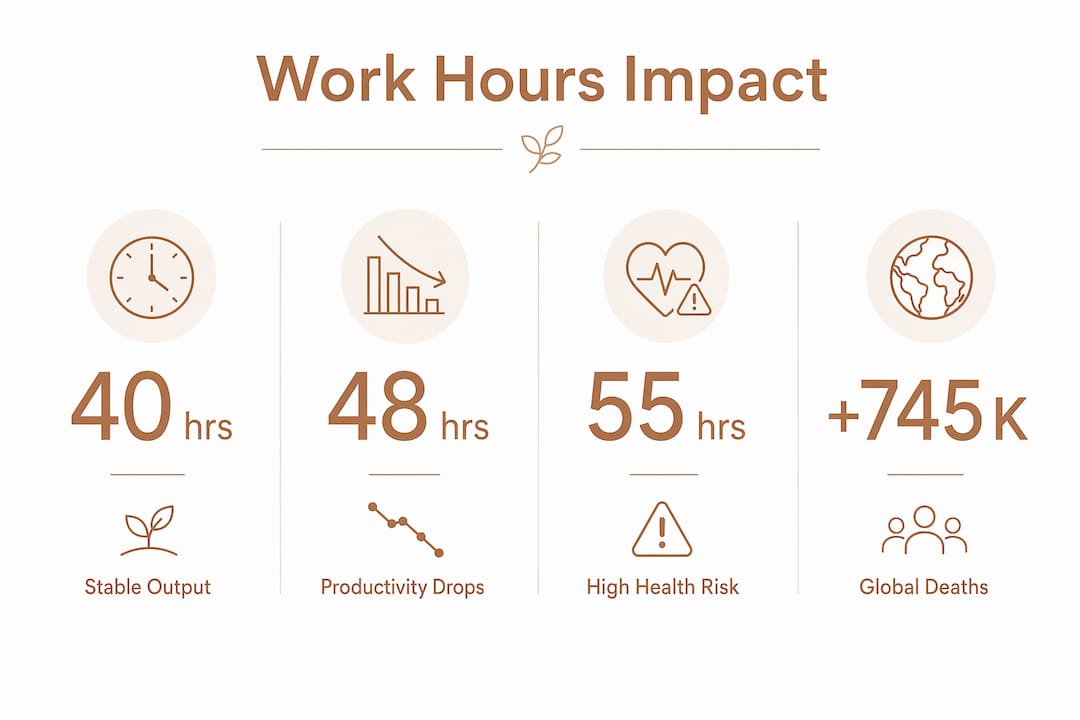
Productivity declines after roughly 48 hours per week and drops steeply after 55 hours, with error rates rising and sick days increasing. Countries with the longest average work hours consistently rank among the least productive per hour worked. The New America Foundation data makes this point clearly: you are not buying more results with extra hours. You are borrowing against future performance.
| Weekly Hours Worked | Productivity Impact | Health Risk Level |
|---|---|---|
| Under 40 hours | Stable, sustainable output | Low |
| 40–48 hours | Slight fatigue, manageable | Moderate |
| 48–55 hours | Measurable decline in quality | High |
| Over 55 hours | Steep error increase, burnout risk | Very High |
Flexible work arrangements complicate this picture. Remote and hybrid work can reduce commute stress and give workers more schedule control. However, flexible work without intentional limits leads to a blurring of work and personal spheres that actually increases total hours worked and deepens work-life conflict. Springer research confirms that boundary-setting must be active and deliberate, not assumed.
The right to disconnect is a policy response to exactly this problem. Without a clear end to the workday, remote workers often find themselves working from home rather than living at home.
Pro Tip: Set a hard stop time and treat it like a meeting you cannot cancel. Log off, close your laptop, and physically leave your workspace, even if that workspace is a corner of your living room. The physical act of separation signals your nervous system that work is done.
Practical strategies to improve balance and body health
Better work-life balance is built through consistent daily habits, not single dramatic changes. The impact of lifestyle on work-life balance is direct: what you do with your non-work hours determines how well your body recovers from work stress.
Start with these fundamentals:
- Protect sleep above all else. Sleep is when cortisol clears and tissue repairs. Seven to nine hours is not a luxury. It is the minimum for physical recovery.
- Schedule exercise like a work commitment. Even 30 minutes of moderate activity five days a week reduces cortisol levels and improves immune function. A lunchbreak workout is one of the most time-efficient ways to reclaim physical health during a busy workday.
- Eat to support your stress response. Chronic stress depletes magnesium, B vitamins, and vitamin C. Prioritize whole foods, and reduce caffeine after noon to protect sleep quality.
- Use relaxation techniques with intention. Diaphragmatic breathing, progressive muscle relaxation, and mindfulness meditation all reduce cortisol measurably. Ten minutes daily is enough to shift your baseline.
- Track your body composition, not just your weight. Stress-driven cortisol increases visceral fat even when total weight stays stable. Monitoring body fat percentage gives you a more accurate picture of how stress is affecting your body.
At the organizational level, policies matter. Compressed workweeks, meeting-free days, and mandatory vacation policies all reduce chronic overwork. Desk job health risks are well-documented, and companies that address them through policy see lower turnover and fewer sick days.
Technology also plays a role. IoT health tracking tools in 2026 give individuals real-time data on sleep quality, heart rate variability, and activity levels, all of which are direct indicators of how well your body is recovering from work stress.
Recovery is an active requirement, not an optional bonus. Treating rest as productive time, not wasted time, is the mindset shift that makes sustainable balance possible.
Pro Tip: Schedule one full recovery day per week with no work email, no work calls, and no work thinking. Research on cognitive restoration shows that mental disengagement from work, not just physical rest, is what restores decision-making capacity.
Key takeaways
Work-life balance directly protects your body by regulating stress hormones, preserving immune function, and preventing the chronic overwork that kills productivity and shortens lives.
| Point | Details |
|---|---|
| Overwork is a mortality risk | Long work hours are linked to 745,000 global deaths annually from heart disease and stroke. |
| Physical symptoms appear early | Hypertension, immune suppression, and sleep disruption are the body's first signals of imbalance. |
| Productivity peaks before 48 hours | Output quality declines measurably after 48 weekly hours, making extra hours counterproductive. |
| Flexible work requires active limits | Remote and hybrid work blurs boundaries without intentional rules, increasing total hours worked. |
| Recovery is non-negotiable | Reducing hours and protecting leisure time improves mental health outcomes in over 80% of studies. |
The myth of the productive overworker
I have spent years reading the research on work and health, and the single most persistent myth I encounter is this: that the person working 60 hours a week is the most dedicated and the most successful. The data does not support that story at all.
What I have found is that the people who protect their recovery time, who actually stop working at a reasonable hour and invest in their physical health, consistently outperform the chronic overworkers over any meaningful time horizon. The overworker burns bright for a year or two and then crashes. The person who sleeps well, exercises, and maintains relationships outside work compounds their performance year after year.
The cultural glorification of busyness is a real obstacle here. Saying "I'm slammed" has become a status signal in many workplaces. But your body does not care about status. It keeps score in cortisol levels, inflammatory markers, and cardiovascular strain. I have seen people dismiss early warning signs like persistent fatigue and recurring illness as normal, only to face a serious health event that forces the reset they should have made voluntarily.
The hybrid working model has created new opportunities for balance, but only for people who use the flexibility intentionally. Flexibility without discipline is just overwork with a nicer commute.
Listen to your body. It is giving you accurate data about your balance long before a doctor does.
— Jacob
Track your balance, not just your weight
Understanding the body impact of work-life balance is the first step. Measuring it is the next one.
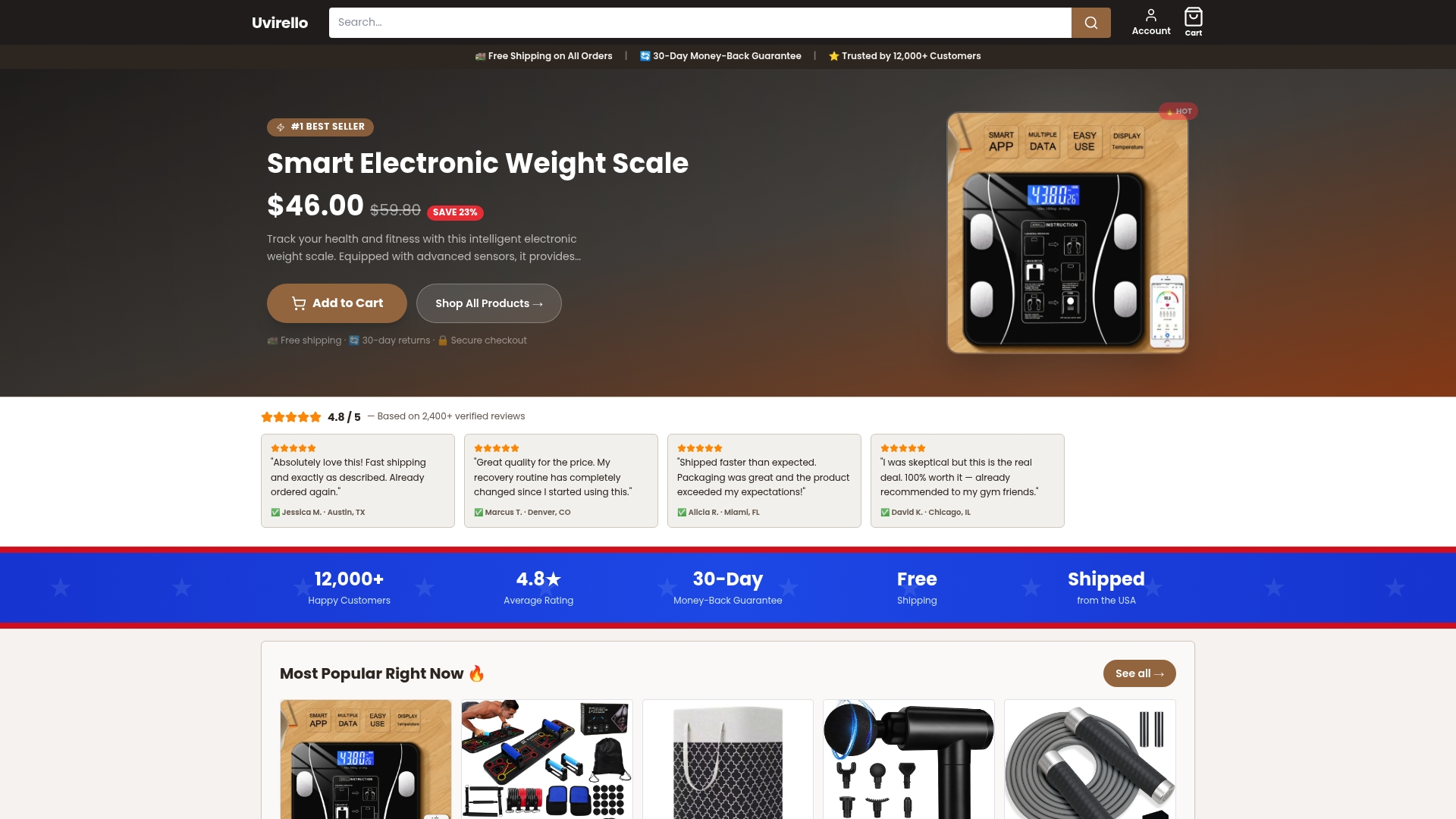
Uvirello's Smart Electronic Weight Scale goes beyond the number on the display. It tracks body fat percentage, BMI, and body composition metrics that reveal how chronic stress and poor recovery are actually affecting your physiology. Over 12,000 customers rate it 4.8 out of 5 because it gives them data they can act on. If you are serious about using your body as a feedback system for your work-life balance, visit uvirello.com to see how precise body composition tracking fits into a real health strategy.
FAQ
What is work-life balance and why does it affect the body?
Work-life balance is the state of managing work and personal life without one consistently damaging the other. When balance breaks down, the body releases excess cortisol and adrenaline, which drive hypertension, immune suppression, and cardiovascular disease over time.
How many hours per week is too many for your health?
Productivity and health both decline after 48 hours per week, with steep drops after 55 hours. WHO and ILO data links working 55-plus hours weekly to 745,000 deaths annually from heart disease and stroke.
Can flexible or remote work improve work-life balance?
Flexible work can reduce commute stress and improve schedule control, but it requires intentional boundary-setting. Without clear limits, remote workers often work longer total hours and experience greater work-life conflict than office-based employees.
What are the first physical signs of work-life imbalance?
The earliest physical signs include waking unrefreshed after a full night of sleep, getting sick frequently, persistent muscle tension in the neck and shoulders, and digestive issues that worsen during high-stress periods.
Does reducing work hours actually improve health outcomes?
Reducing work hours by 10–25% with full pay improved work-life balance and mental health outcomes in 81.8% of studies reviewed by the Scandinavian Journal of Work, Environment and Health. General health and well-being improved in 58.3% of those interventions.