
A non-scale victory (NSV) is any meaningful health or fitness achievement that does not show up as a number on the scale. Celebrating non-scale victories is the most reliable way to stay motivated when weight plateaus, because 44% of people do not own a home scale and already track progress through smart wearables, mood, and clothing fit. That number tells you something important: most people intuitively know the scale is an incomplete picture. This celebrate non-scale victories tracking guide gives you a concrete system for identifying, logging, and rewarding the wins that actually predict long-term success.
What are the most meaningful non-scale victories to track?
The scale is a lagging indicator influenced by water retention, hormone shifts, and sodium intake. NSVs, by contrast, reflect real-time changes in how your body functions and how you feel. Stamina gains and sleep improvements often appear weeks before the scale budges. Tracking them gives you accurate feedback when the number refuses to move.

NSVs fall into three broad categories: physical, mental, and behavioral. Each one signals genuine progress.
Physical NSVs:
- Clothes fitting looser or moving into a smaller size
- Completing more reps or lifting heavier weights than last month
- Walking up stairs without getting winded
- Lower resting heart rate recorded on a fitness tracker
- Improved blood pressure, cholesterol, or blood glucose at your next checkup
- Better digestion and reduced bloating
- Sleeping through the night without waking
Mental and emotional NSVs:
- Reduced anxiety or stress after workouts
- Sharper mental clarity during the afternoon slump
- Improved mood stability across the week
- Less emotional eating in response to stress
Behavioral NSVs:
- Choosing water over soda automatically
- Hitting your step goal four out of five weekdays
- Cooking at home more often than eating out
- Completing a workout even when motivation was low
Nutritionist Leslie Bonci highlights that NSVs shift focus from the scale number to mental and emotional gains, which are the real drivers of long-term motivation. That shift matters because behavior change is what produces lasting results, not a single weigh-in. Losing as little as 5% of body weight improves energy, mood, and sleep, but those same improvements show up as NSVs before the scale reflects them.
How to track non-scale victories effectively
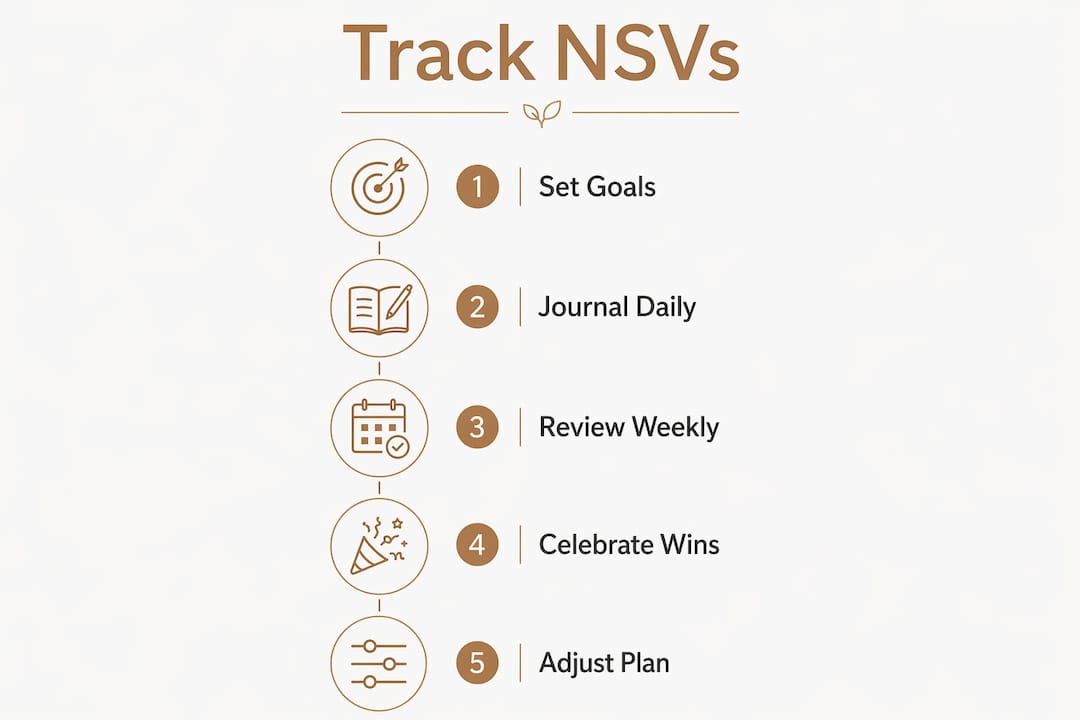
The most effective NSV tracking system uses the SMART framework. SMART goals are Specific, Measurable, Achievable, Relevant, and Time-bound. Applied to NSVs, that turns a vague intention like "have more energy" into "walk 20 minutes, 3 times weekly for 30 days and rate energy on a 1-to-10 scale each evening." That specificity makes progress visible and trackable.
A practical weekly tracking routine looks like this:
-
Choose three NSV categories to focus on each week. Good starting combinations include hunger cues, energy levels, and sleep quality. Rotating categories every few weeks keeps the process fresh and increases motivation over time.
-
Pick your logging method. Options include a paper journal, a notes app on your phone, a dedicated fitness tracker like Garmin or Fitbit, or a check-in with a coach. The best method is the one you will actually use consistently.
-
Log objective markers alongside feelings. Steps taken, exercise reps completed, and blood pressure readings give you hard data. Pairing those numbers with a brief mood or energy note creates a fuller picture of progress.
-
Keep daily entries under two minutes. Brief journaling focused on mood, energy, and sleep observations helps you connect progress dots without turning tracking into a chore. A single sentence per category is enough.
-
Run a weekly review. Every Sunday, scan your entries for patterns. Did your energy score rise on days you slept more than seven hours? Did your mood dip when you skipped workouts? Those patterns are your data.
-
Combine personal logs with objective health data. Regular healthcare monitoring provides objective NSV data like blood pressure, cholesterol, and blood glucose changes. Professional assessments complement what your journal captures.
Pro Tip: Set a recurring five-minute calendar block every Sunday evening for your weekly NSV review. Treat it like a meeting you cannot cancel. Consistency in reviewing is what turns raw data into motivation.
Tracking trends over time beats obsessing over any single reading. A fitness log that shows your mile time dropping by 90 seconds over eight weeks is far more motivating than a scale that moved two pounds. You can read more about this principle in Uvirello's guide on tracking health trends.
Creative ways to celebrate non-scale victories
Celebration is not optional. It is the mechanism that locks in behavior change. When you reward a positive action, your brain encodes that action as worth repeating. The key is choosing non-food rewards that reinforce healthy behavior rather than creating a cycle of eating to celebrate eating less.
Effective non-food celebration ideas include:
- Buying a new piece of workout gear when you hit a fitness milestone
- Booking a massage or spa session after a month of consistent workouts
- Signing up for a new fitness class, like yoga, kickboxing, or rock climbing
- Spending guilt-free time on a hobby you normally deprioritize
- Sharing your win with a support community, accountability partner, or coach
The "benchmark outfit" method is one of the most powerful tactile tracking tools available. Pick a snug-fitting item of clothing at the start of your program. Try it on every three to four weeks. The physical sensation of it fitting better delivers feedback that no app can replicate. It is concrete, personal, and impossible to argue with.
Sharing victories publicly also reinforces progress. Posting a NSV in a fitness community on Reddit, a Facebook group, or with a personal trainer creates social accountability. Other people's recognition amplifies the reward signal in your brain.
Pro Tip: Write your NSV on a sticky note and put it somewhere you see daily, like your bathroom mirror or laptop screen. Reading it repeatedly keeps the win active in your mind and prevents the common habit of immediately discounting your own progress.
Celebrating NSVs via personalized, meaningful activities strengthens behavior change loops better than generic rewards. The more the celebration connects to your specific values, the stronger the reinforcement.
Common challenges in tracking NSVs and how to overcome them
Scale fixation is the most common obstacle to effective NSV tracking. The scale feels objective and final, which makes it psychologically compelling even when it is misleading. Treating the scale as a lagging indicator and limiting weigh-ins to once per week reduces the anxiety that daily fluctuations cause. That one change alone can shift your entire relationship with progress.
Other common challenges and their solutions:
- Inconsistent journaling. The fix is reducing friction. Keep your journal on your nightstand or use a notes app already on your phone. Two sentences before bed beats a detailed entry you never write.
- Dismissing subjective wins. Feeling less stressed is a real physiological change. Mood improvements reflect hormonal and neurological shifts. Do not discount them because they are hard to quantify.
- Comparing your NSVs to someone else's. Your benchmark outfit is not their benchmark outfit. Your energy baseline is not theirs. NSV tracking is personal by design.
- Expecting immediate visible results. Behavioral wins accumulate before physical changes appear. Patience is not passive. It is the active recognition that your habits are compounding.
"The scale reflects lagging data. Your energy, your sleep, your strength — those are leading indicators. Track what moves first."
When progress stalls across multiple NSV categories for more than four weeks, consult a healthcare professional. A doctor or registered dietitian can assess whether physiological factors like thyroid function or sleep disorders are affecting your results. Objective clinical data like blood pressure and cholesterol readings can reveal progress that neither the scale nor your journal captures.
For people with busy schedules who struggle to maintain consistent tracking, the Uvirello blog covers practical tracking methods designed for people with limited time.
Key takeaways
Tracking non-scale victories with the SMART framework, consistent journaling, and non-food celebrations is the most effective way to maintain motivation and measure real health progress.
| Point | Details |
|---|---|
| NSVs outpace the scale | Stamina, sleep, and mood improvements appear weeks before weight changes show up. |
| Use the SMART framework | Turn vague goals like "more energy" into specific, time-bound, measurable targets. |
| Track three categories weekly | Rotating NSV categories like hunger cues, energy, and sleep increases sustained motivation. |
| Celebrate with non-food rewards | New gear, massages, or classes reinforce behavior change without creating food reward cycles. |
| Limit scale weigh-ins to weekly | Daily weighing causes anxiety from normal fluctuations and undermines NSV progress recognition. |
Why I stopped caring what the scale said
I spent two years fixated on a number that moved maybe three pounds in either direction regardless of what I did. My workouts were consistent. My eating was disciplined. But every Monday morning weigh-in felt like a verdict on whether the week had mattered.
The shift happened when I started logging things the scale could not see. I noticed I was sleeping through the night for the first time in years. My resting heart rate dropped from 72 to 64 beats per minute over four months. I ran a 5K without stopping, which I had never done before. None of that showed up on the scale. All of it was real.
What I have seen consistently, both in my own experience and in watching others go through similar processes, is that people who track NSVs stay in the game longer. They do not quit after a plateau because they have evidence that their body is changing even when the number is not. That evidence is not motivational fluff. It is data.
The benchmark outfit method changed things for me practically. I kept a pair of jeans from two years prior. Trying them on monthly gave me feedback that felt more honest than any digital readout. The day they fit again, I had not weighed myself in three weeks. I did not need to.
My honest advice: build your tracking system around at least three NSV categories from day one. Do not add them later as a consolation prize when the scale disappoints you. Make them your primary metric from the start. The scale becomes a secondary data point, not the judge.
— Jacob
Uvirello: a smarter way to track your full health picture
Tracking NSVs gives you the motivation to keep going. Pairing that with accurate body composition data gives you the full picture.
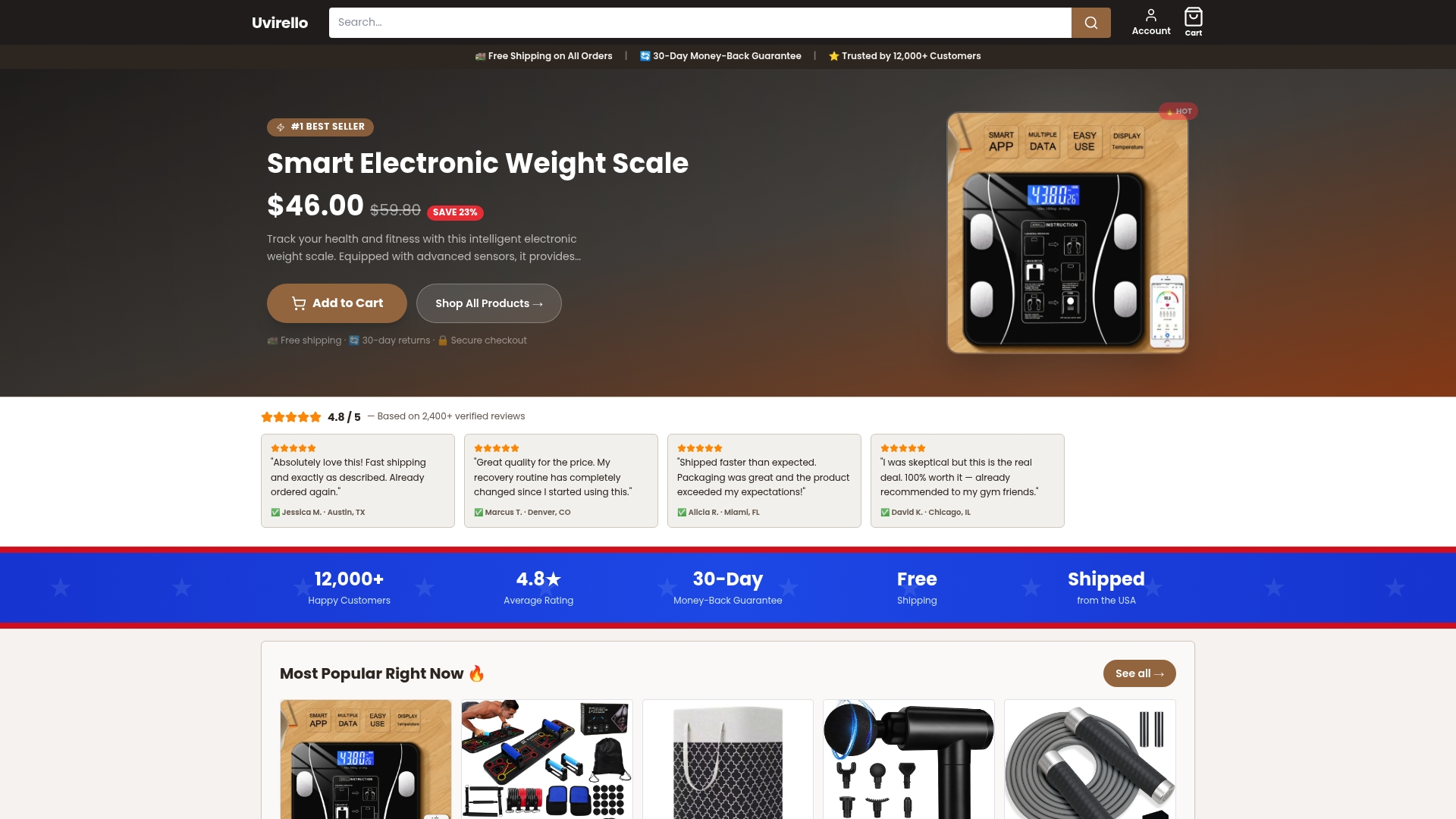
The Uvirello Smart Electronic Weight Scale goes beyond basic weight readings by measuring body fat percentage, BMI, and other key body composition metrics. Over 12,000 customers rate it 4.8 out of 5, and many report that seeing body composition data shift, even when weight holds steady, is exactly the kind of NSV feedback that keeps them consistent. If you are building a body composition tracking routine alongside your NSV journal, the Uvirello scale gives you the objective data to complement your subjective wins. Visit uvirello.com to see the full product details.
FAQ
What is a non-scale victory?
A non-scale victory is any health or fitness improvement that does not appear as a weight change, such as better sleep, increased strength, improved mood, or looser-fitting clothes.
How often should I track non-scale victories?
Track NSVs daily with brief notes and review them weekly. Selecting three NSV categories to monitor each week and logging them consistently produces the best results.
Why does the scale stay the same even when I am making progress?
The scale is a lagging indicator affected by water retention, hormones, and sodium intake. NSVs like stamina and sleep improvements appear weeks before weight changes register.
What are the best non-food rewards for celebrating small wins?
New workout gear, a massage, a fitness class, or dedicated hobby time are all effective non-food rewards. Personalized celebrations tied to your specific values reinforce behavior change more effectively than generic rewards.
How do I stop being fixated on the scale?
Limit weigh-ins to once per week to avoid discouragement from normal daily fluctuations, and actively log at least three NSV categories to redirect your attention to leading indicators of progress.