
Trend analysis is defined as the practice of evaluating multiple consecutive data points to identify a meaningful direction in your health metrics, rather than reacting to any one number. How tracking trends beats single readings comes down to one core problem: biological data is noisy. A single HRV reading can fluctuate 20–40% naturally, which means the number you see on your Apple Health dashboard or Fitbit app on any given morning may tell you almost nothing useful. The solution is not more data. It is smarter interpretation through rolling averages, multi-metric convergence, and consistent measurement habits.
How tracking trends beats single readings in health monitoring
Single readings fail because the human body is never static. Hydration levels, sleep quality, ambient temperature, stress, and even the time of day all shift your metrics before you even move. This is not a device problem. It is a biological reality.

The statistical concept behind this is called regression to the mean. Regression to the mean often misleads users into assuming a single reading change reflects true progress. If your resting heart rate spikes one morning, it almost certainly will drop back toward your personal average the next day, with or without any change in your behavior. Treating that spike as a warning sign is a mistake.
Here is what makes isolated readings particularly unreliable for fitness enthusiasts:
- Biological variability is large. HRV swings of 20–40% between days are completely normal, not a sign of a problem.
- Device consistency matters. Switching between a chest strap, a smartwatch, and a finger sensor across different mornings introduces measurement error that compounds over time.
- External factors dominate short windows. One poor night of sleep, a stressful meeting, or mild dehydration can distort resting heart rate, blood oxygen, and body weight readings simultaneously.
- Random noise looks like signal. Without multiple data points, you cannot tell whether a change is real or just statistical scatter.
Pro Tip: Never adjust your training plan based on a single morning metric. Wait for at least three consecutive readings that all point in the same direction before drawing any conclusion.
The practical result of relying on single readings is over-correction. You rest when you should train, or push hard when your body actually needs recovery. Neither outcome serves your goals.
How do tracking trends reveal meaningful health information?
The advantages of trend analysis come from three specific techniques: rolling averages, consecutive measurement thresholds, and multi-metric convergence. Each one filters a different type of noise.
Rolling averages are the most accessible starting point. Users should shift to 7-day rolling averages to reveal genuine underlying trends by smoothing out daily noise. A 7-day average of your resting heart rate tells you far more about your cardiovascular recovery than today's single number. It absorbs the bad nights, the stressful days, and the measurement quirks, leaving only the real signal.
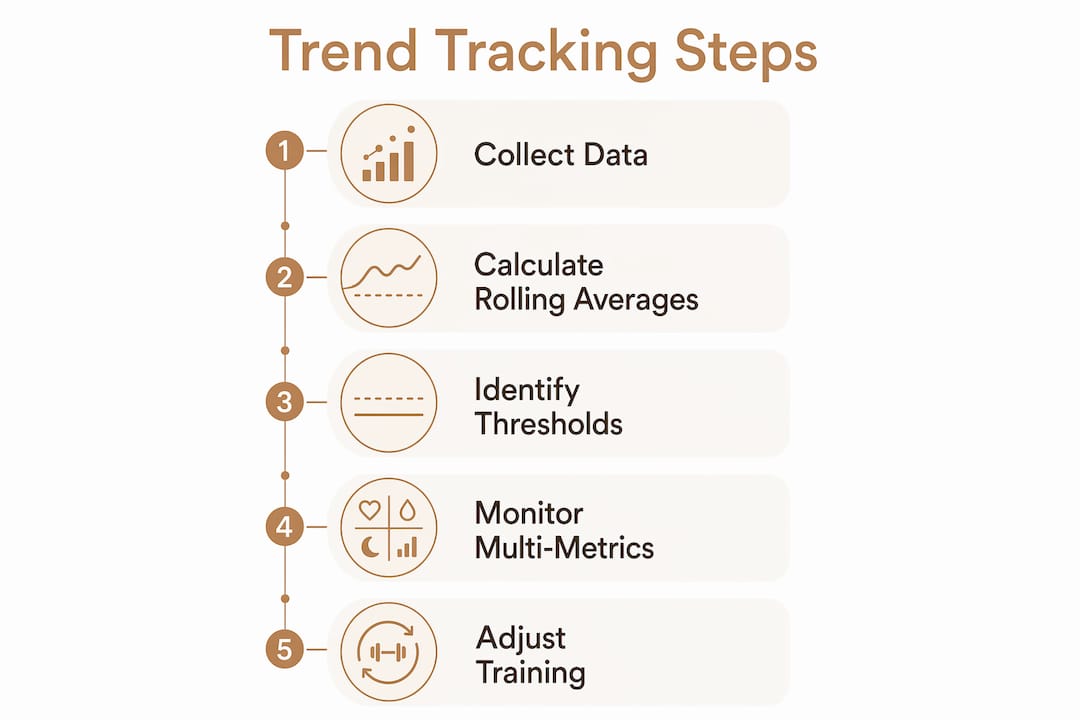
Consecutive measurement thresholds set the minimum bar for calling something real. Tracking three or more consecutive measurements is the minimum threshold required to differentiate real biological signals from random noise. A consistent slope across 3–4 measurements offers higher reliability than any single reading. This is the difference between noticing something and knowing something.
Here is a practical framework for evaluating whether a shift in your data is meaningful:
- Magnitude. Is the change large enough to matter? A 2% shift in body fat percentage is within measurement error. A 5% shift held over a week is not.
- Duration. Sustained deviations in rolling averages over 5–7 consecutive days are stronger signals than any single-day reading. If a shift holds for at least 5–7 days, treat it as real.
- Confirmation across metrics. When HRV, resting heart rate, and sleep patterns move consistently together, this multi-metric confirmation substantially strengthens your interpretation confidence. One metric moving alone is a hint. Three related metrics moving together is a conclusion.
- Subjective alignment. Does how you feel match what the data shows? If your HRV trend is rising but you feel exhausted, dig deeper before acting.
Multi-metric convergence is the most underused technique in personal health tracking. Convergence of trends in HRV, sleep score, and energy levels reinforces the validity of observed changes in a way no single metric can. Think of it as triangulation. Each metric is an imperfect instrument. When they all point the same direction, you can trust the reading.
What are the practical advantages of trend analysis for fitness?
The benefits of tracking data over time show up most clearly in three areas: training decisions, early health detection, and motivation.
Training decisions become more precise. Reacting to individual daily readings by adjusting training often leads to over-correction. When you plan your week based on a 7-day HRV trend rather than this morning's number, you stop second-guessing yourself. A downward trend over five days is a clear signal to reduce intensity. A stable or rising trend gives you the green light to push.
Early health detection becomes possible. Health trackers transform everyday moments into continuous data streams that allow clinicians to distinguish normal adaptations from health concerns. A single elevated resting heart rate reading is noise. A resting heart rate that has been climbing for two weeks is a pattern worth discussing with your doctor. Trend data gives both you and your clinician something concrete to act on.
Motivation becomes more durable. Single readings are brutal for morale. Your weight fluctuates daily due to water retention, food timing, and hormonal cycles. Seeing a higher number on the scale after a strong week of training feels discouraging. But a downward trend in body fat percentage measured weekly over a month tells the real story. Progress is almost always smoother in the trend than in the daily snapshot.
- Avoid overreaction. Base training adjustments on 5–7 day rolling averages, not today's number.
- Spot recovery deficits early. A sustained drop in HRV trend signals accumulated fatigue before you feel it consciously.
- Track body composition, not just weight. Weekly trends in body fat percentage and muscle mass reveal changes that daily weight readings obscure.
- Use trend data in medical conversations. Health tracker data helps patients and clinicians have more informed conversations about cardiovascular status by focusing on patterns over time.
Pro Tip: Review your weekly fitness data every Sunday evening. Compare this week's rolling averages to last week's, not to yesterday's numbers. This one habit changes how you interpret everything.
How do you implement effective trend tracking with wearables?
Knowing why trends matter is only half the work. The other half is building a data collection system that actually produces reliable trends. Here is how to do it practically.
The single biggest mistake most users make is switching wearable devices mid-tracking, which resets baselines and loses the longitudinal context needed for reliable trend data. Consistency using one device or platform for at least three months is critical for valid trend analysis. Pick your tool and commit to it. Switching from a Garmin to a WHOOP after six weeks means starting over.
Logging conditions matter as much as the device itself. Measure resting heart rate and HRV at the same time each morning, before getting out of bed, under similar conditions. Measuring after coffee one day and before coffee the next introduces a confounding variable that pollutes your trend data.
| Tracking Approach | What It Measures | Best For |
|---|---|---|
| Daily single reading | Snapshot of one moment | Noticing acute changes only |
| 7-day rolling average | Smoothed weekly trend | Training load decisions |
| 3+ consecutive readings | Directional signal confirmation | Confirming real biological shifts |
| Multi-metric convergence | Cross-validated trend | High-confidence health conclusions |
Apps that display rolling averages and trend visualizations are far more useful than those showing only daily numbers. Platforms like Apple Health, WHOOP, and Garmin Connect all offer some form of trend visualization. Use those views as your primary dashboard, not the daily readout. For weekly fitness tracking best practices, reviewing data on a fixed weekly schedule produces better decisions than checking metrics obsessively throughout the day.
Incorporate subjective metrics alongside objective ones. Log your perceived energy level, stress, and sleep quality each morning on a simple 1–5 scale. When your subjective scores align with your objective trend data, your confidence in the signal increases. When they diverge, you have a reason to investigate further. Learning how to analyze trends across both objective and subjective data is what separates casual trackers from people who actually improve.
Key takeaways
Trend analysis beats single readings because multiple consecutive data points filter biological noise, confirm real physiological shifts, and produce decisions you can actually trust.
| Point | Details |
|---|---|
| Single readings are unreliable | HRV and other metrics fluctuate 20–40% daily, making isolated numbers misleading. |
| Use 7-day rolling averages | A weekly average smooths noise and reveals the true direction of your health metrics. |
| Require 3+ consecutive readings | A consistent slope across three or more measurements separates real signals from random variation. |
| Apply multi-metric convergence | When HRV, sleep, and resting heart rate all trend together, the signal is reliable. |
| Stay consistent with one device | Switching platforms resets your baseline and destroys longitudinal trend validity. |
Why i think most fitness trackers are used backwards
I have watched hundreds of people obsess over their daily Fitbit or Apple Watch numbers and walk away more confused than when they started. The problem is not the technology. The problem is the mental model. Most people treat their health tracker like a test they pass or fail each day. A good HRV number means they are healthy. A bad one means something is wrong. That framing is almost always counterproductive.
The users who actually improve their health are the ones who stop caring about today's number and start caring about this month's direction. A rising trend in HRV is more indicative of improved health than any single high reading without context. That sentence should be printed on the box of every wearable sold.
What I have found is that patience is the real skill in health tracking. Most meaningful physiological changes take two to four weeks to show up as a clear trend. If you are checking your data daily and reacting to every dip, you are not tracking your health. You are just creating anxiety. The people who get the most out of wearable data are those who review weekly, act on sustained patterns, and treat single readings as data points to file away, not conclusions to act on.
The uncomfortable truth is that most fitness apps are designed to maximize daily engagement, not to help you make better decisions. They surface today's number prominently because that keeps you opening the app. The trend view is usually buried two taps deep. Flip that priority in your own practice. Make the trend your headline and the daily reading your footnote.
— Jacob
See your health trends clearly with Uvirello
Understanding why trends matter is one thing. Having the right tool to capture consistent, accurate data is another.
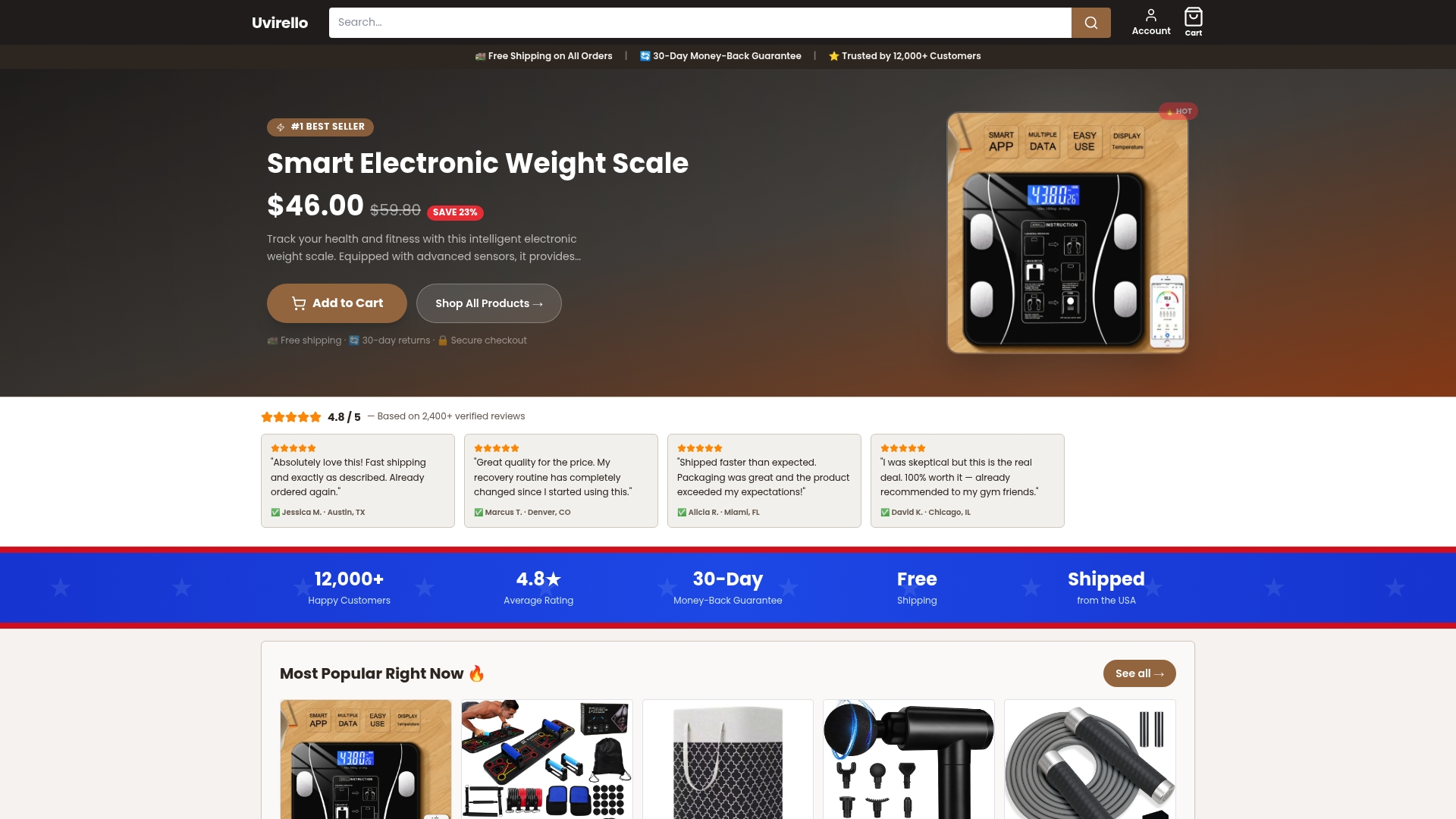
Uvirello's Smart Electronic Weight Scale does more than measure your weight. It tracks body fat percentage, BMI, and other body composition metrics with high-precision sensors, giving you the multi-point data you need to build meaningful trends over time. With over 12,000 satisfied customers and an average rating of 4.8 out of 5, Uvirello is built for fitness enthusiasts who want real insight, not just daily numbers. If you are ready to stop reacting to single readings and start seeing the patterns that drive real progress, explore the Uvirello scale and put trend tracking at the center of your health practice.
FAQ
Why are single health readings unreliable?
Single readings capture only one moment in a system that changes constantly. Biological variability, hydration, stress, and measurement conditions can all shift a metric by 20–40% without any real change in your underlying health.
How many readings do you need to identify a trend?
Three or more consecutive measurements in the same direction are the minimum threshold for distinguishing a real biological signal from random noise or regression to the mean.
What is a 7-day rolling average in health tracking?
A 7-day rolling average calculates the mean of your last seven daily readings, updated each day. It smooths out short-term fluctuations and reveals the true direction of a health metric over time.
What does multi-metric convergence mean?
Multi-metric convergence occurs when several related metrics, such as HRV, resting heart rate, and sleep score, all trend in the same direction simultaneously. This cross-validation produces far more reliable health conclusions than any single metric alone.
How often should you review your trend data?
Review your rolling averages and trend visualizations weekly rather than daily. Weekly reviews reduce noise-driven overreaction and give you enough data to spot patterns that are worth acting on.