
Family health tracking tools are digital platforms that let families and caregivers collect, monitor, and manage health data across every household member in one place. Research on systems like MyHealthNB shows these tools improve 21 health outcomes, including enablement, engagement, and reduced health system costs. The family health tracking tool benefits extend well beyond convenience. They sharpen medication safety, surface health patterns early, and give caregivers real data to bring into clinical conversations. This article covers the most important advantages, with research-backed strategies for getting the most out of any family wellness tool.
1. What are the key benefits of family health tracking tools?
Family health tracking tools give every member of a household a clearer picture of their own health, and yours as a caregiver. Personal health records empower patients by moving them from passive recipients of care to active participants. That shift matters because engaged families catch problems earlier and communicate more effectively with their doctors.
The core benefits fall into five categories:
- Empowerment and engagement: Families gain confidence in managing conditions, scheduling care, and asking informed questions.
- Medication safety: Structured medication lists reduce dosing errors and help caregivers catch discrepancies before they reach a clinic.
- Early pattern detection: Consistent tracking reveals trends in weight, heart rate, and sleep that single readings miss entirely.
- Provider communication: Organized health data gives clinicians a richer picture during appointments, reducing time spent on administrative catch-up.
- Reduced caregiver burden: Centralized records cut the time spent hunting for test results, prescription histories, and allergy lists.
"Most users find personal health records reduce administrative burdens and support deeper health involvement." — Journal of Medical Internet Research, 2026
The psychological path matters here. Enablement leads to empowerment, which drives involvement and engagement. That chain is why families who use these tools consistently report better health outcomes, not just better data.
2. How medication tracking improves family health management
Medication errors are one of the most preventable risks in family caregiving. A systematic review of 31 studies found that patient-held medication records (PHMRs) improve medication reconciliation, adherence, and communication with providers. That is a significant finding. It means a well-maintained medication list in a family health app is not just convenient. It is clinically protective.

PHMRs work by giving families and caregivers a structured record they can review at home, before a clinic visit, or during an emergency. When a family member is admitted to a hospital, that list becomes the baseline for reconciliation. Discrepancies between what the patient takes and what the hospital has on file get caught faster. Medication reconciliation workflows supported by patient-held records reduce errors, especially when integrated into clinical routines.
The table below shows which medication record features deliver the highest clinical value for families.
| Feature | Clinical benefit | Best for |
|---|---|---|
| Allergy list | Prevents adverse drug reactions | All family members |
| Current medication list | Supports reconciliation at every visit | Chronic condition management |
| Dosing schedule | Reduces missed or double doses | Pediatric and elderly care |
| Recent test summaries | Informs prescribing decisions | Complex multi-medication cases |
| Medication history | Tracks what was tried and discontinued | Long-term care coordination |
Pro Tip: Start your family's health record by completing the allergy list, current medications, dosing schedules, and most recent lab results first. These four items deliver the highest safety impact and are the first things a clinician needs in an emergency.
3. How wearable trackers support family wellness
Wearable fitness trackers do more than count steps. They help families recognize health patterns over time and support behavior change through goal reminders, heart-rate monitoring, and activity nudges. The key phrase is "over time." A single heart rate reading tells you almost nothing. A 90-day trend tells you whether someone's cardiovascular system is under stress.
Longitudinal heart rate and sleep data from wearables provide more meaningful clinical insights than any single reading. Resting heart rate, heart rate variability, and recovery scores give clinicians and families a richer basis for discussing cardiovascular health. Tracking these metrics consistently is the difference between a data point and a diagnosis-supporting trend.
Wearables also serve a safety function. Notifications for irregular heart rhythms and symptom tracking can detect serious conditions like arrhythmias and help predict symptom flares before they become emergencies. For families managing a member with a heart condition or chronic illness, that early warning function is worth the investment alone.
There is a real downside to watch for. Clinicians caution that data overload causes anxiety and can actually harm health by creating obsessive monitoring behavior. The fix is simple: agree with your doctor on which three to five metrics matter most for your family's situation, and ignore the rest.
Pro Tip: Bring your wearable's trend report to your next appointment instead of describing symptoms from memory. Clinicians find longitudinal data far more useful than a verbal summary.
4. Practical strategies to maximize health tracking benefits
Consistent use is the single biggest predictor of whether a family health tracking tool delivers results. Families show the greatest benefits when supported by primary care providers and confident with digital systems. That means two things need to happen before tracking becomes useful: a routine must be established, and every caregiver in the household needs to feel comfortable using the tool.
Here is a practical framework for getting started:
- Set a weekly check-in time. Reviewing data once a week prevents both neglect and obsession. Sunday evenings work well for most families.
- Assign one primary data manager. In households with multiple caregivers, one person should own the record and update it after every appointment or prescription change.
- Sync wearables to a shared family profile. Many platforms allow multiple members to connect devices so trends are visible across the household.
- Prepare a data summary before appointments. Print or screenshot the last 30 days of relevant metrics before any clinical visit. Clinicians use this to make faster, better decisions.
- Limit tracked metrics to what drives decisions. If a metric does not change what you or your doctor would do, stop tracking it. Focus on what matters.
- Use reminder and alert features selectively. Medication reminders are high value. Constant activity alerts create noise and reduce compliance over time.
Automated tracking beats manual logging for accuracy and consistency. When data entry is automatic, caregivers spend less time on administration and more time on interpretation.
5. How family history and biomarker integration strengthen tracking
Family health monitoring gains a new dimension when hereditary risk data enters the picture. Routine family history collection integrated in electronic medical records supports tailored care by informing hereditary risk discussions. Physicians report better patient-centered care when family history is documented and reviewed systematically. A family health tool that captures this data gives every provider who sees any member of your household a fuller clinical picture.
Biomarker integration takes that further. Combining fitness tracker data with blood biomarkers shows sustained improvements in cholesterol and glucose over multi-year follow-up. Families with higher engagement showed healthier lipid profiles and HbA1c scores. That is not a short-term effect. It reflects what happens when consistent tracking changes daily behavior over months and years.
Understanding how tracking trends beats single readings is the conceptual shift that separates families who get real value from their tools from those who collect data and do nothing with it. A single fasting glucose reading is a snapshot. Twelve months of fasting glucose readings is a story about whether your family's diet and activity habits are working.
6. Choosing the right features for your family's needs
Not every family health tool offers the same capabilities. The table below compares key feature categories to evaluate when selecting a platform for family use. No brand names are used because the right choice depends entirely on your family's specific needs and existing clinical relationships.
| Feature category | What to look for | Why it matters |
|---|---|---|
| Medication management | Allergy tracking, dosing reminders, reconciliation export | Prevents errors and supports clinical visits |
| Wearable integration | Automatic sync, trend visualization, multi-device support | Reduces manual entry and improves data accuracy |
| Data sharing | Clinician-facing reports, export formats, access controls | Enables productive provider conversations |
| Multi-user support | Separate profiles, caregiver access levels, family dashboard | Manages data for children, elderly, and adults |
| Alert customization | Threshold-based alerts, medication reminders, emergency notifications | Focuses attention on what actually requires action |
| Privacy and security | Encryption, HIPAA compliance, data ownership policies | Protects sensitive health information for all members |
Entry-level family health apps typically cover medication reminders and basic activity tracking. More capable platforms add wearable sync, multi-user dashboards, and clinician-sharing features. The right tier depends on how complex your family's health situation is and how actively your providers want to engage with your data.
Key takeaways
Family health tracking tools deliver the greatest benefits when used consistently, integrated with clinical workflows, and focused on a narrow set of meaningful metrics rather than every available data point.
| Point | Details |
|---|---|
| Empowerment drives outcomes | Personal health records improve engagement and reduce health system costs across 21 measured outcomes. |
| Medication records prevent errors | Patient-held medication lists support reconciliation and reduce discrepancies, especially during hospital transitions. |
| Trends outperform single readings | Longitudinal wearable data on heart rate and sleep gives clinicians and families far more useful clinical context. |
| Provider engagement is non-negotiable | Families gain the most when primary care providers actively support and interpret tracking data. |
| Focus beats volume | Tracking fewer, clinically agreed-upon metrics reduces anxiety and improves the quality of health decisions. |
What I've learned from watching families use these tools
The families who get real value from health tracking tools share one habit: they treat the data as a conversation starter, not a diagnosis. I've seen caregivers spiral into anxiety over a slightly elevated resting heart rate that their doctor would have dismissed in 30 seconds. I've also seen a caregiver catch a medication interaction because she noticed her father's blood pressure readings trending upward after a prescription change. The difference was not the tool. It was how they used it.
The biggest mistake families make is trying to track everything at once. Start with medications and one or two physical metrics that your doctor has already said matter for your situation. Build the habit before you expand the scope. A half-completed record updated every week is worth more than a comprehensive system nobody touches.
Digital literacy support matters more than most families expect. If an elderly parent or a less tech-comfortable caregiver is part of the equation, invest time in a simple walkthrough before assuming the tool will be used. The research is clear: provider engagement and digital literacy are the two factors that most predict whether a family health tool delivers its promised benefits. Neither happens automatically.
My honest recommendation is to bring your tracking data to your next appointment and ask your doctor which three metrics they actually want to see. That conversation will do more to focus your tracking than any feature comparison ever will.
— Jacob
Uvirello and the role of body composition in family health tracking
Body composition data is one of the most underused metrics in family health monitoring. Most families track weight, but weight alone does not distinguish between fat mass and muscle mass. That distinction matters for managing chronic conditions, supporting children's healthy development, and helping older adults maintain strength.
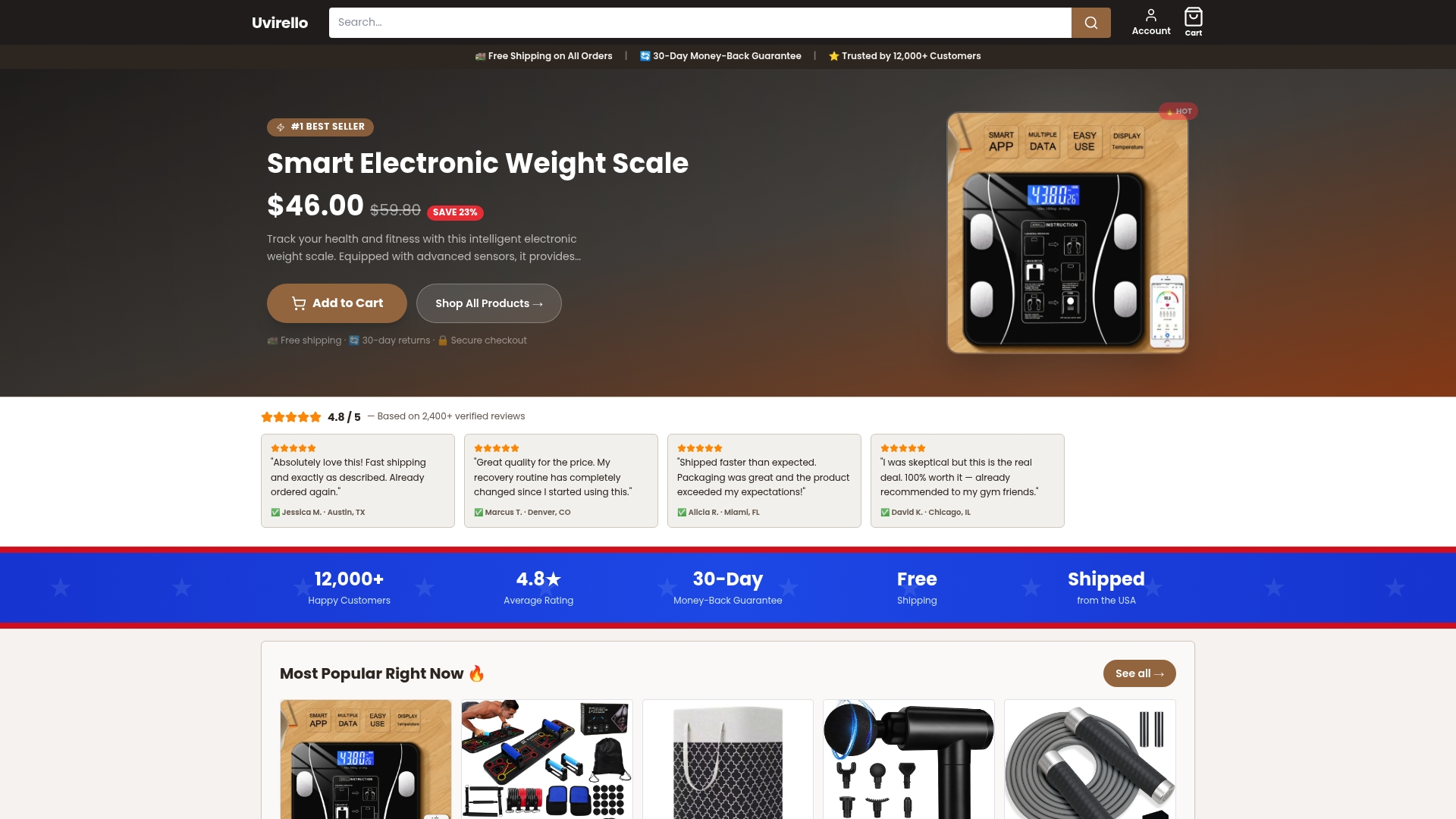
Uvirello's Smart Electronic Weight Scale measures body fat percentage and BMI alongside weight, giving families the kind of data that actually informs health decisions. With over 12,000 satisfied customers and an average rating of 4.8 out of 5, Uvirello has built a reputation for accuracy and ease of use. The scale fits naturally into a family wellness routine by providing consistent, comparable readings that families can track over time and share with their healthcare providers. Visit uvirello.com to see how it fits into your household's health tracking setup.
FAQ
What are the main benefits of family health tracking tools?
Family health tracking tools improve medication safety, support early detection of health patterns, and reduce caregiver administrative burden. Research shows they also improve patient empowerment and engagement across 21 measured health outcomes.
How do patient-held medication records improve safety?
A systematic review of 31 studies found that patient-held medication records improve reconciliation, reduce discrepancies, and support better communication with providers. They are especially valuable during hospital admissions and care transitions.
Can wearable data actually help during doctor appointments?
Yes. Longitudinal wearable data on resting heart rate, sleep, and recovery gives clinicians more useful context than a verbal symptom description. Clinicians report that trend reports support faster, more targeted clinical decisions.
How many metrics should a family track?
Families should track the fewest metrics that drive real health decisions, ideally agreed upon with a clinician. Tracking too many metrics increases anxiety and reduces the quality of data interpretation.
Is family health tracking suitable for managing elderly relatives?
Family health tracking is well-suited for elderly care, particularly for medication management and chronic condition monitoring. Benefits are greatest when caregivers receive digital literacy support and when primary care providers actively engage with the data.