
Holistic health tracking is the practice of monitoring multiple interconnected health metrics together to reveal a fuller, more accurate picture of your well-being than any single measurement can provide. Relying on one number, whether that's your weight, step count, or resting heart rate, collapses a complex biological system into a single axis. The result is a distorted view that can hide serious risks. With 6 in 10 U.S. adults living with at least one chronic disease, the importance of comprehensive health data has never been clearer. Tools like Garmin, Apple Health, and Oura Ring now make multi-metric monitoring accessible to anyone. The question is no longer whether you can track more. It's whether you understand why holistic health tracking surpasses single metrics in delivering real results.
Why holistic health tracking surpasses single metrics
A single metric gives you one data point in a system that runs on thousands. Your body's health is shaped by sleep quality, stress hormones, blood sugar, movement patterns, nutrition, and emotional state, all interacting simultaneously. No single number captures that complexity. The industry term for this broader approach is integrative health monitoring, and it treats your body as a system rather than a scoreboard.
The core advantage is correlation. When you track sleep alongside glucose, you can see that four nights of poor sleep push your fasting blood sugar higher, even without dietary changes. That connection is invisible if you only track glucose. Wearable platforms like Whoop and Fitbit now surface these correlations automatically, but only if you feed them enough data streams to work with.

The benefits of holistic health tracking also show up in motivation. Seeing progress across multiple dimensions, such as improved sleep, lower resting heart rate, and better energy scores, keeps you engaged even when the scale doesn't move. Single metrics create a pass/fail dynamic that discourages most people within weeks.
What are the key components of holistic health tracking?
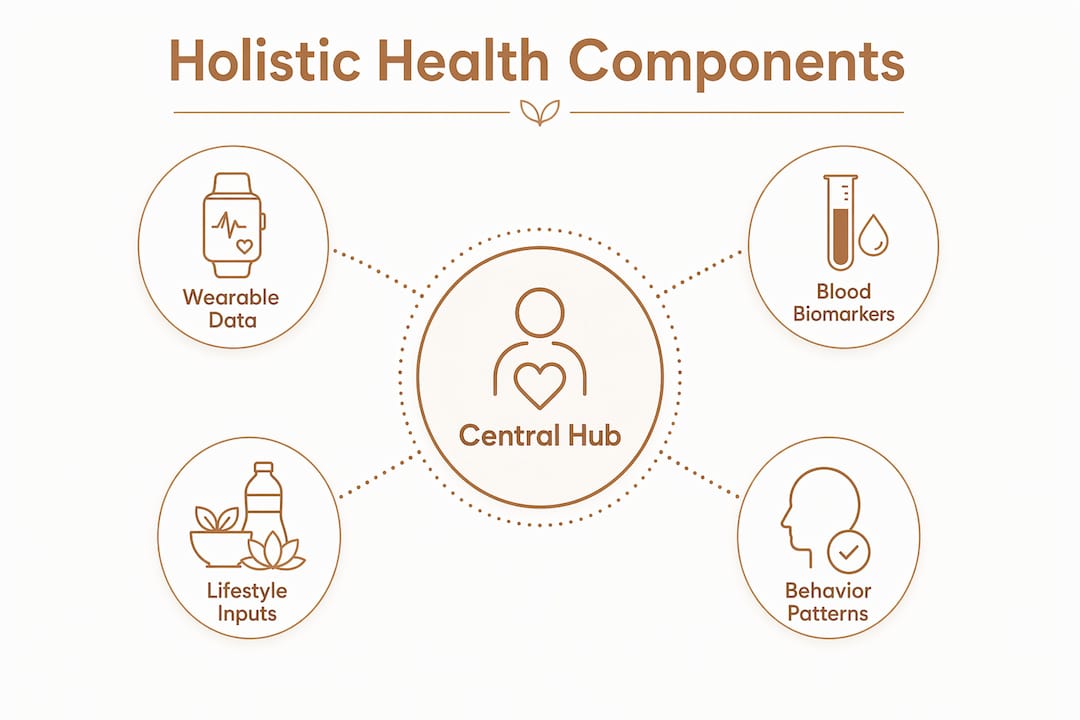
A complete health profile draws from four distinct domains. Each one captures something the others miss.
Physical metrics form the foundation:
- Heart rate variability (HRV), which reflects nervous system recovery
- Sleep duration and sleep stage breakdown
- Daily activity, including steps, active minutes, and VO2 max estimates
- Body composition data: fat percentage, muscle mass, and bone density
Biochemical markers reveal what wearables cannot:
- Blood panels covering cholesterol, blood glucose, and thyroid function
- Inflammation markers like C-reactive protein (CRP)
- Vitamin D, ferritin, and hormone levels
Lifestyle inputs provide context for everything else:
- Nutrition logs tracking macros and micronutrients
- Stress levels, measured through perceived stress scales or cortisol testing
- Alcohol intake, hydration, and environmental exposures
Mental and emotional factors complete the picture:
- Mood tracking and anxiety scores
- Social connection and relationship quality
- Cognitive performance and focus metrics
Effective health dashboards unify wearable daily data, blood biomarkers, and lifestyle inputs to reveal how your behaviors affect biological aging. That unification is what separates a genuine health profile from a pile of disconnected numbers.
Pro Tip: Start tracking just one metric from each of the four domains above before adding more. Four well-monitored data points beat twenty poorly understood ones.
Why do single metrics fail to capture health complexity?
Single metrics collapse multi-dimensional health into one axis, and that compression hides critical risks. Weight is the most common example. A person losing weight rapidly may be losing muscle mass, not fat. Without body composition data alongside the scale reading, that regression stays invisible until it causes real harm.
Step count has the same problem. Hitting 10,000 steps daily while sleeping five hours and eating a high-sugar diet does not produce good health outcomes. The step count looks fine. The full picture does not.
"Treating health data like a pass/fail exam is dangerous. Multi-metric evaluation suites reveal demographic-specific risks and edge cases that single benchmarks consistently miss."
Daily fluctuations make single metrics even less reliable. Your HRV can drop 20% after one stressful meeting or a poor night's sleep. If you react to that single reading, you may overtrain, undereat, or panic unnecessarily. The signal only becomes meaningful when you observe it across weeks, not hours.
Understanding why single metrics are insufficient also matters for demographic accuracy. Women's hormonal cycles cause natural weight fluctuations of 2–5 pounds across a month. Older adults show different HRV baselines than younger athletes. A single benchmark applied universally misses these realities entirely.
Pro Tip: Never make a training or dietary decision based on one day's data. Wait for a pattern across at least seven days before adjusting your routine.
How do holistic metrics improve health outcomes?
The evidence for comprehensive tracking is concrete. Geisinger's integrated care model produced a 40% reduction in hospital readmissions by monitoring patients across multiple health dimensions rather than treating isolated symptoms. That result reflects what happens when care teams stop asking "what is your blood pressure today?" and start asking "how do your sleep, stress, activity, and diet interact this week?"
For individuals managing chronic conditions, the mechanism works the same way. Here is how multi-metric monitoring translates to better outcomes in practice:
- Trend detection over time. Weekly and monthly trend reviews are more actionable than reacting to daily fluctuations. A gradual rise in resting heart rate over three weeks signals overtraining or illness far earlier than any single reading.
- Hidden correlations become visible. Combining sleep data with glucose readings reveals that sleep deprivation raises fasting blood sugar, a connection that drives better sleep habits more effectively than glucose targets alone.
- Personalized baselines replace generic norms. Your healthy HRV is not the same as the population average. Multi-metric tracking builds your personal baseline, making deviations meaningful rather than alarming.
- Preventive action replaces reactive care. When your inflammation markers, sleep quality, and stress scores all trend negatively at the same time, you have a clear signal to intervene before symptoms appear.
Integrated holistic care models require upfront coordination investment but yield long-term cost savings by preventing chronic disease and reducing hospitalizations. The same logic applies to personal tracking. The effort you put into building a multi-metric system pays back in avoided health crises.
How do you build a practical holistic health dashboard?
Building a working dashboard does not require expensive equipment or a medical degree. The goal is a minimum viable set of metrics that covers your key health domains without overwhelming you.
Choosing your core metrics
A dashboard of roughly 20 core metrics covering wearable data, quarterly labs, and lifestyle habits offers enough coverage without causing burnout from over-complexity. Start with a wearable device like Garmin, Oura Ring, or Apple Watch for daily physical data. Add quarterly blood panels through services like Quest Diagnostics or LabCorp. Log nutrition with an app like Cronometer or MyFitnessPal.
Unifying your data
Fragmentation is the biggest failure mode in personal health tracking. Data unification allows you to understand the interplay between metrics and improves insight in ways that siloed apps cannot. Use a platform like Apple Health or Google Fit as a central hub, or build a simple spreadsheet that pulls your weekly averages together in one place. The goal is to see all your metrics side by side, not scattered across six separate apps.
Avoiding common pitfalls
| Pitfall | Better approach |
|---|---|
| Reacting to daily spikes | Review weekly and monthly averages instead |
| Chasing perfect wearable scores | Use scores as guides, not goals |
| Tracking too many metrics at once | Start with 4–6 metrics, add gradually |
| Ignoring subjective data | Pair quantitative scores with how you actually feel |
| Skipping quarterly labs | Blood biomarkers reveal what wearables cannot detect |
Chasing perfect wearable scores often sacrifices actual well-being. A Whoop recovery score of 95% means nothing if you feel exhausted and are ignoring your body's signals. Scores should guide decisions, not replace your judgment.
The IoT transformation of personal health tracking in 2026 means your devices can now share data automatically. Take advantage of that connectivity rather than manually logging everything. Automation removes friction and keeps your dashboard current without adding daily effort.
Key Takeaways
Holistic health tracking surpasses single metrics because it reveals the interactions, trends, and hidden risks that isolated data points structurally cannot show.
| Point | Details |
|---|---|
| Single metrics hide critical risks | Weight, steps, or HRV alone collapse complex health into one axis, masking muscle loss and other regressions. |
| Four domains build a complete profile | Physical, biochemical, lifestyle, and mental metrics together capture what no single category can. |
| Trend analysis beats daily reactions | Weekly and monthly reviews surface meaningful patterns; daily fluctuations mislead more than they inform. |
| Data unification is the key step | Connecting wearables, blood labs, and lifestyle logs in one place enables the correlations that drive real insight. |
| Integrated care delivers measurable results | Geisinger's model cut hospital readmissions by 40% using multi-factor monitoring across patient populations. |
The number that's lying to you
I spent two years obsessing over my weight. Every morning, same time, same scale. I thought I was being disciplined. What I was actually doing was letting one number narrate my entire health story, and it was a bad narrator.
The turning point came when I added HRV tracking and quarterly blood panels. My weight had been stable for six months. My CRP levels were creeping up. My sleep efficiency was dropping. My testosterone was low for my age. The scale said everything was fine. The full picture said otherwise.
What I've learned from tracking across multiple domains is that the metrics you ignore are usually the ones that matter most. People who only track weight miss body composition shifts. People who only track steps miss recovery deficits. The data you don't collect is a blind spot, not a clean bill of health.
The other thing I'd push back on is the idea that more data means more anxiety. In my experience, the opposite is true. When you understand the full context, a bad day on one metric stops feeling like a crisis. You can see it against everything else and make a calm, informed decision. That perspective is worth more than any single perfect score.
— Jacob
How Uvirello fits into your multi-metric health strategy
If you're building a real health dashboard, your body composition data is one of the most important layers you can add.
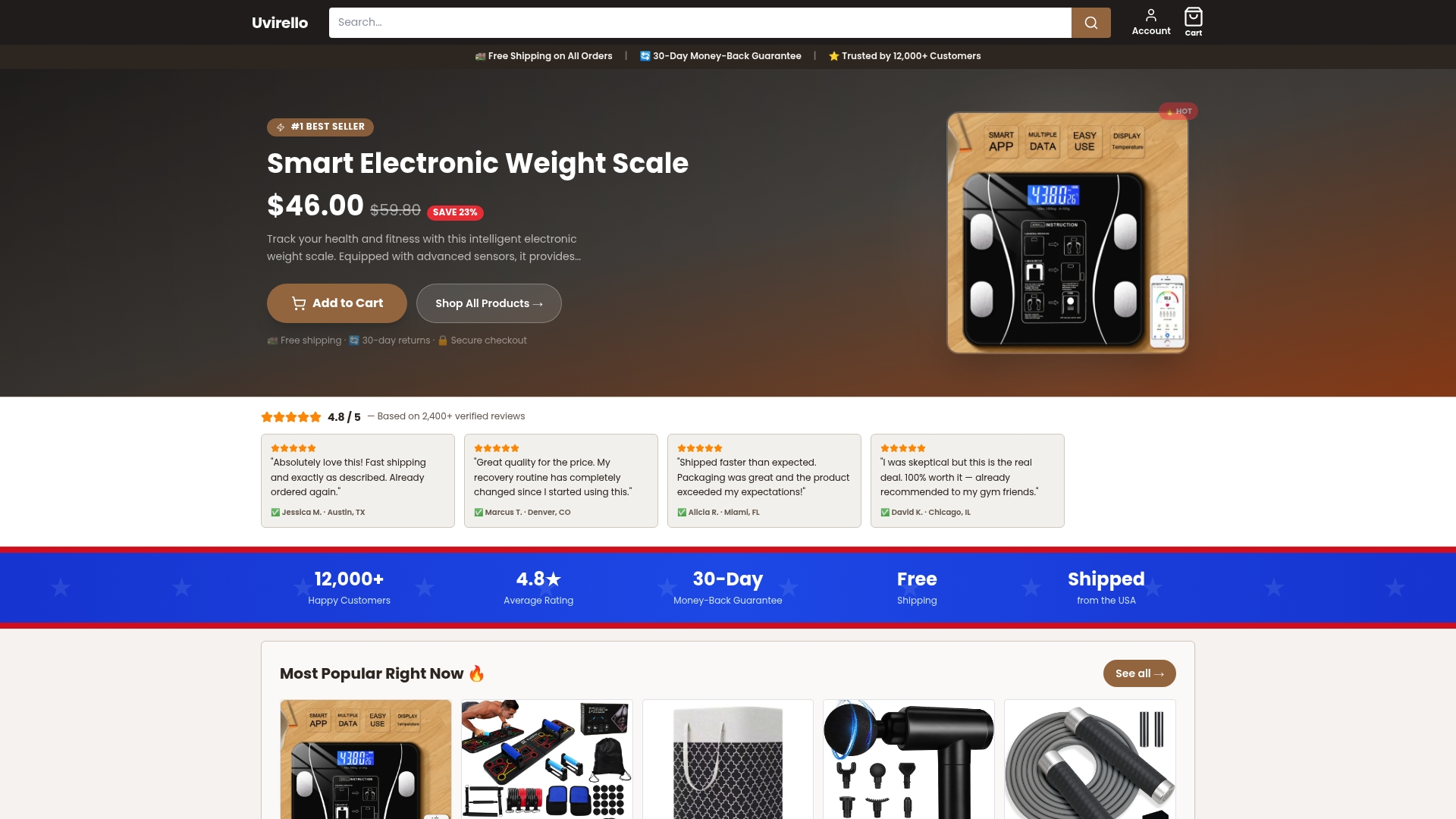
Uvirello's Smart Electronic Weight Scale goes beyond basic weight readings to deliver body fat percentage, BMI, and muscle mass data with high-precision sensors. That body composition layer is exactly what turns a single weight number into a meaningful health signal. Over 12,000 customers rate Uvirello at 4.8 out of 5, and the consistent feedback is that seeing body composition data alongside weight changes the way people understand their progress entirely. Start tracking smarter with Uvirello and give your health dashboard the body composition foundation it needs.
FAQ
What is holistic health tracking?
Holistic health tracking is the practice of monitoring multiple interconnected health metrics, including physical, biochemical, lifestyle, and mental data, to build a complete picture of well-being rather than relying on a single measurement.
Why are single metrics like weight or step count insufficient?
Single metrics collapse multi-dimensional health into one axis, hiding risks like muscle loss during weight loss or recovery deficits behind high step counts. They miss the interactions between data streams that drive real health outcomes.
How many metrics should I track in a health dashboard?
A dashboard of roughly 20 core metrics covering wearable data, quarterly blood labs, and lifestyle habits provides strong coverage without causing complexity burnout. Start with 4–6 metrics across different domains and expand gradually.
What is the best way to unify health data from multiple sources?
Use a central platform like Apple Health or Google Fit to aggregate wearable data automatically, then supplement with quarterly lab results and a simple lifestyle log. The goal is to see all metrics side by side so correlations become visible.
Can holistic tracking actually reduce health risks?
Yes. Geisinger's integrated care model achieved a 40% drop in readmissions by monitoring patients across multiple health dimensions. For individuals, the same principle applies: multi-metric monitoring surfaces warning signs before they become medical events.