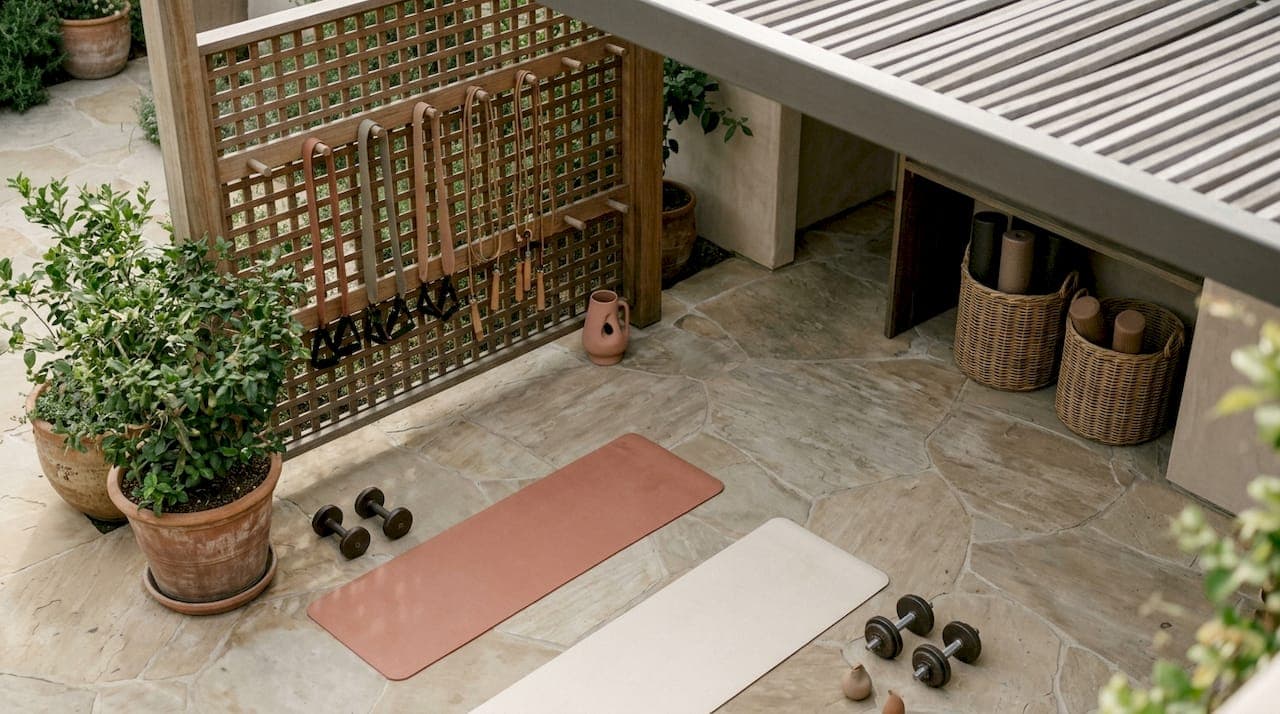
A well-organized fitness tracking equipment space is defined by three distinct zones: a clear training floor, a weekly-use storage area, and an overflow section for rarely touched gear. Most home gym setups fail not because of limited space, but because all three zones collapse into one cluttered pile. The fix is a structured layout paired with modular vertical storage that keeps your tech gear, weights, and accessories exactly where you need them. This guide covers the zone system, wall storage methods, under-furniture solutions, and the workflow habits that keep everything from sliding back into chaos.
How to organize fitness tracking equipment space with a zone system
The most effective home gym layout separates gear into three zones: training, storage, and overflow. Each zone has a specific job, and mixing them is the single biggest cause of cluttered workout spaces.
The training zone is your clear floor space. Nothing lives here permanently. This is where you squat, stretch, do cardio, and move freely. Protecting this lane matters more than adding extra storage furniture. A clear training lane improves workout flow more than any shelf or bin you could buy.
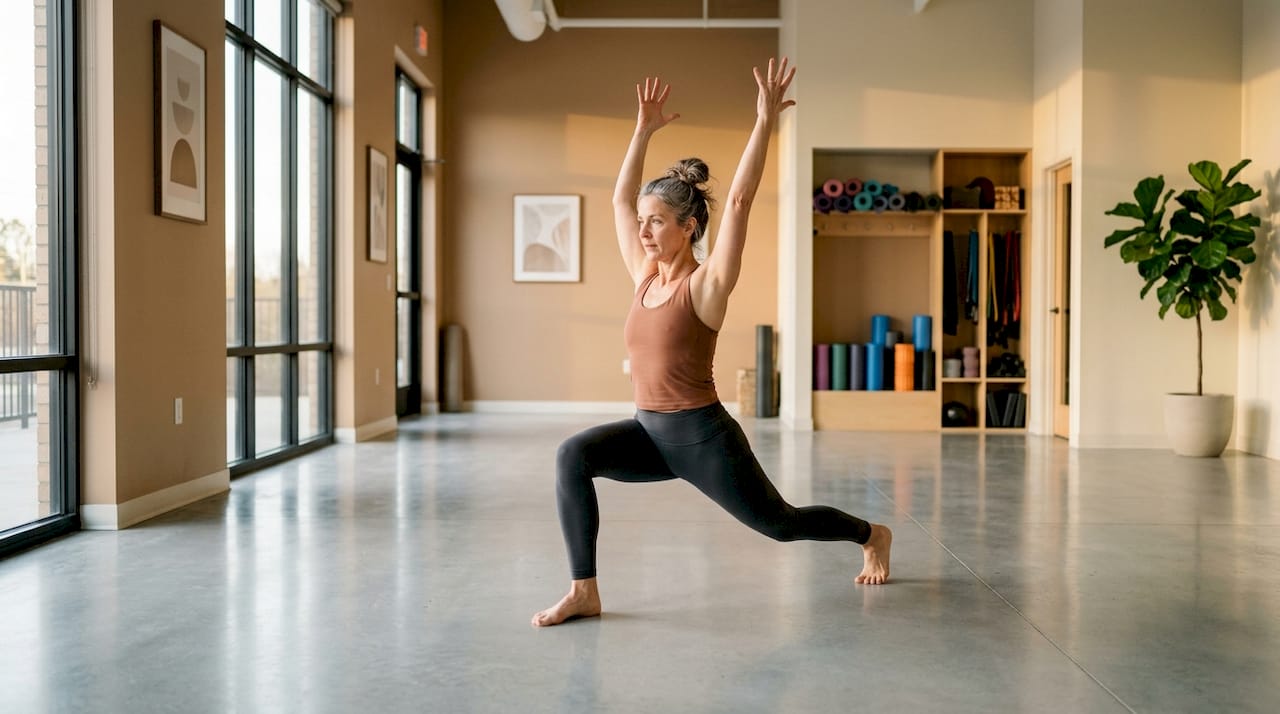
The storage zone holds gear you use every week: resistance bands, jump ropes, lifting straps, your body composition scale, and chargers. This zone sits along a wall or under a bench, close enough to grab without crossing the training lane.
The overflow zone is for seasonal items and rarely used equipment: spare foam rollers, extra resistance bands, holiday gear. A corner cabinet or high shelf works well here. Keeping overflow separate prevents it from creeping into your active storage and training areas.
Cardio machine clearance is a non-negotiable layout rule. Treadmills need 2 feet of clearance on each side and 6 feet behind the deck. That clearance is not just for safety. It also stops people from stacking gear behind the machine, which is where clutter piles up fastest.
Pro Tip: Tape out your three zones on the floor with painter's tape before moving any equipment. Seeing the boundaries physically makes it much easier to commit to the layout.
How to use modular and vertical storage for fitness tracking accessories
A dedicated system wall is the most space-efficient way to store fitness tracking accessories. Pegboard systems with 1–2 inch standoffs let you mount hooks, shelves, and bins anywhere on the board and reconfigure them as your gear changes. Fixed shelves cannot do that.
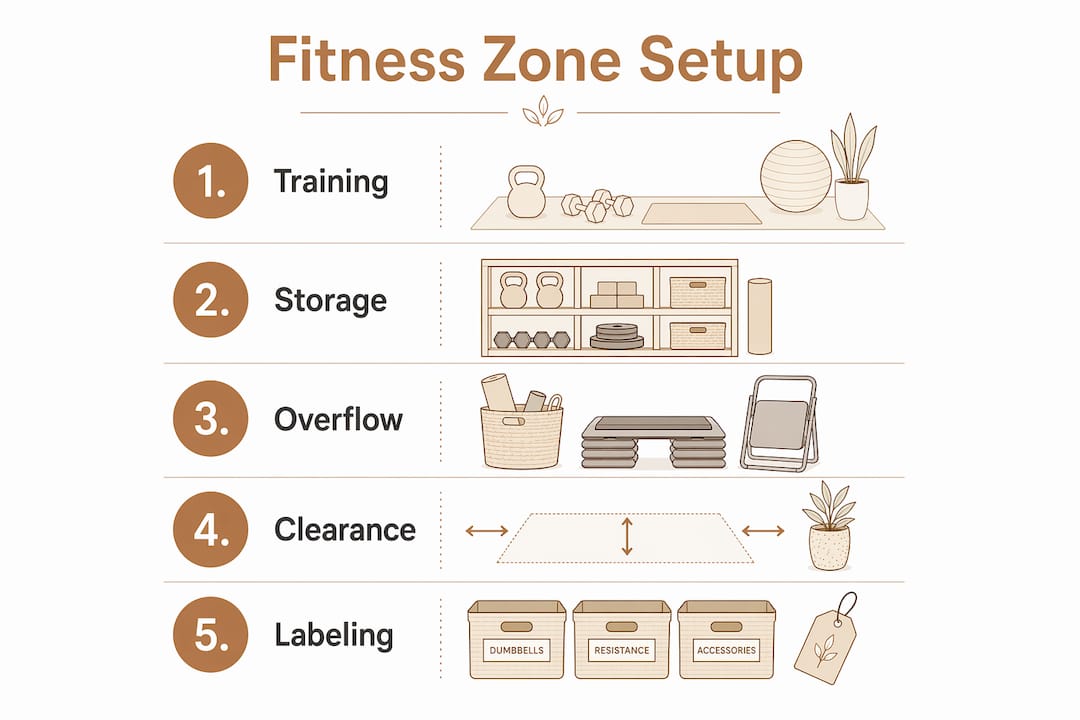
The core advantage of a modular wall is adaptability. When you add a new heart rate monitor, a second jump rope, or a set of ankle straps, you move a hook rather than buy a new shelf. Choosing modular pegboards over fixed shelving avoids the temporary clutter buildup that happens every time your gear collection grows.
Here is what a well-built system wall typically holds:
- Resistance bands and jump ropes on J-hooks at eye level
- Lifting straps, collars, and belts on larger hooks below
- Chargers and sensor cables in a small bin or pouch mounted to the board
- Wipes, chalk, and small accessories in a shallow tray at the bottom
The REP Fitness wall-mounted storage rack (29.5" L x 19.5" H x 19.5" D) is a strong example of multi-level wall storage that holds medicine balls, barbells, bands, collars, and jump ropes in one compact footprint. It replaces multiple floor-standing storage units with a single wall fixture.
For heavier items like medicine balls and kettlebells, vertical floor storage towers keep them off the ground and out of the training lane. Stack them by weight, heaviest at the bottom, to prevent tipping.
| Storage type | Best for | Flexibility |
|---|---|---|
| Pegboard with hooks | Small accessories, cables, straps | High: hooks reposition easily |
| Wall-mounted rack | Balls, bands, barbells, collars | Medium: fixed frame, adjustable levels |
| Vertical floor tower | Kettlebells, medicine balls | Low: position is fixed |
| Under-bench bins | Chargers, wipes, spare cables | High: bins slide in and out |
Pro Tip: Mount your pegboard at least 6 inches above the floor so the bottom row of hooks stays clear of foot traffic and cleaning.
What under-furniture and hidden storage options work best?
Under-bench storage is prime real estate in any home gym. Sliding drawers, bins on casters, or shelves sized to fit beneath benches store small accessories close at hand without consuming extra floor space. The key is sizing the bins to the exact clearance under your bench so nothing shifts during workouts.
Hidden storage keeps your training zone visually clean, which matters more than most people expect. A cluttered space raises mental friction before a workout. A clean space lowers it. That is a real effect, not a design preference.
The best items for under-furniture storage include:
- USB chargers and charging cables for scales, heart rate monitors, and fitness trackers
- Microfiber towels and cleaning wipes
- Spare resistance bands and extra straps
- Small notebooks or printed workout logs
- Replacement batteries for wireless sensors
Floor-to-ceiling cabinets work well for lightweight accessories that you do not need every session. A cabinet with adjustable shelves near the overflow zone keeps seasonal gear contained without taking up wall space you could use for pegboards. The doors hide visual clutter, which keeps the room feeling open even when it is fully stocked.
One underused option is the space beneath a weight rack. Most racks have a footprint of 2–4 square feet at the base. A flat storage tray or a low-profile bin slides under the frame and holds collars, clips, and chalk without adding any new furniture to the room.
How to maintain your fitness gear organization as your collection grows
Organization works best when you treat it as an ongoing training workflow, not a one-time cleanup. Every piece of gear that enters your space needs a designated home before it arrives. If it does not have a home, it lands on the floor and stays there.
Follow these steps to keep your system working long-term:
- Assign a home before you buy. Before ordering new gear, identify exactly where it will live. If there is no space, rearrange existing hooks or clear a bin first.
- Separate active from batch accessories. Daily-use items like straps, chargers, and wipes stay in the storage zone. Spare batteries, extra bands, and backup cables go in the overflow zone.
- Rearrange hooks, not shelves. When your gear changes, move pegboard hooks rather than adding new furniture. New furniture shrinks your training lane.
- Run a monthly reset. Spend 10 minutes returning everything to its designated home. This prevents slow drift back into clutter.
- Plan cable and charging station placement. Cable placement near treadmills and tech gear should be part of your clearance plan, not an afterthought. Loose cables in the training zone are a trip hazard.
Tracking your fitness data is only useful if your devices are charged, accessible, and ready to use. A dedicated charging station, mounted to the wall or tucked under a bench, keeps your Uvirello scale, heart rate monitor, and fitness tracker powered without creating cable clutter on the floor. Pairing good fitness tracking workflow habits with a clean physical space means your data collection never gets interrupted by a dead battery or a missing strap.
Pro Tip: Label every bin and hook with a small piece of tape and a marker. Labels make it obvious when something is out of place, which speeds up your monthly reset dramatically.
Key Takeaways
Organizing your fitness tracking equipment space requires three defined zones, modular vertical storage, and a workflow mindset that assigns every piece of gear a permanent home.
| Point | Details |
|---|---|
| Use three distinct zones | Separate training, weekly storage, and overflow to prevent clutter from spreading. |
| Protect the training lane | Clear floor space improves workout flow more than any additional storage unit. |
| Choose modular over fixed | Pegboards with movable hooks adapt to new gear without shrinking your floor space. |
| Use under-furniture space | Bins and drawers under benches store chargers, cables, and straps without extra footprint. |
| Treat organization as workflow | Assign gear a home before it arrives and run a monthly reset to prevent drift. |
What I have learned from organizing a home gym the hard way
Most people approach home gym organization as a weekend project. They buy a rack, hang some hooks, and call it done. Three months later, the floor is covered again. I made that mistake twice before I understood the real problem: the system was not built around how I actually train.
The three-zone layout changed everything for me. The moment I taped off a protected training lane and committed to keeping it clear, my workouts got faster to start and easier to finish. There was no hunting for a strap or stepping over a cable. The space felt intentional, and that feeling carried into the workout itself.
The modular wall was the second shift. I used to add a shelf every time I got new gear. The shelves multiplied, the floor space shrank, and the room started feeling like a storage unit. Switching to a pegboard meant I could add a hook in 30 seconds instead of drilling new hardware. When I got a second jump rope, I moved one hook. Done.
The part most guides skip is clearance planning around cardio machines. I ignored the 6-foot rear clearance on my treadmill for over a year. That space became a dumping ground for foam rollers and spare cables. Once I enforced the clearance, the clutter had nowhere to land. Treadmill clearance controls clutter indirectly, and that is a lesson worth learning before the pile forms.
My honest advice: build the system as you acquire gear, not after. Every item you bring in without a designated home costs you 10 future minutes of searching and resetting.
— Jacob
Uvirello and your fitness tracking setup
Keeping your fitness tracking devices organized is only half the equation. The data they collect needs to be accurate and consistent to be worth anything.
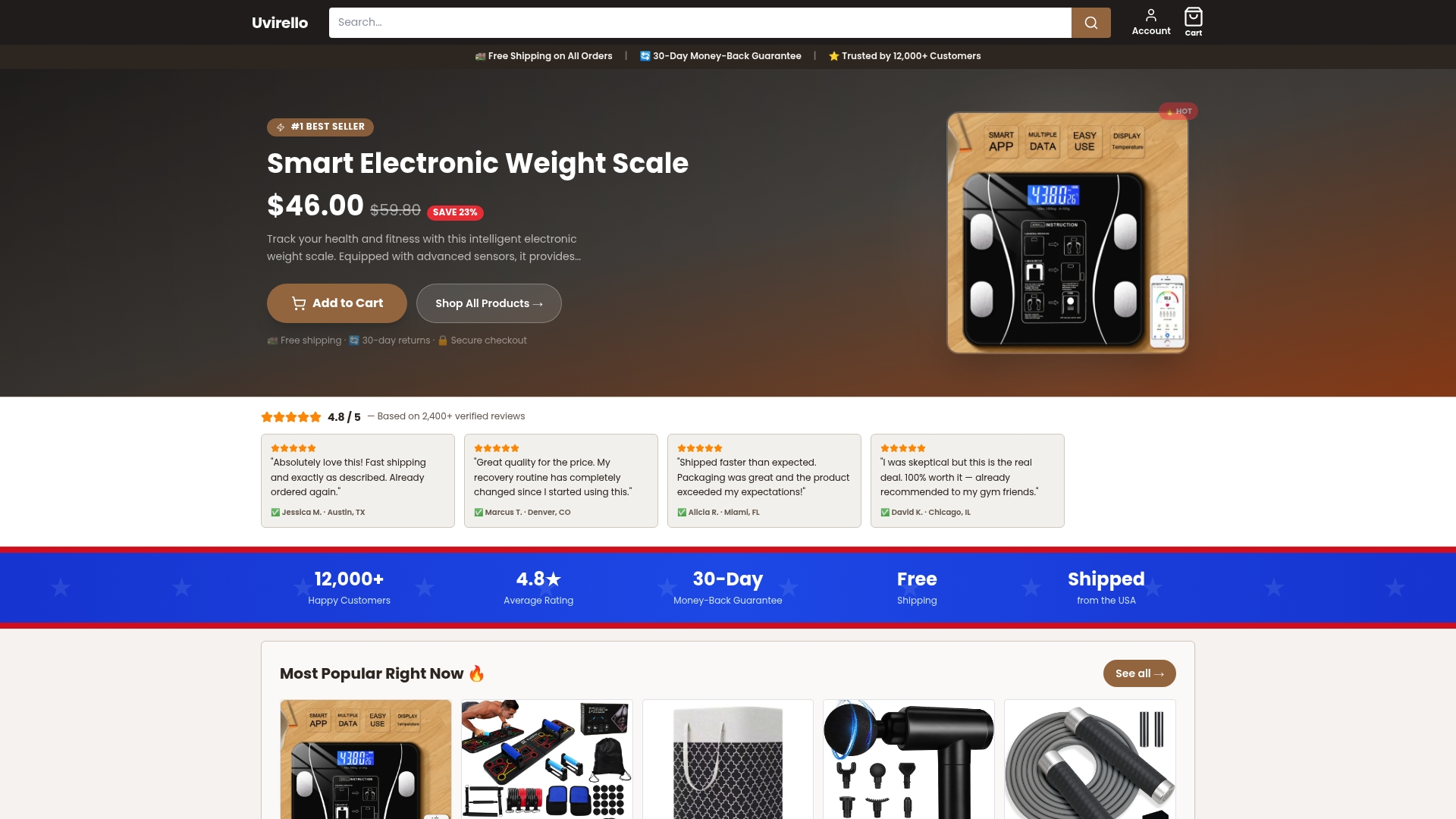
Uvirello's Smart Electronic Weight Scale measures body fat percentage, BMI, and other body composition metrics with high-precision sensors. It fits cleanly into any organized home gym setup, whether stored on a low shelf, under a bench, or on a dedicated wall mount. Over 12,000 customers have rated it 4.8 out of 5, making it one of the most trusted body composition tools available for home fitness enthusiasts. If you want your tracking data to match the quality of your organized space, Uvirello is the place to start.
FAQ
What are the three zones for organizing a home gym?
The three zones are training (clear floor space), storage (weekly-used gear), and overflow (rarely used items). Keeping these zones separate prevents clutter from spreading into your active workout area.
How much clearance does a treadmill need?
A treadmill requires 2 feet of clearance on each side and 6 feet behind the deck. This space supports safe use and also prevents gear from piling up around the machine.
What is the best storage system for small fitness tracking accessories?
A pegboard with 1–2 inch standoffs is the most flexible option. It holds chargers, straps, bands, and sensors, and you can reposition hooks as your gear changes without adding new furniture.
How do I store fitness tracking devices like scales and heart rate monitors?
Store them in the weekly-use storage zone, either on a low shelf, in an under-bench bin, or on a wall-mounted tray. A dedicated charging station setup nearby keeps them powered and ready for every session.
How often should I reset my home gym organization system?
A monthly 10-minute reset is enough for most home gyms. Return every item to its designated home, check that cables are managed, and confirm the training lane is clear before the next week begins.