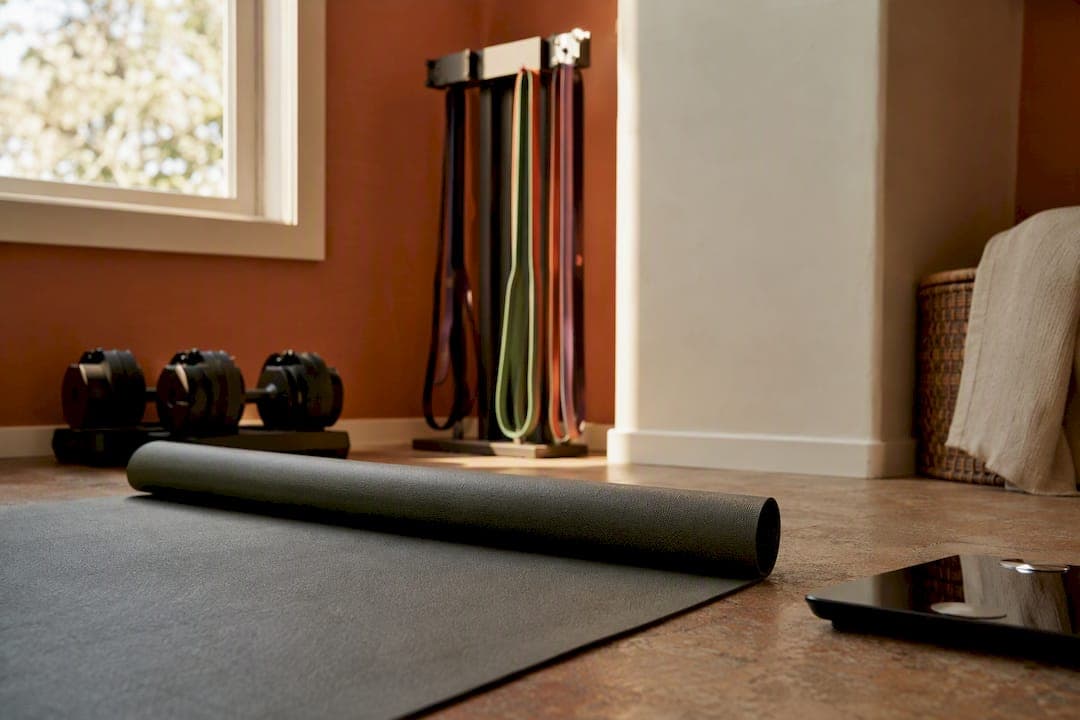
The fastest path to a working home gym is picking one of three proven builds: a $300 to $500 bare-bones setup in an 8×8 foot corner, a $1,000 to $3,000 mid-range strength build in a garage or spare room, or a full health station that adds cardio and body-composition monitoring for $2,500 and up. Each one works. The right choice depends on your square footage, your budget, and whether you're training alone or feeding a whole household through the same equipment.
Here's how the three stack up before you spend a dollar:
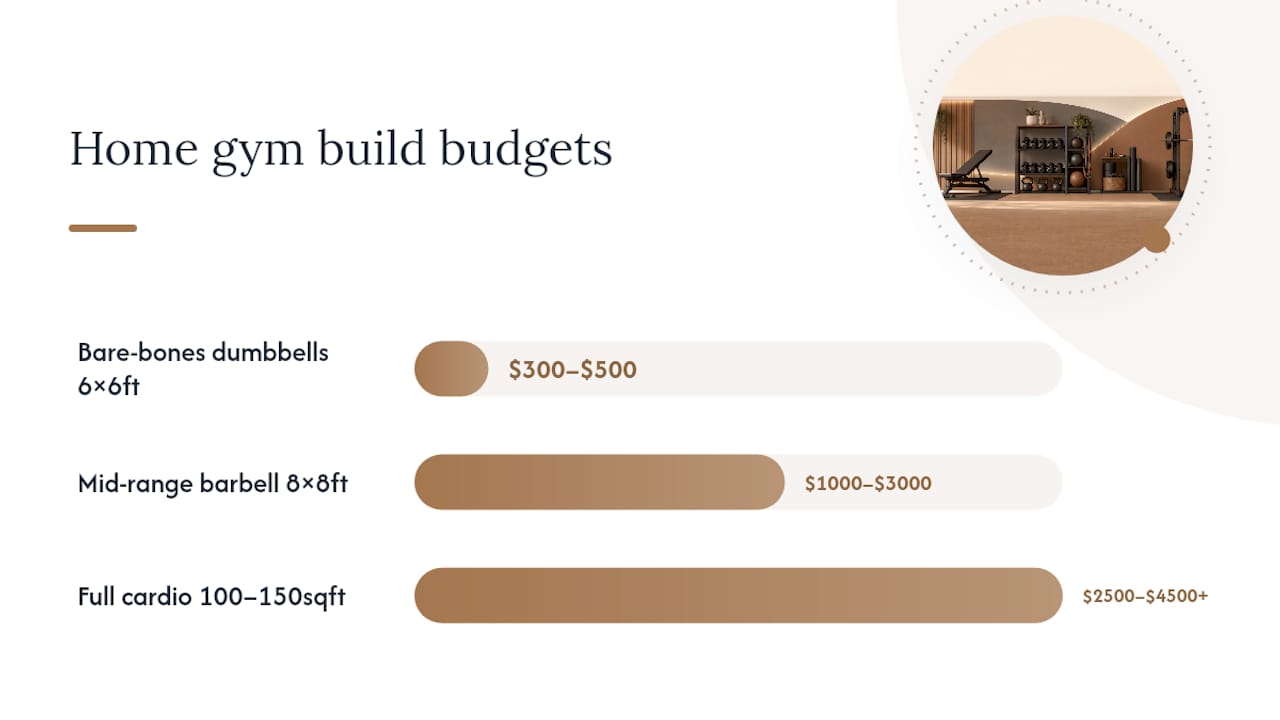
| Build | What it gets you | Approximate cost | Minimum footprint |
|---|---|---|---|
| Bare-bones small-space | Adjustable dumbbells, bands, mat, basic cardio | $300–$500 | 6×6 ft |
| Mid-range strength | Barbell, plates, rack, bench, flooring | $1,000–$3,000 | 8×8 ft |
| Full health station | Strength setup, plus cardio machine and smart scale | $2,500–$4,500+ | 100–150 sq ft |
Pro Tip: If you're building the mid-range or full station, spend on flooring before you spend on anything else. A bent bar is annoying. A cracked subfloor is a repair bill.
Key Takeaways
Building a functional home gym health station comes down to sequencing: flooring first, a barbell-based strength foundation second, and integrated monitoring like a smart scale to make the results visible.
| Point | Details |
|---|---|
| Start with flooring | It protects your subfloor and defines your training zone before any equipment arrives. |
| Respect the 8×8 rule | Barbell setups need a minimum of 64 square feet for safe loading clearance. |
| Buy in sequence | Flooring, barbell and plates, rack, bench, then accessories, in that order. |
| Match cardio to your walls | Rowers and air bikes suit shared walls better than treadmills or jump ropes. |
| Track trends, not daily numbers | The Smart Electronic Weight Scale (Uvirello) gives weekly body-composition trends that guide real program changes. |
Table of Contents
- How Much Space Do You Need to Set Up a Home Gym Health Station?
- What Should You Buy First for a Home Gym?
- Three Sample Builds by Budget and Space
- Storage, Organization, and Safety for a Home Gym
- Cardio Machines That Work in a Small Home Gym
- How Do You Set Up the Health Monitoring Side of Your Gym?
- What Should You Check Before Buying Home Gym Equipment?
- When Should You Buy Each Piece of Equipment?
- Frequently Asked Questions
- Sources
How Much Space Do You Need to Set Up a Home Gym Health Station?
A standard barbell setup needs a minimum of 64 square feet, or an 8×8 foot area. That number isn't arbitrary. An Olympic barbell runs 7 feet long, and you need extra room on both ends to load and unload plates without clipping a wall or a rack upright.
Once you know your footprint, split it into zones instead of treating it as one open area. A heavy lifting zone holds the rack, barbell, and bench. A conditioning zone handles the rower or bike. A mobility and accessory zone covers stretching, bands, and floor work. In a true 8×8 room, these zones overlap, so you'll shuffle equipment between sessions. In a 120 square foot spare room, you can dedicate corners to each. In a 400+ square foot garage, zone-based planning actually starts to matter for traffic flow, not just tidiness.
Before you buy anything, check these four things:
- Ceiling height clears 7.5 feet minimum if you plan to do overhead presses or pull-ups
- Doorways and hallways can fit a barbell (7 feet) or a boxed rack through them
- Ventilation exists, whether that's a window, fan, or open garage door, because a sealed room heats up fast under load
- An outlet sits within reach for a rower's console, a treadmill, or a phone charging dock
Pro Tip: Before you order a single item, tape out your rack and bench dimensions on the floor with painter's tape. It takes ten minutes and saves you from discovering your dream squat rack doesn't clear the water heater.
What Should You Buy First for a Home Gym?
Buy in this order: flooring, barbell and plates, rack or squat stand, adjustable bench, then accessories. This sequence isn't a personal preference. It's how Consumer Reports and independent testers at Garage Gym Reviews recommend building a gym that doesn't waste money on items you'll replace in six months.
- Flooring first. It protects your subfloor, cuts down noise for anyone below or beside you, and physically defines your workout space before a single weight arrives.
- Barbell and plates next. A bar and plates unlock more exercises per dollar than any single piece of equipment. Squats, deadlifts, rows, presses. All from one bar.
- Rack or squat stand. Once you own a bar, you need somewhere safe to load and unload it. A rack like the Rogue R-3 Power Rack or the budget-friendly Fitness Reality 810XLT Super Max Power Cage both work here.
- Adjustable bench. Opens up presses, step-ups, and single-leg work.
- Accessories last. Bands, a jump rope, a dip belt. Fun, but not foundational.
| Priority item | Typical cost range | Footprint impact |
|---|---|---|
| Flooring (stall mats or rubber tiles) | $100–$300 | None (covers existing floor) |
| Barbell + plates | $300–$500 | Minimal, stores vertically |
| Rack or squat stand | $300–$900 | 3×4 ft footprint |
| Adjustable bench | $150–$400 | 2×5 ft, folds for storage |
Pro Tip: If your building has thin walls or you're sharing space with a sleeping baby upstairs, swap the barbell setup for Bowflex SelectTech adjustable dumbbells. You lose some max-load headroom, but you gain quiet and roughly a third of the footprint.
Three Sample Builds by Budget and Space
The bare-bones build ($300–$500, 6×6 to 8×8 feet)
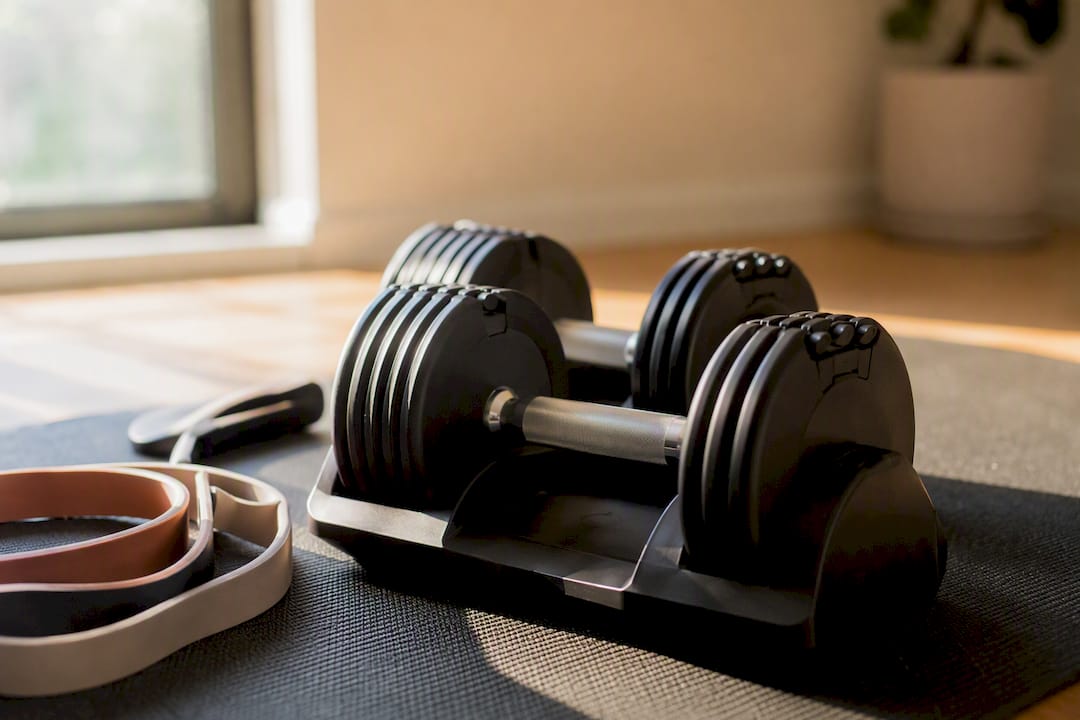
This tier gets you moving without a big commitment. Start with a set of Bowflex SelectTech adjustable dumbbells or the Bowflex Results Series 552 SelectTech Adjustable Dumbbell, a few resistance bands, a thick exercise mat, and a jump rope. You can run a full-body strength and conditioning routine from this list alone. Add a Smart Electronic Weight Scale (Uvirello) to track how your body responds, and you've got a real health station for under $500.
The mid-range strength build ($1,000–$3,000, 8×8 to 10×10 feet)
This is where a barbell-based setup earns its keep. A realistic list: stall-mat flooring, a Buddy Capps Texas Power Bar, 300 to 400 pounds of plates, a Rogue R-3 Power Rack, and a flat/incline adjustable bench. That combination alone runs $1,000 to $3,000 depending on whether you buy new plates or hunt used ones. If cost is tighter, the Fitness Reality 810XLT Super Max Power Cage covers the same rack function for less, trading some steel gauge and long-term durability for a lower price tag.
The full health station ($2,500–$4,500+, 100 to 150 square feet)
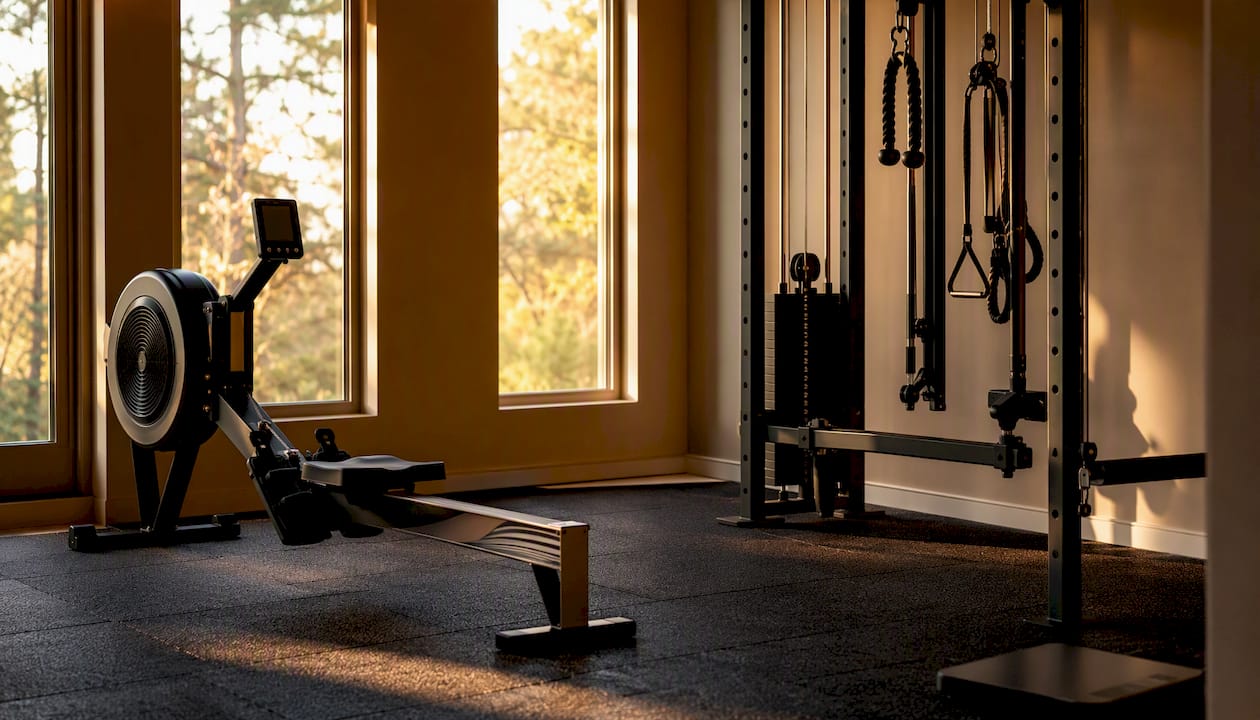
Add a Concept2 Rower for conditioning, an XMark Heavy Duty Lat Pulldown and Low Row Cable Machine for pulling variety a barbell can't replicate well, and the Smart Electronic Weight Scale (Uvirello) as your dedicated tracking hub. This tier suits a household with more than one lifter or someone training for both strength and cardio goals in the same room.
| Budget tier | Core items | Minimum footprint |
|---|---|---|
| Bare-bones | Adjustable dumbbells, bands, mat | 6×6 ft |
| Mid-range strength | Barbell, plates, rack, bench, flooring | 8×8 ft |
| Full health station | Strength setup + rower + cable machine + smart scale | 100–150 sq ft |
You don't have to buy every tier's worth of gear on day one. Flooring and a barbell can carry you for months before a rower or cable machine becomes worth the money. If your goal leans toward conditioning over max strength, flip the priority and get the Concept2 Rower earlier, running dumbbells for strength work in the meantime.
Storage, Organization, and Safety for a Home Gym
A gym that looks like a storage unit stops getting used. Wall-mounted hooks hold resistance bands and jump ropes off the floor. A vertical plate rack or a simple A-frame keeps loose plates from becoming a tripping hazard. Dumbbells belong on a low rack, not stacked in a corner where they roll. Small accessories, chalk, straps, a lifting belt, deserve one dedicated shelf or bin instead of scattering across the floor.
Safety matters more when nobody else is around to spot you. Set your rack's safety pins or spotter arms below your working height every single session, not just on max-effort days. If you can, angle a mirror or a phone camera to catch your full range of motion. Solo lifters who build these habits into every session catch form breakdowns before they become injuries, not after.
A missed rep with the safeties set correctly is a non-event. The same missed rep with no safeties is an emergency room visit.
Basic maintenance extends your equipment's life more than any single purchase decision does. Wipe down bench upholstery after sweaty sessions to stop it from cracking early. Brush bar knurling occasionally to keep grip texture from filling with chalk and grime. Rubber flooring holds up for years if you keep it out of direct sun, which degrades the material over time.
Pro Tip: A tension rod with S-hooks mounted between two studs holds four to six resistance bands for about $15 and takes up zero floor space.
Cardio Machines That Work in a Small Home Gym
You don't need a treadmill-sized footprint to get real conditioning work done. A jump rope needs roughly 6×6 feet of clearance and costs under $20. An air bike or assault bike needs about 4×3 feet and holds resale value well if you ever need to sell it. A compact rower like the Concept2 Rower needs 8×2 feet unfolded but stores upright against a wall in about 2×2 feet. A folding treadmill needs the most space, typically 6×3 feet, and loses the most resale value over time.
If you live in an apartment or share walls with neighbors, skip anything with foot impact. A rower or an air bike puts far less strain on the floor below you than a treadmill or rope work does. Compact rowers and adjustable dumbbells consistently top small-space recommendations for exactly this reason: low noise, low footprint, high output.
- Jump rope: 6×6 ft, under $20, zero noise complaints
- Assault or air bike: 4×3 ft, $300–$700, moderate noise, holds resale value
- Compact rower (Concept2 Rower): 8×2 ft unfolded, 2×2 ft stored, $900–$1,200
- Folding treadmill: 6×3 ft, $400–$1,500, worst for shared walls
How Do You Set Up the Health Monitoring Side of Your Gym?
Four metrics matter more than the rest combined: body weight trend, body-composition trend (body fat percentage), resting heart rate trend, and a simple progress log for lifts or cardio output. Weight alone bounces around daily from water and food. Watching the trend line over two to four weeks tells you what's actually happening.
Placement matters more than people expect. A smart scale needs a hard, flat floor, not carpet, positioned away from direct sunlight and bathroom humidity that can throw off sensor readings over time. Most gym owners put it just inside the door so weigh-ins happen before warming up, not after a sweaty session skews the numbers.
- Weigh in at the same time of day, ideally right after waking, before eating or drinking
- Log the number alongside your workout notes so trends and training load line up
- Sync scale data to a tracking app weekly, not daily, to avoid obsessing over noise in the numbers
- Pair the Smart Electronic Weight Scale (Uvirello) with a simple progress tracking wall so strength gains and body-composition trends sit in one visible place
The scale's high-precision sensors pick up body-composition shifts that a bathroom scale from a decade ago never could, which matters most when you're cutting weight but want to confirm you're losing fat and not muscle.
Pro Tip: Skip daily obsessing over the number. A weekly average smooths out water retention and gives you a trend line worth trusting.
What Should You Check Before Buying Home Gym Equipment?
Before checkout, run through warranty length, plate diameter (standard 2-inch Olympic sleeves, not off-spec), knurl quality on a barbell, stated load rating, and actual shipped dimensions versus the listing. A rack that "fits" your room on paper can still clip a light fixture if you didn't check the true crated height.
Used gear can be a genuine deal on racks, benches, and plates, since steel doesn't wear out the way electronics do. Walk away from a bent bar (roll it on a flat surface to check), rusted sleeves that won't spin freely, or any weld with visible cracking. None of those get better with use.
Budget direct-to-consumer brands, mid-tier tested builders, and premium commercial-grade manufacturers each serve a different buyer. None of them are automatically wrong for a home setup. The right pick depends on how heavy you're loading the bar and how many years you expect the piece to last.
- Confirm warranty terms and what voids them
- Measure your doorway against the boxed dimensions, not just the assembled size
- Check knurling depth on any bar meant for deadlifts
- Ask about return policy before, not after, assembly
Pro Tip: If a listing doesn't state a load rating for a rack or bench, treat that as a red flag, not an oversight.
When Should You Buy Each Piece of Equipment?
Spread your purchases across three phases instead of buying everything at once.
- Month 0 to 1: Flooring, barbell, and plates. This is your foundation and the highest-value spend per dollar.
- Month 1 to 3: Rack, bench, and basic storage (plate rack, wall hooks). Now you have a complete strength station.
- Month 3 to 12: Cardio equipment, the smart scale, and specialty accessories like a dip belt or lifting straps.
Staging purchases this way lets you confirm you'll actually use the gym regularly before you drop $900 on a rower. A basic strength setup covering months 0 through 3 typically runs $1,000 to $3,000 total, which pays for itself against a $60 to $150 monthly gym membership within a year or two depending on your area's rates.
A health-first case for building your own gym
Strength training does more than build muscle. It's tied to meaningfully lower risk factors for chronic disease, which is why health authorities recommend resistance work for adults at every age, not just competitive lifters. A home setup removes the two biggest reasons people skip training: drive time and gym hours. If the rack is twenty feet from your bed, you show up more.
I've watched enough garage builds succeed and fail to notice a pattern: the ones that stick treat the gym as a health system, not a hobby room. Flooring, a bar, and a scale that tells you the truth beat a wall of unused machines every time.
Your Home Gym Deserves a Health Hub That Keeps Up
Every build in this guide, from the bare-bones dumbbell corner to the full health station, works better when you can actually see what your training is doing to your body. That's the gap the Smart Electronic Weight Scale (Uvirello) fills. It's not just a number on a floor scale. It reads body fat percentage and BMI through high-precision sensors, then syncs that data into a simple app so your weigh-ins connect directly to your training log instead of living in a separate mental spreadsheet.
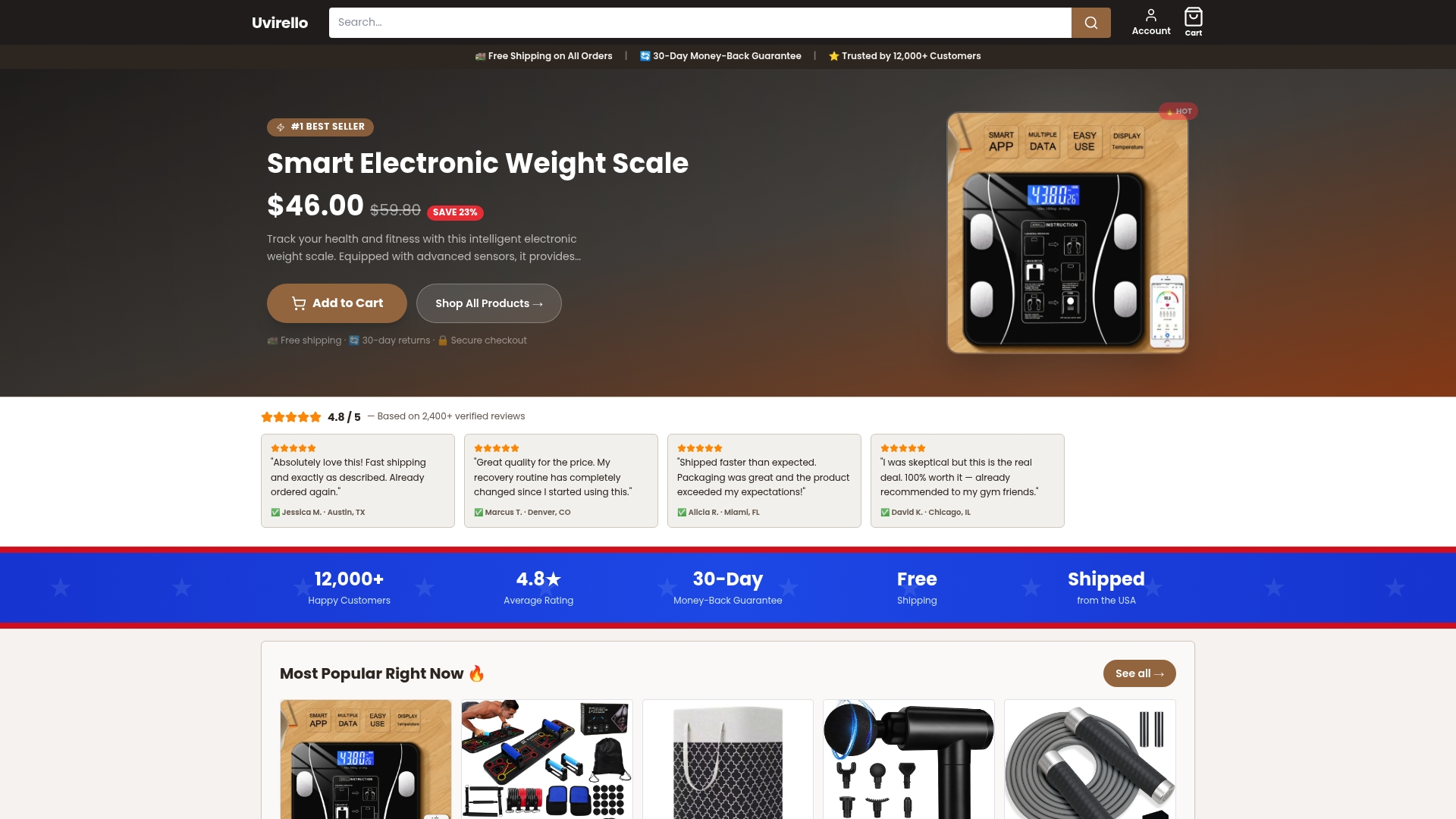
Over 12,000 customers have rated it 4.8 out of 5, and the pattern in that feedback is consistent: people notice trends they'd have missed on a standard scale, and that visibility changes how they adjust their programming week to week. Pair it with your performance tracking setup and you've got a genuine health station, not just a workout corner.
Ready to make your weigh-ins count for something? Check out the Smart Electronic Weight Scale and give your home gym the monitoring hub it's missing.
Frequently Asked Questions
How much does it cost to set up a home gym health station? A bare-bones setup runs $300 to $500. A mid-range strength build lands between $1,000 and $3,000. A full health station with cardio and monitoring tech typically costs $2,500 to $4,500 or more.
What's the minimum space needed for a home gym? Plan for at least 64 square feet, or an 8×8 foot area, for a standard barbell setup. Adjustable dumbbell setups can work in as little as 6×6 feet.
What should I buy first when building a home gym? Flooring comes first, followed by a barbell and plates, then a rack, then a bench. Accessories come last.
Do I need a smart scale in my home gym? It's not required, but a scale that tracks body composition, not just weight, gives you a clearer read on whether your training is working than a standard bathroom scale can.
Are adjustable dumbbells a good substitute for a barbell setup? Yes, especially in apartments or small rooms. Systems like the Bowflex SelectTech line replace multiple dumbbell pairs in a fraction of the footprint a rack and barbell need.
Sources
- How much space do I need for a home gym? | Bells of Steel
- How to Set Up Your Ideal Home Gym | Consumer Reports
- How to Build a Home Gym on Any Budget — GarageGymBuilders
- Use strength training to help ward off chronic disease | Harvard Health