
Splurge on a durable power rack, a quality barbell and plates, adjustable dumbbells, and one dependable cardio machine — those are the pieces of home gym equipment worth spending real money on, assuming you train at least three times a week. Everything else is either a nice-to-have or a save-on item. Here's the shortlist before the details:
- Power rack + barbell + plates: Best for intermediate to advanced lifters who squat, bench, and deadlift. Foundational, decades-long value.
- Adjustable dumbbells (e.g., Bowflex SelectTech 552 or Nuobell): Best for beginners and small-space owners who need a full weight range without a wall of fixed dumbbells.
- Cardio machine (treadmill, rower, or bike): Best for cardio-first or HIIT-focused users who would otherwise pay monthly gym fees.
- Smart all-in-one system (e.g., Tonal 2, Tempo Studio): Best for time-poor, coached-training seekers with limited floor space and a tolerance for subscription fees.
- High-precision smart scale: Best for anyone tracking body composition alongside training. Objective data changes how you plan.
Resistance bands, foam rollers, basic mats, and single-function gadgets are almost always save-on items. Spend less there and redirect that budget toward the pieces above.
Key Takeaways
The highest-value home gym splurges are durable, versatile strength pieces used frequently, paired with objective tracking to confirm they're producing results.
| Point | Details |
|---|---|
| Splurge on strength foundations | Power rack, barbell, and plates deliver decades of use and strong resale value. |
| Adjustable dumbbells beat fixed sets | A Bowflex SelectTech 552 or Nuobell covers a range of weights suitable for most home gym users in a single compact footprint. |
| Cardio splurge requires frequency | Only buy premium cardio equipment if you anticipate consistent frequent use per week. |
| Smart systems carry hidden costs | Consider subscription fees and installation costs before deciding on Tonal 2 or Tempo Studio. |
| Uvirello tracks your results | The Uvirello Smart Scale measures body fat, BMI, and composition so your equipment investment shows up in data. |
Table of Contents
- What makes home gym equipment worth splurging on?
- Strength equipment that's worth every dollar
- When is premium cardio equipment actually worth it?
- Smart all-in-one systems: who actually benefits?
- Space-saving options that justify a higher price
- Tech and recovery gear that's actually worth the money
- Items that usually aren't worth the premium price
- Price bands and how to sequence your splurges
- What the research says about spending on home gym gear
- The case for buying less and tracking more
- Uvirello's Smart Scale: the tracking tool your gym splurges deserve
- Sources
What makes home gym equipment worth splurging on?
Before you spend $1,500 on a rack or $3,000 on a smart system, run through five questions. If you answer yes to at least three, the splurge is likely justified.
-
Will you use it at least three times per week? Frequency is the single biggest cost-per-use lever. A $2,000 treadmill used daily for five years costs less per session than a $300 model that breaks in year two. Exercise physiologists at the Cleveland Clinic consistently recommend prioritizing equipment you will actually use consistently, favoring versatile and compact gear early in a home-gym build.
-
Does it have a progress ceiling? A 20-lb fixed dumbbell stops being useful once you're stronger. A Bowflex SelectTech 552 adjusts from 5 to 52.5 lbs. A full power rack with a 1,000-lb load rating never becomes obsolete. Gear that grows with you earns its price.
-
What's the footprint cost? A piece that takes up 50 square feet of your garage needs to earn that real estate. If it sits unused three weeks a month, the space cost alone makes it a bad investment.
-
What's the resale value? Quality barbells and racks from Rogue, REP Fitness, or Force USA hold resale value well. Electronics and smart systems depreciate faster, especially once a subscription model changes or a company pivots.
-
Does it remove a behavioral barrier? Public health data from the CDC links convenience and accessibility directly to higher activity adherence. If owning a specific machine means you skip the 20-minute commute to a gym and actually train, that machine pays for itself in consistency alone.
Decision rule: If a piece of equipment scores yes on frequency, progress ceiling, and barrier removal, buy the best version you can afford. If it scores yes on only one, buy mid-range or skip the splurge entirely.
Strength equipment that's worth every dollar
For serious lifters, a high-quality power rack, barbell, and plates are foundational investments that retain functional value for decades, according to Men's Health product testing. The reason is simple: these items don't become obsolete. A Rogue Ohio Bar bought today will still be the right tool in 2040.
Power rack
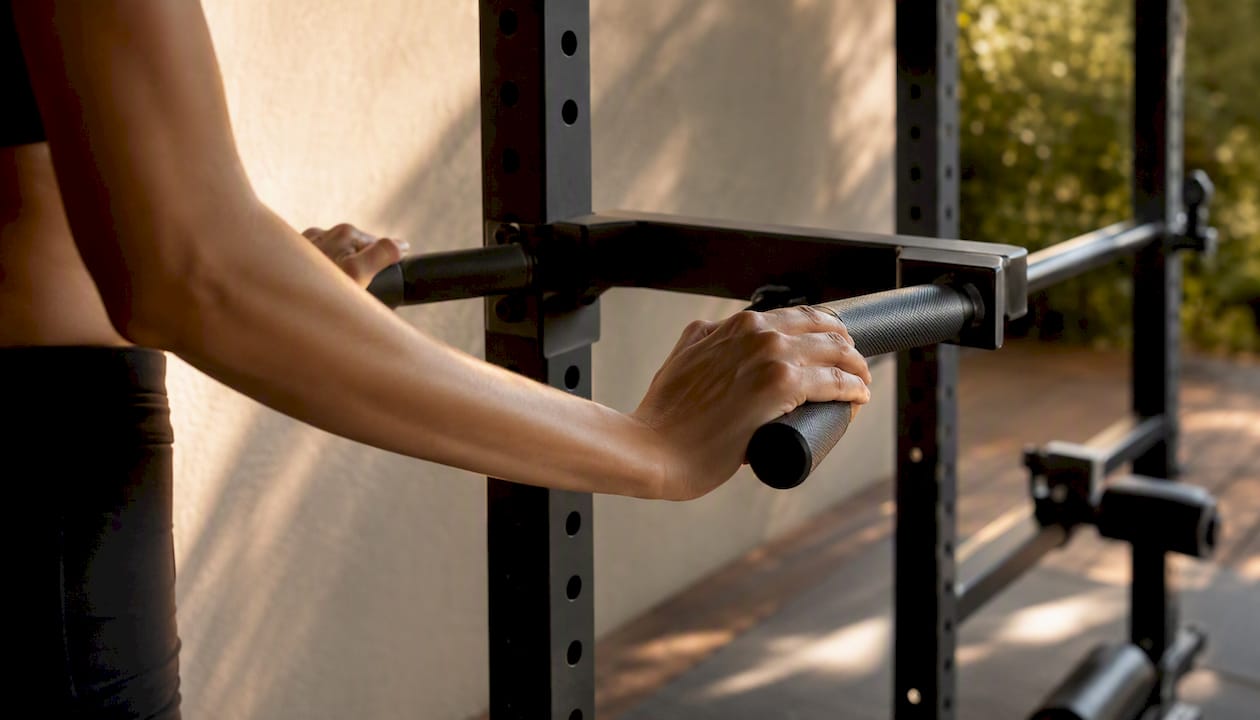
The power rack is the most versatile piece of strength equipment you can own. Squats, bench press, pull-ups, rack pulls, overhead press — one unit covers all of it. The PRx Profile PRO is the standout for small spaces; it folds flat against the wall when not in use, reclaiming nearly the full footprint of a spare room. The REP Fitness PR-5000 and the Force USA G3 All-in-One are better choices for dedicated garage gyms where space isn't the constraint — both offer cable attachments, pull-up bars, and dip handles built in.
When evaluating any rack, Garage Gym Reviews' testing methodology points to three durability signals: steel gauge (11-gauge or thicker is the standard for splurge-level racks), weld quality (look for full-penetration welds, not tack welds), and load rating (600 lbs minimum; 1,000+ lbs for serious lifting). Warranty matters too. REP Fitness offers a lifetime warranty on its structural steel. That's the kind of signal that separates a real investment from a piece of equipment you'll replace in three years.
Price bands:
- Entry: $300–$600 (adequate for light use, thinner steel)
- Mid: $700–$1,200 (solid for most home lifters)
- Splurge: $1,300–$2,500+ (Rogue, REP PR-5000, Force USA G3, PRx Profile PRO)
Pros: Decades of use, high resale value, supports progressive overload safely. Cons: Heavy shipping costs, requires ceiling clearance (typically 8+ feet), permanent footprint.
Barbell and plates
The Rogue Ohio Bar is the benchmark for home gym barbells. At 190,000 PSI tensile strength, it handles both powerlifting and Olympic lifting without flex or whip issues. Pair it with calibrated iron plates or bumper plates depending on your training style. Bumpers are quieter and safer for drops; iron plates are cheaper per pound and more compact.
Price bands:
- Entry barbell: $100–$200 (adequate, but expect more flex and faster knurling wear)
- Mid: $200–$350
- Splurge: $350–$600 (Rogue Ohio Bar, Texas Power Bar)
- Plates: $1.50–$2.50 per pound for iron; $2–$4 per pound for bumpers
Pro Tip: Buy used plates whenever possible. Cast iron doesn't wear out. You can often find 45-lb plates at garage sales or Facebook Marketplace for $0.50–$1 per pound, cutting your plate budget in half.
Adjustable dumbbells
The Bowflex SelectTech 552 (5–52.5 lbs) and the Nuobell (5–80 lbs) are the two most practical options for home gyms. GQ's equipment guidance specifically highlights adjustable dumbbells as the kind of versatile, high-quality gear that grows with you and outlasts cheaper alternatives. The Nuobell's round shape makes it easier to use for movements like dumbbell rows and floor presses, where the SelectTech's rectangular cradle can get in the way.
Price bands:
- Entry: $150–$250 (limited range, plastic-heavy construction)
- Mid: $300–$450
- Splurge: $500–$900 (Nuobell 80-lb set, Bowflex SelectTech 1090)
Bench
A quality adjustable bench (flat, incline, decline) runs $200–$500 for a splurge-level option. The REP Fitness AB-5200 and the Bells of Steel Flat Bench are both worth the price for their pad density, steel frame, and stability under heavy loads. A wobbly bench at 250 lbs is a safety issue, not just an annoyance.
When is premium cardio equipment actually worth it?
Splurge on cardio equipment when you will use it multiple times per week and need durability or specific training features that cheaper machines can't deliver. A $500 treadmill used daily will fail within two years. A $2,000 NordicTrack Commercial 1750 or equivalent will run reliably for a decade.
Treadmill: The NordicTrack Commercial Series (including the 1750 and its successors) offers a 3.5 CHP motor, a 10-inch touchscreen, and iFIT integration for on-demand running classes. For runners who train indoors year-round, the motor power and cushioning system justify the price. Noise and vibration are real considerations in apartments or second-floor rooms; a quality treadmill mat ($80–$150) is non-negotiable.
Rower: The Aviron Strong Series Rower stands out for its game-based and competitive rowing programs, which meaningfully improve adherence for users who find standard rowing monotonous. Air and water rowers (like the Concept2 RowErg) are the durability benchmarks — fewer electronics means fewer failure points. Expect to pay $900–$1,800 for a splurge-level rower.
Indoor bike: For HIIT-focused users and cyclists, a quality spin bike with a heavy flywheel (20+ lbs) and a smooth magnetic resistance system is worth the investment. Subscription-based options add coaching but also add $40–$50 per month in ongoing costs.
Price bands for cardio:
- Treadmill: Entry $600–$900 / Mid $1,000–$1,800 / Splurge $2,000–$4,000+
- Rower: Entry $300–$600 / Mid $700–$1,200 / Splurge $1,300–$2,500
- Indoor bike: Entry $300–$500 / Mid $600–$1,200 / Splurge $1,300–$2,500
Use-case guidance:
- Runners who train for races: treadmill with incline and speed range
- Cross-trainers and HIIT users: rower or assault bike
- Cyclists and low-impact cardio seekers: indoor bike
- Space-limited users: folding treadmill or compact rower (Concept2 stores vertically)
Smart all-in-one systems: who actually benefits?
Smart systems like the Tonal 2 and Tempo Studio pay off when you need guided programming, a compact footprint, and you're willing to pay for a subscription. They're not for everyone. CNET's testing of smart home gyms notes that these systems carry significant upfront costs, possible wall-installation constraints, and recurring subscription fees that add up over time.
The Tonal 2 mounts to a wall and uses electromagnetic resistance to simulate up to 200 lbs of load. It's genuinely impressive for upper-body and cable-based movements, and its AI-based weight adjustment is one of the more useful coaching features available. The Tempo Studio uses a camera and computer vision to track your form in real time, which is a legitimate differentiator for beginners who don't have a coach.
Who benefits most:
- Time-poor professionals who want structured, coached workouts without planning
- Apartment dwellers with no room for a rack and plates
- Beginners who need form feedback and programming guidance
Hidden costs to factor in:
- Tonal 2: roughly $3,495 upfront plus a monthly subscription
- Tempo Studio: roughly $2,495 upfront plus a monthly subscription
- Professional wall installation may be required for Tonal (adds $150–$300)
- Subscription cancellation often means the hardware loses most of its functionality
The Bells of Steel All-in-One Home Gym is a different kind of all-in-one: a cable-and-pulley system without the subscription dependency. It's a better long-term value for lifters who want cable movements but don't need AI coaching.
Pro Tip: Before buying a smart system, calculate the 5-year total cost including the subscription. A Tonal 2 at $3,495 plus $49/month for 60 months totals roughly $6,435. That's a full rack, barbell, plates, and adjustable dumbbells with money left over.
Space-saving options that justify a higher price
A compact splurge still needs to earn its keep. The PRx Profile PRO Squat Rack is the clearest example: it folds flat against the wall, taking up roughly 6 inches of depth when stored, yet it handles serious loads and includes a pull-up bar. For a 10x10 home gym or a shared garage, that fold-away design is worth the $1,500+ price tag.
High-end adjustable dumbbells (Nuobell, Bowflex SelectTech) replace an entire dumbbell rack. A full set of fixed dumbbells from 5 to 80 lbs takes up roughly 8–10 feet of wall space and costs $1,500–$3,000. A single pair of Nubells covers the same range in a 12-inch footprint.
Before buying any space-saving piece:
- Measure ceiling height (racks need 8–10 feet minimum; wall-mounted systems need stud spacing to match)
- Check floor load capacity for garage gyms (concrete slabs handle it; wood subfloors may need reinforcement for heavy racks)
- Account for swing space: a cable machine needs 3–4 feet of clearance in front
For organizing tracking devices, mats, and smaller gear in tight spaces, this guide on organizing your fitness tracking equipment space offers practical layout advice.
When to choose a space-saving splurge vs. a full-size option:
- Under 150 sq ft of dedicated space: folding rack, adjustable dumbbells, compact rower
- 150–300 sq ft: full rack with cable attachment, adjustable dumbbells, one cardio machine
- 300+ sq ft: full rack, barbell station, dedicated cardio zone
Tech and recovery gear that's actually worth the money
Most small accessories are save-on items. A few are genuinely investment-worthy because they change behavior, not just comfort.
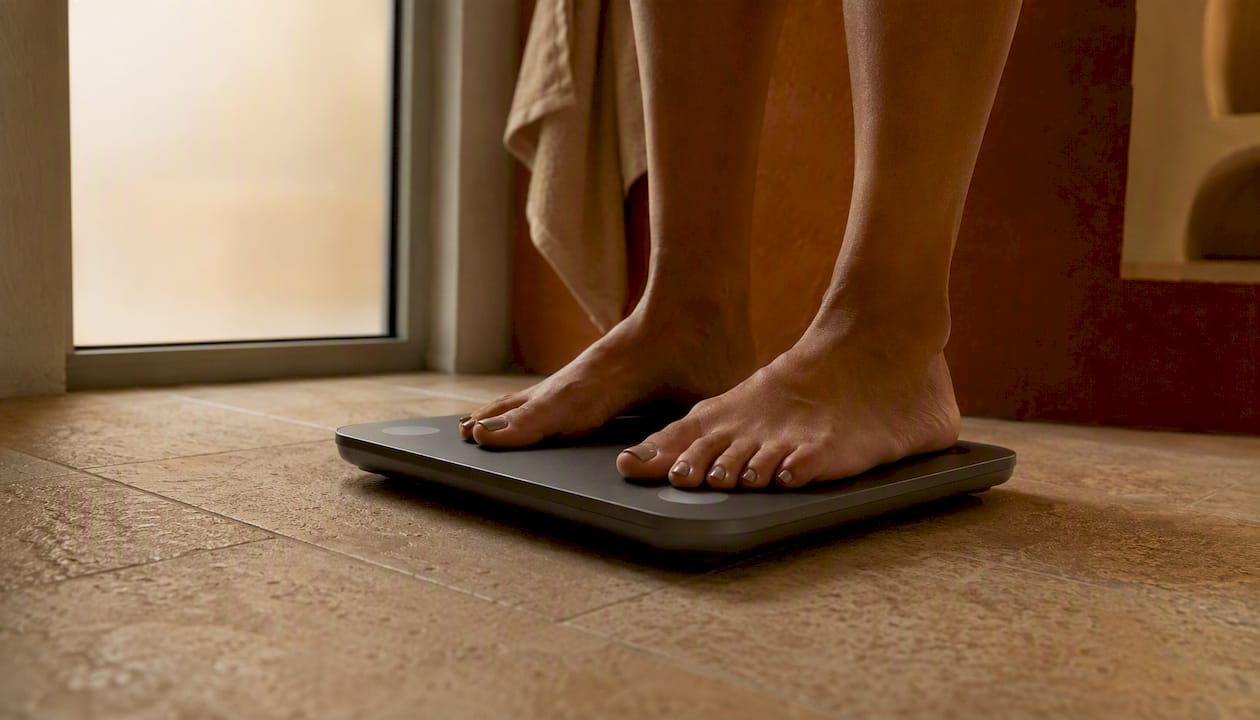
High-precision smart scale: This is the most underrated splurge in a home gym. A scale that measures only weight tells you almost nothing useful about training progress. A high-precision scale that tracks body fat percentage, muscle mass, and BMI gives you the data to know whether your training is actually working. Men's Health testing confirms that precise body-composition metrics improve workout and nutrition planning in ways that weight alone cannot. Pair smart scale data with your workout planning and you'll catch plateaus weeks before they become months of wasted effort.
Heart-rate monitor: A clinically validated chest strap (Polar H10 is the standard) or a quality optical wrist monitor gives you real-time intensity data. This matters for HIIT training, where staying in the right zone is the difference between an effective session and an overtraining spiral.
Massage gun: An industrial-grade percussion device (Theragun PRO or Hypervolt 2 Pro) meaningfully speeds recovery between sessions. The difference between a $60 knockoff and a $300 professional model is motor power and stall force — the cheap ones stall under pressure, which is exactly when you need them most.
Quality mat: A 3/8-inch or thicker rubber mat protects your floor, reduces noise, and prevents equipment from shifting. Horse stall mats (4x6 feet, 3/4-inch thick) from a farm supply store cost $40–$50 each and outperform most "gym mats" sold at three times the price.
What to skip: Vibration plates, ab rollers with digital displays, smart jump ropes, and most wearable resistance products are low-value splurges. The technology adds cost without adding meaningful training benefit.
Items that usually aren't worth the premium price
A personal trainer writing for The Guardian makes the point plainly: compact, budget-friendly equipment plus consistency can produce excellent results. You don't need premium versions of everything.
Skip the splurge on:
- Single-function cardio machines (ab machines, inner/outer thigh machines, seated calf raise machines): each does one thing a dumbbell or barbell can do better
- Cheap resistance bands sold in "premium" sets: a $15 set from a reputable brand performs identically to a $60 "premium" set
- Thin foam rollers with vibration motors: the vibration adds $80–$150 to the price with marginal recovery benefit over a standard $25 foam roller
- Smart mirrors with limited content libraries: if the platform has fewer than a few hundred classes, the subscription value collapses quickly
- Inflatable balance trainers and wobble boards marketed for "core activation": the research on unstable surface training for strength gains is weak; a quality mat and intentional bracing do the same job
Red flags for overpriced accessories:
- More than 50% plastic construction on a "heavy-duty" product
- Warranty under 90 days
- Marketing copy that leads with "as seen on TV" or celebrity endorsement over specs
- No listed load rating or steel gauge on a rack or cable machine
Better alternatives: A $30 resistance band set, a $40 jump rope, and a $50 foam roller cover most accessory needs. Redirect that $200–$400 toward a better barbell or a quality adjustable dumbbell set.
Price bands and how to sequence your splurges
The right purchase order depends on your primary goal. Here's a practical sequence for the three most common home-gym builds:
Strength-first build:
- Adjustable dumbbells (Bowflex SelectTech 552 or Nuobell)
- Adjustable bench
- Power rack + barbell + plates
- Smart scale for tracking
- Cardio machine (if desired)
Cardio-first build:
- One quality cardio machine (treadmill, rower, or bike)
- Adjustable dumbbells
- Smart scale for tracking
- Rack and barbell (if strength training becomes a priority)
Space-limited build:
- Adjustable dumbbells
- Folding rack (PRx Profile PRO) or smart all-in-one (Tonal 2)
- Compact rower or folding bike
- Smart scale for tracking
Price band reference
Buying used vs. new: Barbells, plates, and racks hold up well used. Electronics (smart systems, treadmills with touchscreens) carry more risk used, especially if the warranty is non-transferable. Check that a used rack hasn't been welded or modified, and always test a used barbell for straightness by rolling it on a flat surface.
Strength equipment from specialty brands like Rogue rarely goes on sale; buy it when you're ready, not when it's discounted.
What the research says about spending on home gym gear
The evidence behind home-gym spending decisions is more consistent than most equipment marketing suggests. A few principles hold up across sources.
Adherence beats equipment quality. Exercise physiology research indexed on PubMed establishes that progressive overload and training adherence drive strength gains, not equipment brand. Quality equipment supports safe progressive overload; it doesn't replace the training principle itself. Spend on gear that makes progressive overload easier to execute safely, not on gear that promises to do the work for you.
Versatility compounds over time. The Cleveland Clinic's exercise physiologist guidance and GQ's equipment reviews converge on the same point: versatile gear that grows with you delivers better long-term value than specialized machines you'll outgrow or underuse. A power rack with a cable attachment covers more movement patterns than five single-function machines combined.
Construction specs predict lifespan. Review teams that test equipment at Garage Gym Reviews use steel gauge, weld quality, and tested load capacity as their primary durability indicators for racks and cable machines. These aren't marketing specs; they're engineering specs that predict how long a piece of equipment will last under real training loads.
Convenience drives consistency. CDC public health data links accessibility and convenience to higher physical activity adherence. A home gym removes the commute barrier entirely. That's the strongest argument for spending on a quality home setup versus a gym membership, and it's why the accountability and consistency research around home training is so compelling.
- Prioritize equipment that removes your specific barrier (time, access, coaching)
- Buy versatile pieces before specialized ones
- Use construction specs (steel gauge, load rating, warranty) as your durability filter
- Track results with objective metrics so you know when a purchase is paying off
The case for buying less and tracking more
The conventional wisdom in home-gym building is to keep adding equipment. Buy the rack, then the barbell, then the cable machine, then the cardio piece, then the smart system. The list never ends, and most people end up with a garage full of gear they use unevenly.
The smarter approach is to buy fewer, better pieces and then track your results obsessively. Not because tracking is inherently motivating, but because objective data tells you when a piece of equipment is actually working and when you need to change something. A lifter who tracks body composition monthly will know within 90 days whether their current setup is producing results. One who doesn't track might spend two years on a program that isn't working and blame the equipment.
The Tonal 2 and Tempo Studio are genuinely impressive machines. But for most home gym owners, a Rogue Ohio Bar, a quality rack, and a high-precision smart scale will produce better long-term results at a fraction of the total cost. The bar and rack build strength. The scale tells you whether it's working.
Start with the equipment that covers the most movement patterns. Add tracking tools early, not late. Then add specialized equipment only when your training data shows you've outgrown what you have.
Uvirello's Smart Scale: the tracking tool your gym splurges deserve
You can spend $3,000 on a rack and barbell and still have no idea whether your training is producing results without objective body-composition data. That's where the Uvirello Smart Electronic Weight Scale fills a gap that no amount of strength equipment can.
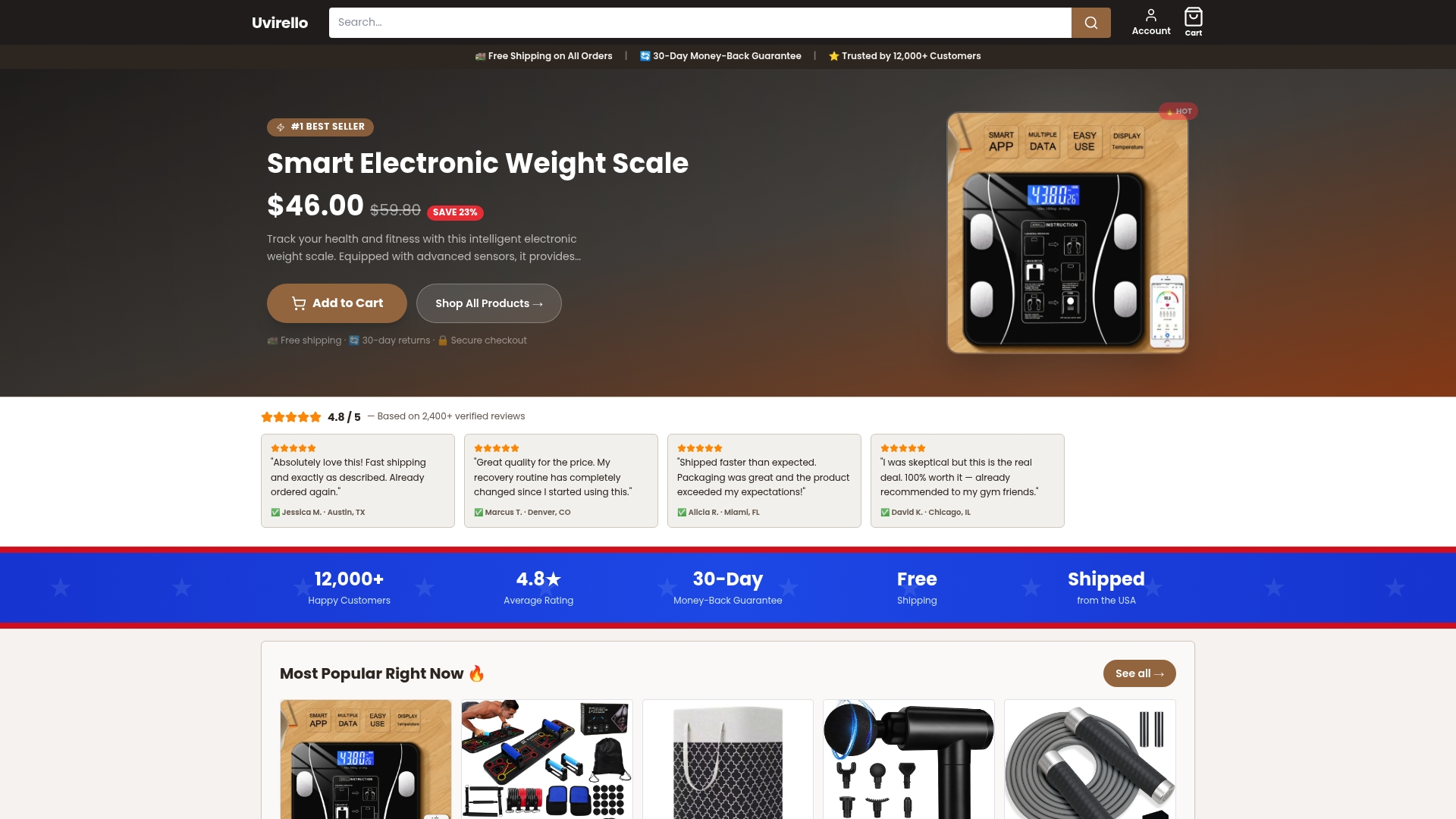
The Uvirello scale uses high-precision sensors to measure body fat percentage, BMI, and additional body-composition metrics alongside weight. That data matters after a strength or cardio splurge because it tells you whether your investment is translating into actual physical change. Over 12,000 customers have rated it 4.8 out of 5, and the sleek, minimalist design fits the aesthetic of a well-built home gym without looking like a medical device. For anyone who has just made a serious equipment investment, pairing it with a performance monitoring tool that delivers real body-composition feedback closes the loop between training and results. Check out the Uvirello Smart Scale at Uvirello and start measuring what your equipment is actually doing for you.
Sources
- Best Home Gym Equipment You’ll Actually Use — Cleveland Clinic Health Essentials
- Best home gym equipment — GQ
- The 35 Best Home Gym Equipment Gear, Tested By Us — Men's Health
- Best Smart Home Gyms for 2026 — CNET
- Best home gyms — Garage Gym Reviews