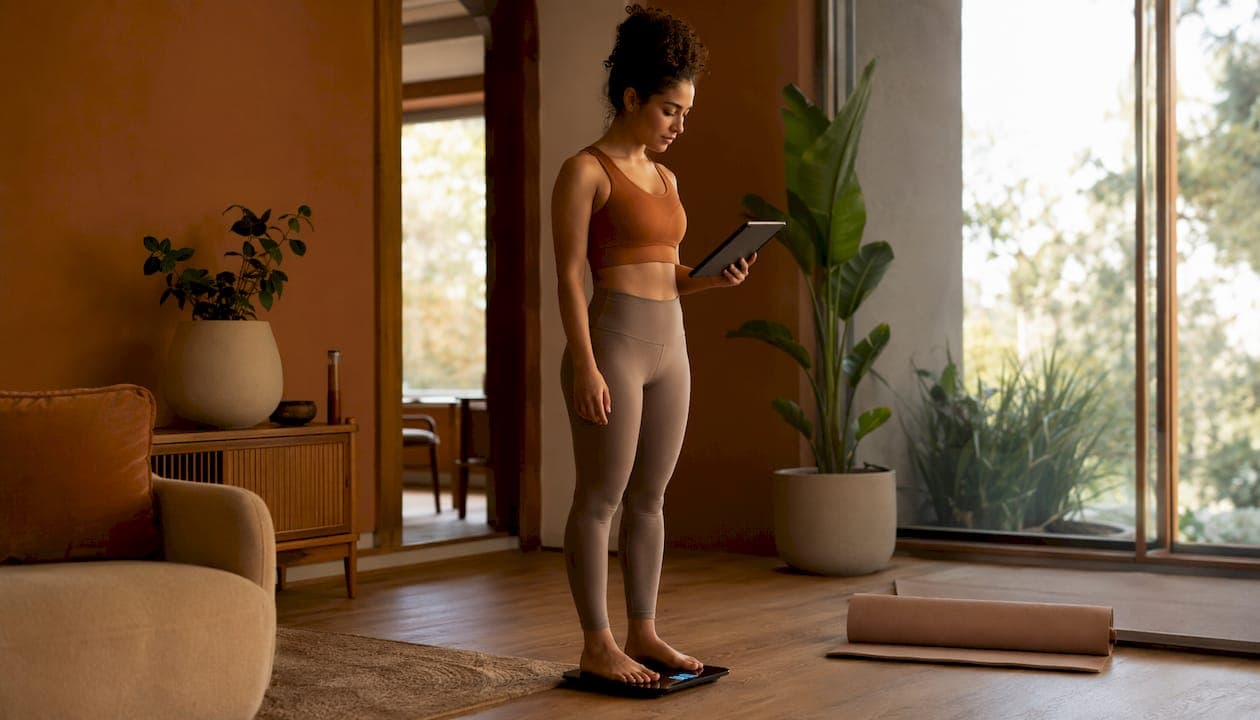
Accountability turns fitness intentions into repeated action. Without it, willpower alone fails most people within weeks. The Journal of Business Ethics frames accountability as an internalized virtue, not just an external rule, and fitness consultant Pete McCall describes personal trainers as accountability systems that hold clients to commitments when motivation fades. A smart electronic weight scale used on a consistent cadence functions exactly as that kind of objective witness: it converts private choices into visible data. Uvirello's Smart Electronic Weight Scale has earned 4.8/5 across 12,000+ reviews, which reflects how much precision and reliability matter when measurement is the backbone of your system.
- Accountability fills the gap between knowing what to do and actually doing it.
- Daily or weekly smart-scale check-ins create the measurable record that makes accountability concrete.
Table of Contents
- How accountability improves fitness consistency
- What types of accountability actually fit your situation
- How to use a smart scale as your accountability backbone
- How to design an accountability system you will actually keep
- Reading your body-composition data without overreacting
- Practical routines and templates you can use this week
- When to bring in a trainer, clinician, or specialist
- Key Takeaways
- The accountability gap most people never close
- Uvirello's Smart Electronic Weight Scale gives your accountability system a precise foundation
- Useful sources
How accountability improves fitness consistency
Willpower is a finite resource. It fluctuates with sleep, stress, and schedule, which is why relying on it alone produces inconsistent results. Accountability works differently: it externalizes the decision and adds a predictable consequence or witness that keeps behavior on track even when motivation is low.
Three mechanisms explain why it works:
- Commitment devices bind future behavior by raising the cost of skipping. A logged goal, a scheduled weigh-in, or a financial stake all function this way.
- Monitoring as a nudge means that when someone or something is watching, follow-through increases. Tracked commitments maintain behavior longer than short-term incentives alone.
- Social or public expectations add reputational weight. Knowing a partner or coach will see your data raises the perceived cost of a missed session.
Common accountability consequences that reinforce follow-through: social notice from a partner, streak loss in an app, a financial stake in a commitment contract, or a scheduled coach check-in.
What types of accountability actually fit your situation
No single model works for everyone. The right choice depends on cost, friction, and how much external pressure you actually need.
- Self-tracking suits privacy-focused users who want precision without social exposure. A smart scale with automatic syncing handles this well.
- Peer or social accountability adds motivational weight through a partner or group. The key is choosing someone who will challenge you, not just cheer. Precision Nutrition's guidance on multi-tiered accountability specifically warns against "yes-man" partners who never push back.
- Coach or trainer accountability provides professional systems: goal-setting, objective metric tracking, and structured follow-up. ACE notes that personal trainers function as accountability systems that improve attendance and adherence.
- Public or financial commitments work for people who need high stakes. A public pledge or a commitment contract raises the cost of quitting.
- App-based accountability automates reminders and streak tracking with minimal friction.
Pro Tip: Pick a partner who will ask hard questions about your data, not just offer encouragement. A partner who never challenges a plateau is not an accountability partner.

How to use a smart scale as your accountability backbone
A high-precision smart scale used with clear rules is the most practical objective witness available for home-based accountability. Here is a step-by-step workflow:
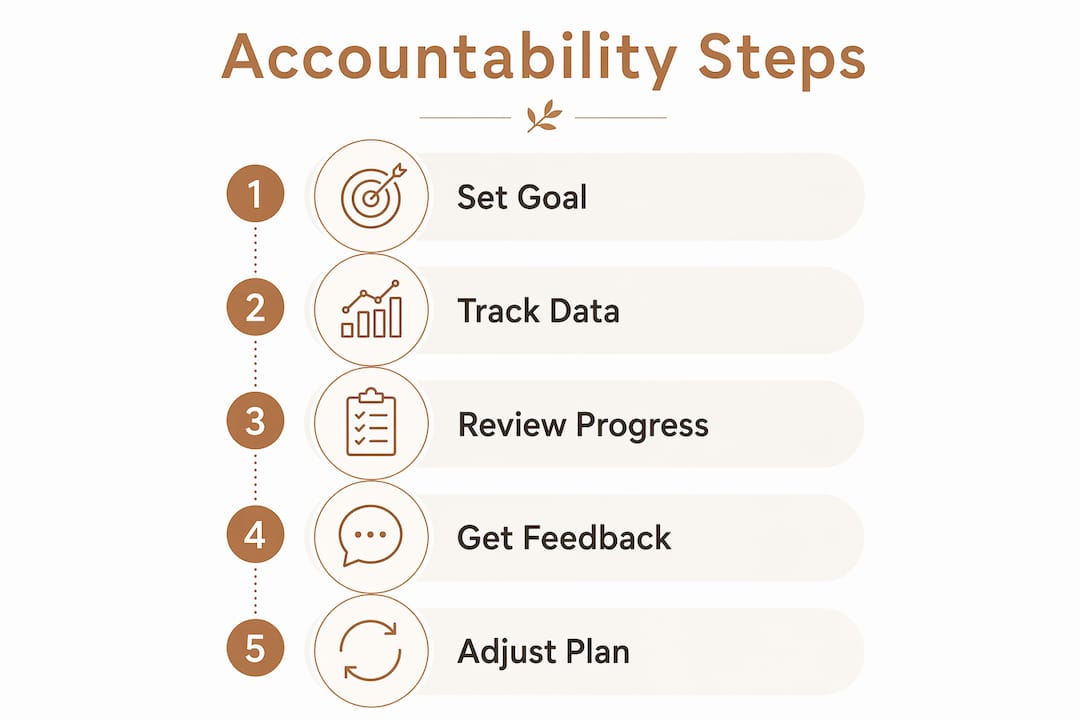
- Set a specific, measurable goal. "Reduce body fat by 2% over 8 weeks" is trackable. "Get fit" is not.
- Choose your measurement cadence. Daily readings smooth out noise when you average them; weekly readings are simpler and reduce obsessive checking.
- Standardize conditions. Weigh at the same time each day, after waking and before eating, with consistent hydration. This keeps the data honest.
- Enable automatic syncing. Most smart scales push data to a companion app. Set it up once and let it run.
- Decide your sharing level. Private (you only), partner-shared, coach-visible, or public. Match this to the accountability model you chose.
- Set a reaction rule. Agree in advance: you will only adjust diet or training after a consistent trend across 2–4 weeks, not after a single reading.
| Cadence | What it reveals | Common pitfall |
|---|---|---|
| Daily | Short-term fluctuations; useful for averaging | Overreacting to single-day swings |
| Weekly | Week-over-week trend; cleaner signal | Missing daily patterns that explain stalls |
| Monthly | Long-arc progress; good for goal resets | Too infrequent to catch early drift |
Prioritize lean mass trends and body fat percentage over raw weight. A single number on the scale tells you almost nothing. A trend across several weeks tells you whether your system is working.
Pro Tip: Use a rolling 2–4 week average rather than comparing today's reading to last week's. This filters out hydration and hormonal variance and shows the actual direction of your progress.
How to design an accountability system you will actually keep
Sustainable accountability is chosen, layered, and forgiving. Systems imposed from outside tend to produce short-term compliance, not lasting change. HBR's research confirms that effective accountability is chosen, not mandated.
- Start internal. Commit to a measurement routine and a written goal before adding any external layer.
- Add one external layer. A single partner, app, or coach check-in. Not all three at once.
- Build in a repair ritual. Decide in advance what a "reset" looks like after a missed week: one short session, a new weigh-in, a brief message to your partner. Slips become recoverable events, not reasons to quit.
- Add public or professional layers only if needed. If internal plus one external layer is working, you do not need more pressure.
The Journal of Business Ethics argues that the most durable accountability comes from cultivating it as an internal virtue, not just responding to external pressure. External systems are scaffolding. The goal is to need less of it over time.
Pro Tip: Limit punitive consequences. A system built on fear of failure tends to collapse after the first real setback. Build repair rituals instead.
Reading your body-composition data without overreacting
Single readings are noisy. Hydration, meal timing, recent exercise, and hormonal cycles can shift your scale number by several pounds in a day with no change in actual body composition. The signal lives in the trend, not the data point.
- Factors causing short-term variance: hydration status, sodium intake, time of last meal, exercise-induced inflammation, hormonal cycle phase.
- Metrics that show real progress: lean mass trends and body fat percentage tracked across 2–4 weeks.
- When to act on a trend: consistent directional movement across at least two to four weeks, not a single reading.
Visualization helps. A trendline or rolling average in your scale's companion app removes the noise that triggers reactionary changes. For a deeper look at which body-composition metrics actually matter, the distinction between weight and lean mass is worth understanding before you set your first goal.
One privacy note: review your scale app's sharing settings before connecting a partner or coach. Control who sees your data and at what level of detail.
Practical routines and templates you can use this week
Short, repeatable routines outperform complex plans. Pick one and run it for four weeks before adding anything.
Weekly personal review (Sunday evening, 10 minutes)
- Record this week's average weight and body fat reading from your scale app.
- Compare to last week's average. Note direction, not magnitude.
- Write two corrective actions for next week (e.g., add one workout, reduce late-night snacking).
- Send a one-line update to your accountability partner.
Partner check-in script: "This week: [metric]. Trend: [up/down/flat]. Plan: [one action]. Need from you: [feedback/encouragement/challenge]."
Coach update template: "Week [X] data: weight [X], body fat [X%], lean mass [X]. Trend vs. last month: [direction]. Obstacle this week: [brief note]. Question: [specific ask]."
Monthly goal reset: Review your 4-week trend, compare to your original goal, and adjust the target or the method, not both at once. A weekly tracking cadence that feeds into a monthly review gives you both short-term feedback and long-arc perspective.
- Sync your scale data to a shared spreadsheet or coach portal once per week.
- Keep messages short. A long update rarely gets a useful response.
When to bring in a trainer, clinician, or specialist
Add external professional help when self or peer accountability is not enough.
- Plateau longer than 8–12 weeks despite consistent effort: a trainer can redesign the program.
- Unexplained body-composition swings not tied to diet or training changes: a clinician can rule out metabolic or hormonal causes.
- Disordered eating signals or compulsive scale-checking: a mental-health specialist is the right call, not a stricter diet.
- Exercise pain or injury: stop and see a clinician before continuing.
When hiring a trainer, ask directly how they design accountability: how often they check in, whether they track objective metrics, and whether they can integrate your smart-scale data. A trainer who relies only on subjective feedback misses half the picture. Wellness coaching that combines behavioral change with structured check-ins is one model worth exploring if you want professional support without a full personal training commitment.
Pro Tip: Ask any prospective trainer: "How will you know if I'm making progress between sessions?" Their answer tells you whether they run a real accountability system or just show up for the hour.
Key Takeaways
Accountability converts fitness intentions into consistent action by adding an objective witness, a commitment structure, and a repair plan that willpower alone cannot provide.
| Point | Details |
|---|---|
| Accountability beats willpower | External commitment devices and monitoring maintain behavior when motivation fluctuates. |
| Smart scale as objective witness | Consistent cadence and sharing rules turn body-composition data into a reliable accountability anchor. |
| Trend over single readings | Act on 2–4 week trends in body fat and lean mass, not individual daily readings. |
| Opt-in design lasts longer | Chosen, layered systems with repair rituals outlast mandated or punitive ones. |
| Uvirello Smart Electronic Weight Scale | 4.8/5 across 12,000+ reviews; high-precision sensors and body-composition metrics make it a practical accountability backbone. |
The accountability gap most people never close
Most fitness advice focuses on what to do. The harder problem is the gap between knowing and doing, and that gap is where accountability lives. What strikes me about the research here is how consistently it points away from motivation as the variable that matters. Pete McCall's framing of trainers as accountability systems is useful precisely because it depersonalizes the problem: you do not need more willpower, you need a better system.
The virtue-of-accountability idea from the Journal of Business Ethics is the part most fitness content ignores. External systems, including smart scales, partners, and coaches, are scaffolding. They work best when they are building something internal. A person who needs a partner to weigh in every week for three years has not built accountability—they have rented it. The goal is to internalize the habit until the external layer becomes optional.
The smart scale matters here because it is honest in a way that partners and coaches sometimes are not. It does not soften bad weeks. It does not offer encouragement when the trend is flat. That objectivity is uncomfortable, and it is also exactly what makes it useful. The readers who get the most from precise body-composition tracking are the ones who stop treating the number as a verdict and start treating it as a data point in a longer story.
Uvirello's Smart Electronic Weight Scale gives your accountability system a precise foundation
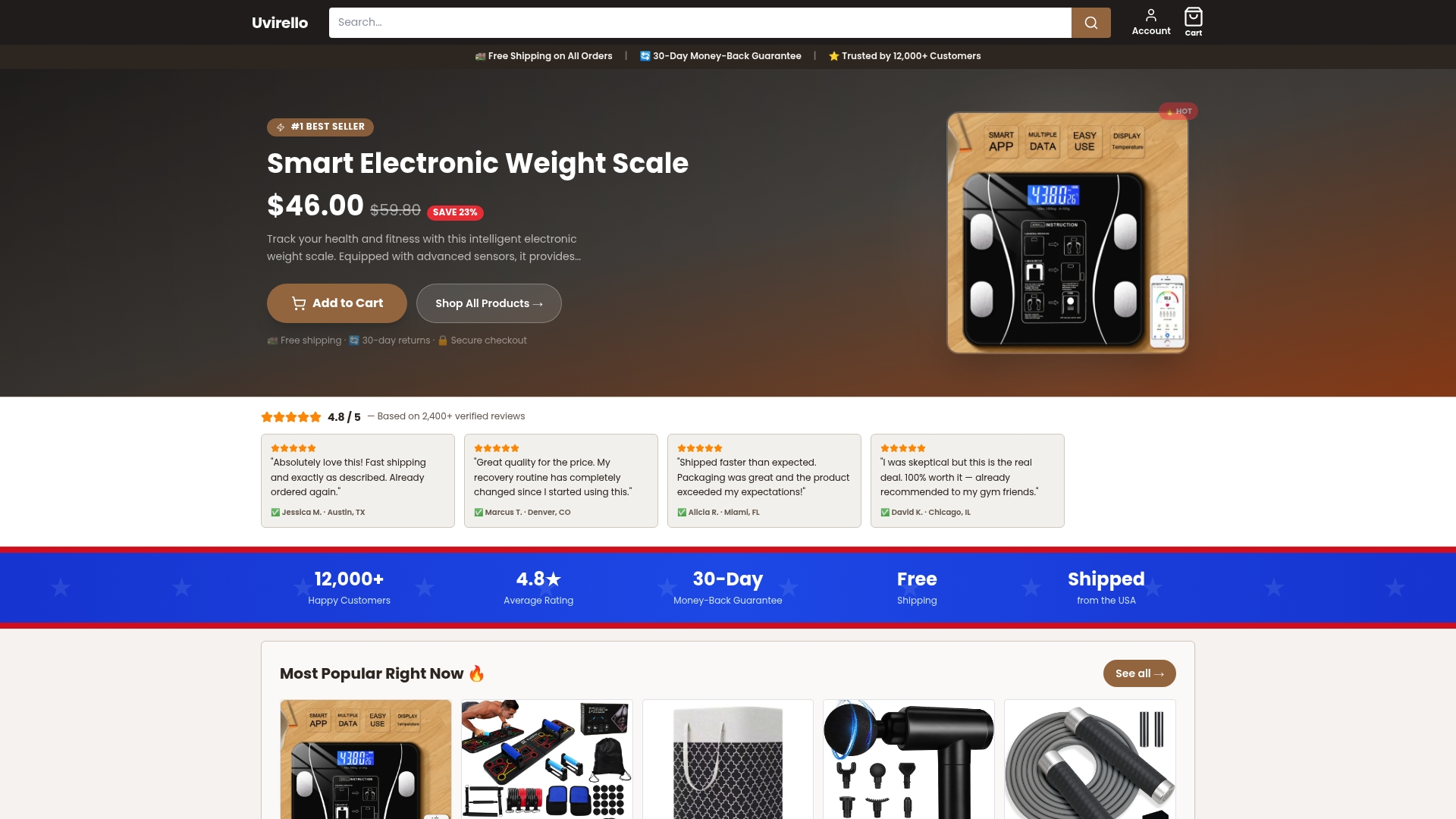
Body-composition data is only as useful as the device measuring it. Uvirello's Smart Electronic Weight Scale delivers the high-precision readings that accountability systems actually need: body fat percentage, lean mass, BMI, and weight, all tracked automatically and available to share with a partner or coach.
Key features that support accountability directly:
- High-precision sensors reduce measurement noise so trend data is reliable.
- Body-composition metrics (body fat %, lean mass, BMI) give you more signal than weight alone.
- Automatic syncing to a companion app means your data is always current without manual logging.
- Flexible sharing lets you keep data private, share with a partner, or send to a coach.
Over many customers rate it highly. If you are building an accountability system and need a reliable objective witness at the center of it, check out the Uvirello scale and see how it fits your routine.
Useful sources
- Accountability: The Not-so-secret Key to Success — ACE: trainer-as-accountability-system framing and adherence evidence.
- Accountability Must Be Chosen, Not Mandated — HBR: behavioral research on opt-in vs. mandated accountability.
- Examining the importance of accountability as a virtue — Journal of Business Ethics: theoretical basis for internal accountability as a durable virtue.
- Workout Accountability: Why Willpower Isn't the Fix — OgamicX: commitment devices, monitoring, and the objective-witness concept.
- Why Accountability Is The Key To Fitness And Weight Loss Motivation — Burn The Fat Blog: layered accountability levels and practical weigh-in practices.
- Why accountability in fitness is important — Precision Nutrition: multi-tiered system design and partner selection guidance.
- Uvirello — Smart Electronic Weight Scale: product proof points, sensor precision, and user satisfaction data.