
Smart scales are defined as connected body composition devices that automatically log weight, body fat percentage, muscle mass, and BMI directly to your fitness apps the moment you step on them. That single action replaces several minutes of manual entry every day. For fitness enthusiasts and busy individuals, understanding how smart scales save workout time is the difference between spending your morning logging numbers and actually training. The technology is straightforward, the time savings are real, and the data quality is good enough to drive better decisions about training and nutrition.
How do smart scales integrate with fitness apps to save workout time?
The core time-saving mechanism is automatic syncing. When you step on a smart scale, it sends your metrics to apps like Apple Health, MyFitnessPal, and Garmin Connect via Wi-Fi or Bluetooth without any manual input from you. That automated sync removes manual logs entirely, giving you instant visibility into body composition trends without touching a spreadsheet or app form.
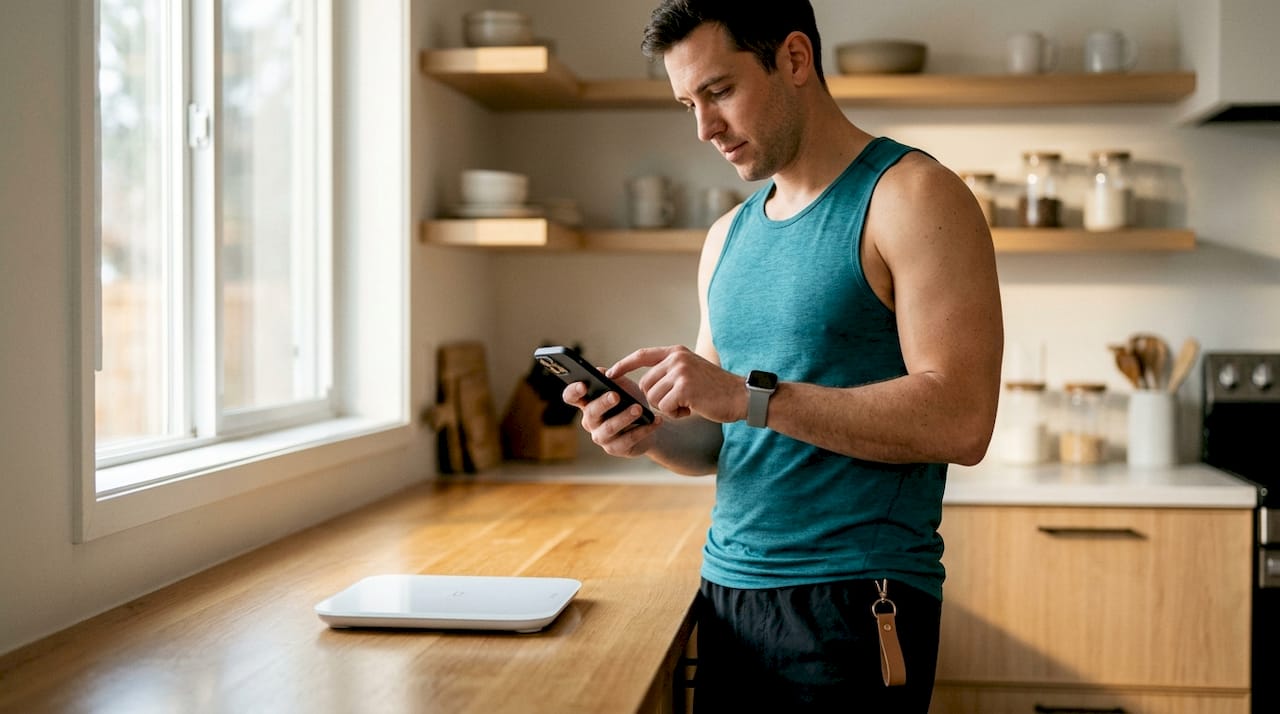
Integrating smart scales with platforms like Garmin Connect and Apple Health consolidates fitness data into a single dashboard. That centralization means you review one screen during your morning routine instead of cross-referencing three separate apps. The administrative burden drops to zero.
Here is what that integration workflow looks like in practice:
- Step on the scale. Your weight, body fat percentage, and muscle mass are captured in under 10 seconds.
- Data syncs automatically. Metrics appear in your connected app within seconds, no manual entry required.
- Dashboard updates. Your weekly trend line, calorie targets, and training load recommendations refresh automatically.
- Review takes 30 seconds. You check one number or one trend line, then move on to your workout.
- No reconciliation needed. Because data flows from one source, there are no discrepancies between apps.
This workflow is why reducing manual logging frees up workout time and sharpens training focus. The time you used to spend on data entry goes directly back into your session.
What body metrics do smart scales track that actually matter?
Smart scales track a range of body composition metrics, but not all of them carry equal weight for workout decisions. The most useful markers for fitness progress are weight trend, body fat percentage, and muscle mass. These three give you a clear picture of whether your training is working without burying you in numbers.
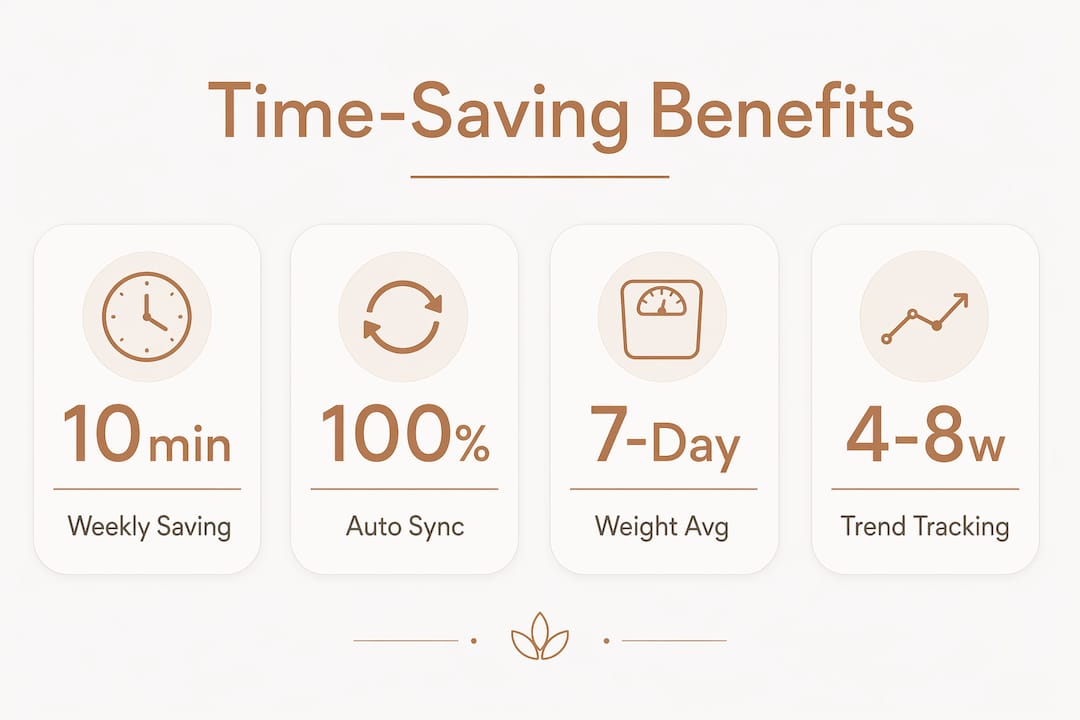
Weight from a smart scale is a high-confidence metric. Body fat and muscle mass percentages are projections based on bioelectrical impedance analysis (BIA), a technology that sends a small electrical current through your body to estimate tissue composition. BIA is less precise than a DEXA scan, but it produces consistent relative data. That consistency is what makes it useful for tracking direction over time.
The practical advice from fitness experts is clear: focus on 2–3 key body markers to avoid data fatigue. Tracking every metric a smart scale offers, from bone density estimates to visceral fat scores, creates information overload without improving your decisions. Pick the numbers that connect directly to your goal and ignore the rest.
Here are the three metrics worth tracking for most fitness goals:
- Weight trend (7-day average). A rolling average smooths out daily fluctuations caused by water retention and food volume. It shows real direction.
- Body fat percentage trend. Even if the absolute number is slightly off, the direction over 4–8 weeks tells you whether your body composition is shifting.
- Muscle mass estimate. Useful for people in strength training phases to confirm that fat loss is not coming at the expense of muscle.
Pro Tip: Set your app to display a 7-day rolling average for weight instead of the daily reading. This single change eliminates most of the noise that causes unnecessary anxiety and wasted mental energy.
How does consistent use of a smart scale make tracking more reliable?
Consistency matters more than precision when it comes to smart scale data. BIA technology is sensitive to hydration levels, recent exercise, and food intake. A reading taken after a salty dinner will differ from one taken fasted in the morning, even if your actual body composition has not changed. The solution is a standardized measurement protocol, not a more expensive device.
The 5-Rule Calibration Protocol is the standard approach for getting stable, comparable weekly measurements. Following it neutralizes the inherent variability of BIA technology and makes your trend data meaningful.
- Measure at the same time every day. Morning, after using the bathroom and before eating or drinking, is the gold standard.
- Stay consistently hydrated. Dehydration artificially inflates body fat readings. Drink the same amount of water the evening before each measurement.
- Avoid measuring after intense exercise. Hard training sessions temporarily shift fluid distribution and skew BIA results.
- Use the same surface. Hard floors give more accurate readings than carpet. Pick one spot and use it every time.
- Wear the same amount of clothing. Ideally none, or the same light clothing each time, to keep weight readings comparable.
Daily body fat readings vary due to hydration and exercise, but 4–8 week trend lines are meaningful and motivating. The goal is not to judge each individual reading. The goal is to collect enough consistent data points that the trend becomes undeniable.
Pro Tip: Treat your smart scale like a weekly check-in, not a daily verdict. Step on it every morning for data collection, but only evaluate your progress once a week using the trend line. This habit alone reduces anxiety and keeps motivation high.
In what ways do smart scales speed up workout decisions?
The biggest practical benefit of a smart scale is not the data itself. It is the speed at which that data reaches your decision-making. When your body composition trends sync automatically with your workout log, you can spot problems and make adjustments in minutes rather than days.
"Tracking fitness data automatically enables quicker, more confident decisions on training and nutrition. Integration into health ecosystems creates a workflow that saves time and improves results." Pairing scale data with workout logs gives a more accurate fitness picture than weight alone, and AI coaching tools that combine both data streams can spot training or nutrition drift early.
Automated data feeds directly into workout planning in several concrete ways:
- Calorie targets update automatically. When your weight trend shifts, apps like MyFitnessPal recalculate your daily targets without you doing the math.
- Recovery decisions get easier. A sudden weight spike after a hard training block often signals water retention from muscle repair, not fat gain. Knowing this prevents unnecessary diet cuts.
- Plateau detection is faster. A flat body fat trend over three weeks tells you to change something. You see it in the app before you feel it in the gym.
- Progress reports write themselves. Instead of manually calculating how much body fat you have lost over 12 weeks, your app generates the chart automatically.
Reducing time spent on manual logging and administrative tasks frees workout time and improves training focus. That is the core promise of efficient workout tracking, and smart scales deliver it consistently when used correctly.
One underappreciated benefit is motivation. Seeing a clear downward trend in body fat percentage over six weeks is more motivating than a single good weigh-in. The automated health monitoring that smart scales provide turns abstract effort into visible progress, which keeps you consistent longer. You can also pair this with a fitness tracking workflow that connects your scale data to the rest of your health stack for even faster reviews.
Key Takeaways
Smart scales save workout time by automating body composition tracking, syncing data to fitness apps instantly, and delivering trend insights that replace manual logging and guesswork entirely.
| Point | Details |
|---|---|
| Automation removes admin work | Smart scales sync data to apps like Apple Health and MyFitnessPal automatically, saving 5–10 minutes weekly. |
| Track 2–3 metrics, not all of them | Focusing on weight trend, body fat, and muscle mass prevents data fatigue and keeps decisions fast. |
| Consistency beats precision | Following the 5-Rule Calibration Protocol produces reliable trend data regardless of BIA limitations. |
| Trends matter more than daily readings | Evaluating 4–8 week trend lines reduces anxiety and gives a true picture of fitness progress. |
| Integrated data speeds up decisions | Combining scale outputs with workout logs enables faster, more confident adjustments to training and nutrition. |
Why I think most people use smart scales wrong
Most fitness enthusiasts buy a smart scale and immediately start judging every single reading. They step on it after a big dinner, see a number they do not like, and either panic or dismiss the whole device as inaccurate. Both reactions waste time and miss the point entirely.
A smart scale is a trend tool, not a lab instrument. I have seen people with years of training experience abandon perfectly good data because one week looked bad. The week looked bad because they traveled, ate differently, and slept poorly. The scale was doing its job. They were not reading it correctly.
The real time savings come from trusting the system. When you track body composition over weeks instead of obsessing over daily numbers, you spend less time second-guessing and more time training. The integration with apps like Garmin Connect and Apple Health is only valuable if you let the trend data guide your decisions rather than overriding it with gut feelings.
My honest advice: set up your scale, connect it to one primary app, choose two metrics to watch, and review your progress once a week. That is it. The simplicity is the point. The less time you spend analyzing data, the more time you have to act on it.
— Jacob
Uvirello makes efficient fitness tracking straightforward
For fitness enthusiasts who want body composition data without the administrative overhead, the Uvirello Smart Electronic Weight Scale delivers exactly that.
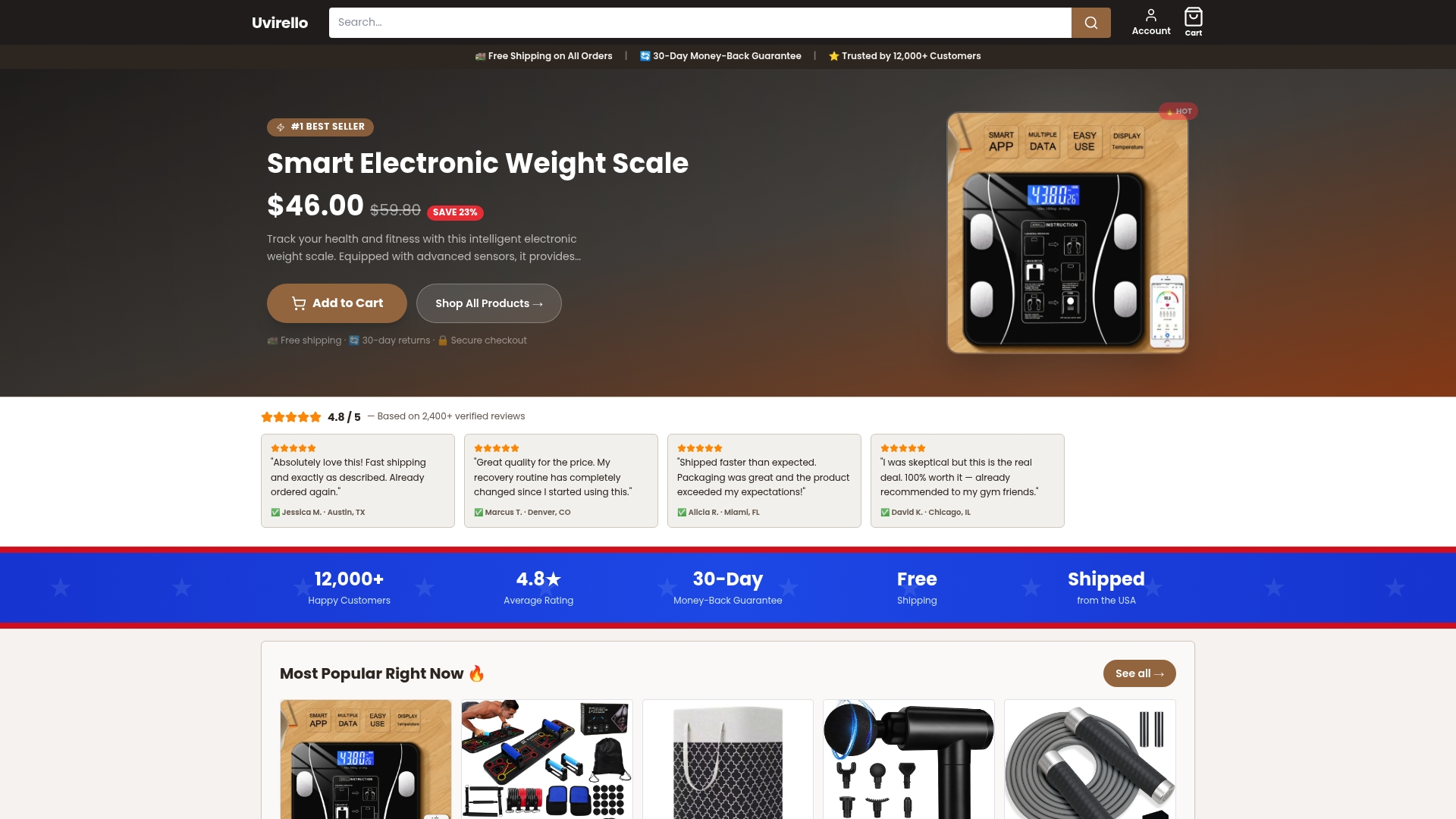
Uvirello tracks body fat percentage, BMI, muscle mass, and more using high-precision sensors, then syncs results directly to your health apps. Over 12,000 customers have rated it 4.8 out of 5, and the feedback consistently points to one thing: it makes fitness metrics beyond weight accessible without complexity. If you want a scale that works inside your existing fitness ecosystem and cuts the time you spend on tracking, the Uvirello Smart Scale is worth a close look.
FAQ
How much time do smart scales actually save per week?
Smart scales save 5–10 minutes weekly by eliminating manual data entry and automating body composition logging. That time compounds significantly over months of consistent use.
Are smart scale body fat readings accurate enough to use?
Smart scale body fat readings are projections based on BIA technology and are less precise than DEXA scans, but they produce consistent relative data that makes them reliable for tracking direction over time.
How often should I weigh myself with a smart scale?
Daily measurement at the same time each morning gives the most data for trend analysis, but you should evaluate progress using 4–8 week trends rather than reacting to individual daily readings.
Which fitness apps do smart scales sync with?
Most smart scales sync with Apple Health, MyFitnessPal, and Garmin Connect via Wi-Fi or Bluetooth, consolidating fitness data into a single dashboard for faster review.
What is the 5-Rule Calibration Protocol for smart scales?
The 5-Rule Calibration Protocol means measuring at the same time, with consistent hydration, avoiding post-exercise readings, using the same surface, and wearing the same clothing. Following it neutralizes BIA variability and produces reliable weekly comparisons.