
Fitness tracking accuracy is the degree to which wearable devices precisely measure health and activity metrics relevant to your personal fitness goals. When that accuracy slips, the data you rely on for calorie targets, workout intensity, and sleep quality becomes unreliable. The consequences range from stalled progress to misguided decisions about your health. Understanding why accuracy matters in fitness tracking is the first step toward using your device as a real tool rather than an expensive pedometer.
Why accuracy matters in fitness tracking
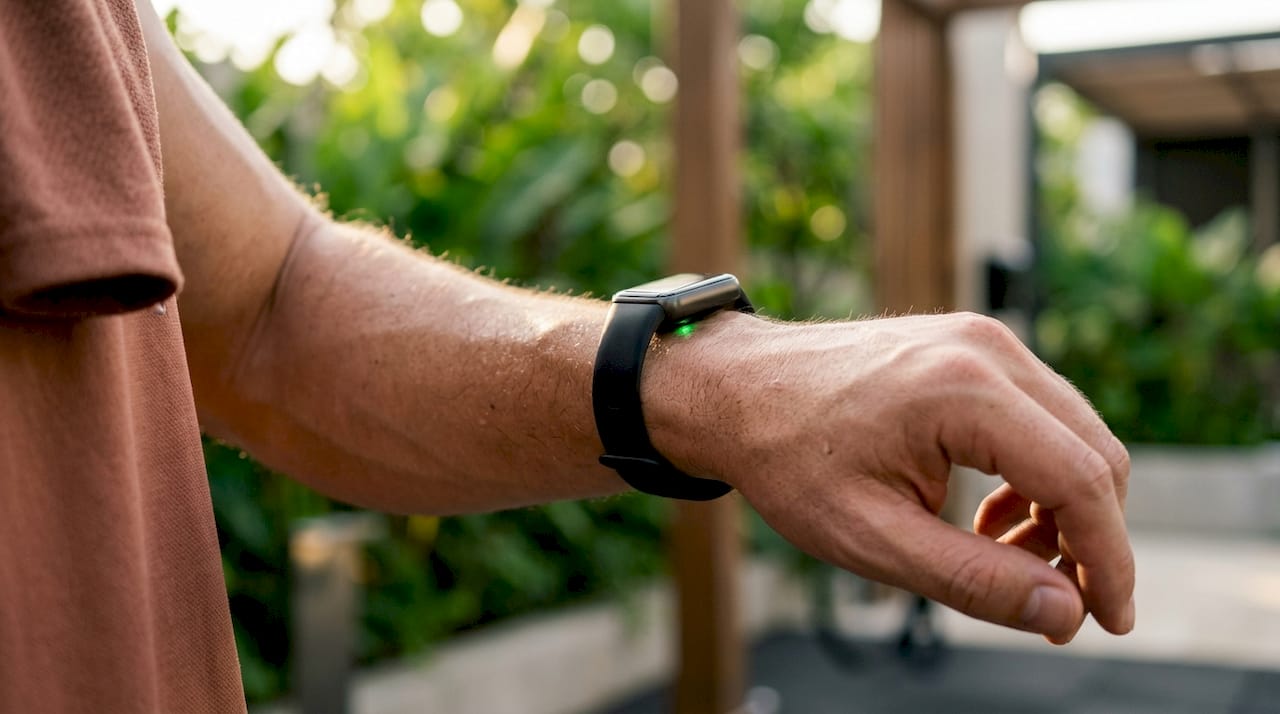
Fitness trackers measure steps, heart rate, calories burned, and sleep stages. Each metric carries its own margin of error, and those margins compound when you use multiple data points together to make decisions.
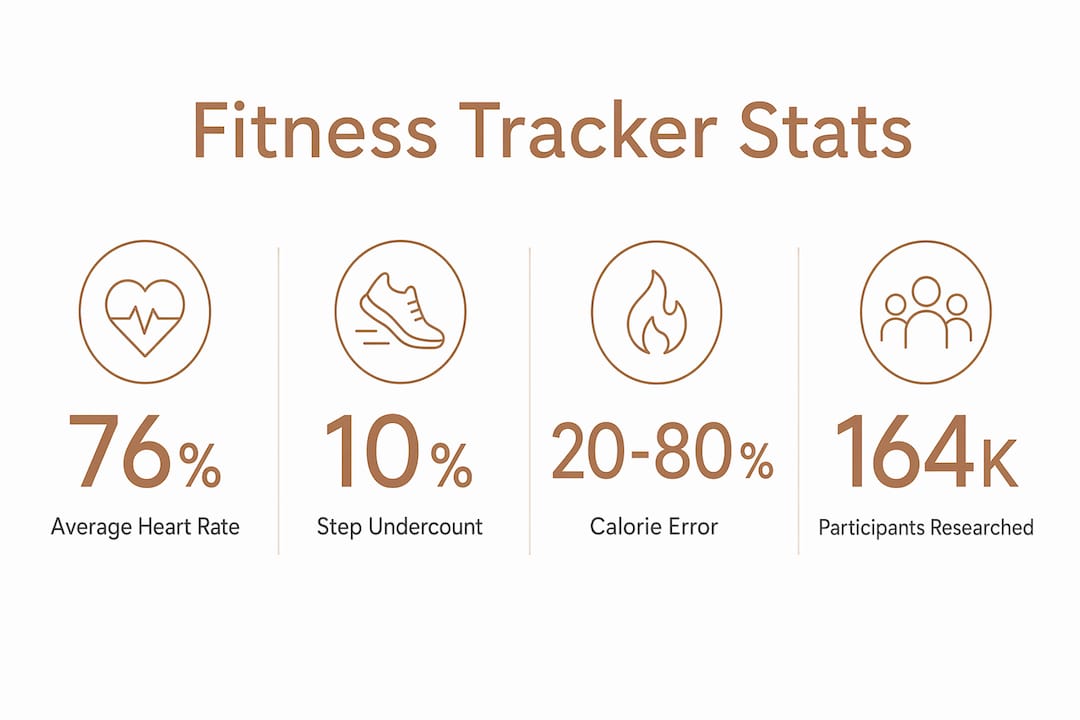
Heart rate accuracy averages about 76% across consumer devices under normal conditions. That means roughly one in four readings could be off, which matters when you are trying to stay in a specific training zone.
Calorie burn is even less reliable. Popular wearables can misestimate calories burned by 20% to 80% depending on exercise intensity. An 80% error on a 600-calorie run means your tracker might report anywhere from 120 to 1,080 calories. That range makes calorie-based goal setting nearly impossible without additional context.
Step counting is the most accurate metric, but it still has limits. Trackers typically undercount steps by about 10% during normal activity, and that error grows when arm movement is restricted, such as when pushing a stroller or carrying groceries. The wrist sensor cannot distinguish between walking and other repetitive arm motions.
How accuracy is assessed in research
Researchers compare wearable data against gold-standard laboratory equipment, such as metabolic carts for calorie measurement and electrocardiograms for heart rate. Real-world testing introduces variables that lab conditions cannot replicate, including sweat, skin tone variation, and inconsistent device placement. This gap between lab results and everyday use explains why the same device can perform well in a controlled study and poorly during your actual workout.
What causes inaccuracies in fitness trackers?
The sources of error in wearable fitness data fall into three main categories: sensor limitations, physical factors, and user behavior.
- Sensor limitations. Optical heart rate sensors use light to detect blood flow through the skin. Motion artifacts, sweat, and individual differences disrupt this signal, especially during high-intensity intervals. The sensor struggles to separate the pulse signal from background noise when you are sprinting or doing burpees.
- Physical and physiological factors. Skin tone affects how well the optical sensor reads blood flow. Darker skin tones absorb more light, which can reduce signal quality. Device fit matters too. A loose band creates gaps that let ambient light interfere with the sensor.
- Activity type. Calorie algorithms are built on average population data. They perform reasonably well during steady-state cardio like jogging, but they break down during resistance training, cycling, or activities with irregular movement patterns.
- Environmental conditions. Cold temperatures constrict blood vessels near the skin, which reduces sensor accuracy. High humidity increases sweat, which scatters the optical signal.
- User behavior. Wearing the device too low on the wrist, charging it during workouts, or failing to update personal profile data like weight and age all introduce additional error.
Sleep stage detection carries its own set of problems. Consumer trackers infer sleep stages from heart rate variability and movement. Clinical sleep studies use electroencephalography, which measures brain activity directly. The two methods are not equivalent, and consumer devices frequently misclassify light sleep as deep sleep or vice versa.
Pro Tip: Wear your tracker about two finger-widths above your wrist bone during workouts. This position reduces motion artifact and improves heart rate signal quality.
How does inaccurate data affect your fitness goals?
Inaccurate data creates a gap between what you think you are doing and what you are actually doing. That gap has real consequences for motivation and results.
Consider calorie tracking. If your device overestimates calories burned by 30%, you might eat back those calories and end up in a caloric surplus without realizing it. Weight loss stalls, frustration builds, and the tracker gets blamed rather than the data error. The same logic applies to training load. If your heart rate readings are consistently low, you may push harder than recovery allows, increasing injury risk.
"Fitness trackers are tools for behavior change, making invisible habits visible and empowering healthy choices." — Cleveland Clinic
Meta-analyses covering 164,000 participants show that tracker use links to an average of 40 additional minutes of walking per week and roughly 1 kg of weight loss. These are modest but real gains. They suggest that the behavioral effect of wearing a tracker matters more than the precision of any single reading.
The risk runs in the other direction too. Over-reliance on tracker data can trigger anxiety and obsessive behaviors, and randomized trials have documented elevated blood pressure and negative mental health effects among people who received deflated step counts. The data you see shapes how you feel about your effort, even when that data is wrong.
The right mindset treats your tracker as a compass, not a ruler. A compass tells you the direction you are heading. It does not measure every step of the path. Wearables act as trend indicators rather than precise measurement tools, and expecting medical-grade precision from a consumer device sets you up for frustration.
How to get the most from your fitness tracker
Getting value from a fitness tracker does not require perfect data. It requires smart interpretation and consistent habits.
- Wear it consistently. The best tracker is the one worn consistently, because behavioral change and trend observation drive results more than exact numbers. A device sitting on your nightstand produces no data at all.
- Focus on trends, not daily numbers. Your step count on any given Tuesday is less meaningful than your weekly average over three months. Long-term patterns are more reliable than daily fluctuations, and chasing daily precision leads to misinterpretation. Review your weekly tracking trends on a set schedule rather than checking your stats every hour.
- Combine data with how you feel. Combining objective tracker data with subjective feelings about performance and recovery produces better fitness outcomes than relying on device numbers alone. If your tracker says you slept well but you feel exhausted, trust your body.
- Choose the right device for your primary goal. A person focused on weight management needs accurate body composition data. A runner training for a half-marathon needs reliable heart rate zones. Match the device's strongest metrics to your specific need rather than buying the most feature-rich option.
- Update your profile data regularly. Calorie and metabolic algorithms use your age, weight, and height. Outdated profile data introduces a systematic error that compounds over time. Update your stats after any significant change in body weight.
- Use body composition metrics alongside activity data. Body fat percentage and BMI give context that step counts and calorie burns cannot. A scale that measures body composition, like the Uvirello Smart Electronic Weight Scale, adds a layer of data that wrist-based trackers cannot provide.
Pro Tip: Pair your wearable with a body composition scale to cross-reference activity data with actual body changes. Seeing fat loss alongside step increases confirms that your effort is translating into real results.
Understanding how precision sensors improve accuracy in modern devices also helps you evaluate which tools are worth the investment for your specific goals.
Key Takeaways
Accurate fitness tracking data matters because it shapes every decision you make about training, nutrition, and recovery. The most effective approach is to use tracker data as a directional guide, cross-reference it with body composition metrics, and focus on long-term trends rather than daily precision.
| Point | Details |
|---|---|
| Calorie errors are large | Wearables can misestimate calories burned by up to 80%, making calorie-only goal setting unreliable. |
| Heart rate accuracy is limited | Consumer devices average 76% heart rate accuracy, with performance dropping during intense exercise. |
| Trends beat daily numbers | Weekly and monthly patterns are more meaningful than any single day's reading. |
| Body composition adds context | Pairing a wrist tracker with a body composition scale gives a fuller picture of real health progress. |
| Consistent use drives results | Wearing your tracker daily and reviewing trends regularly produces behavioral change regardless of data precision. |
Accuracy matters, but consistency matters more
I have spent years watching people buy expensive fitness trackers, obsess over daily numbers for two weeks, and then abandon the device entirely when the data did not match their expectations. The frustration is understandable. You expect a device that costs over $200 to tell you the truth.
Here is what I have learned: the truth in fitness tracking is directional, not absolute. When my weekly step average climbs from 6,000 to 9,000 over two months, that trend is real regardless of whether the daily counts are off by 10%. When my resting heart rate drops five beats per minute over a training cycle, that improvement is real even if individual readings vary. The signal is in the pattern.
What I find more interesting is how the act of tracking changes behavior independent of accuracy. People who wear trackers move more. The meta-analysis data backs this up. The device creates awareness, and awareness drives action. That is the actual mechanism at work, not the calorie number on the screen.
My recommendation: stop auditing your tracker and start using it. Set a weekly step goal, track your body weight and composition consistently, and review your trends monthly. The data does not need to be perfect. It needs to be consistent and interpreted with common sense.
— Jacob
Uvirello and the case for better body data
Wrist-based trackers give you activity data. Body composition data tells you what that activity is actually doing to your body.
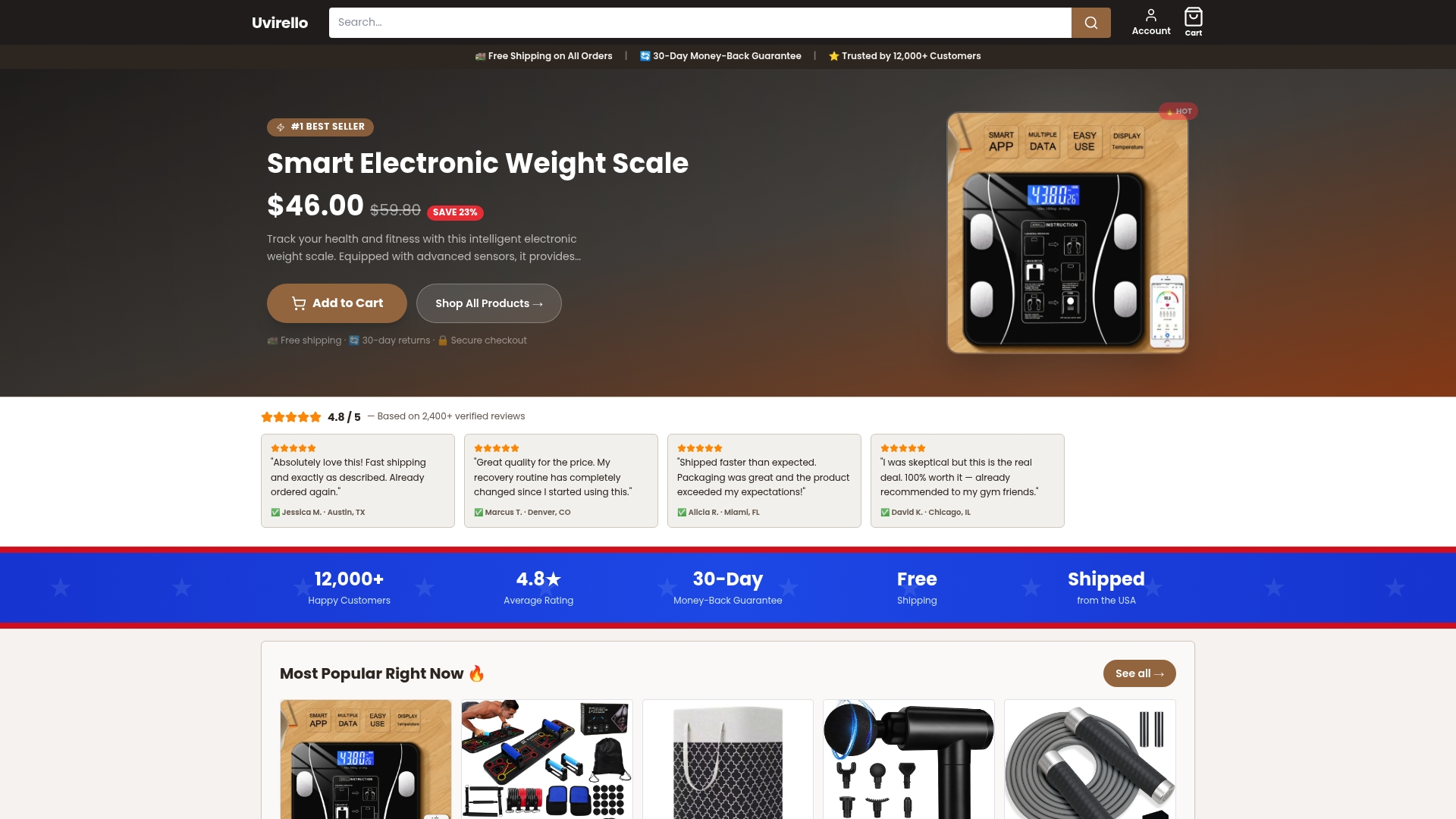
The Uvirello Smart Electronic Weight Scale measures body fat percentage and BMI alongside weight, giving you the metrics that activity trackers cannot capture. With high-precision sensors and a straightforward user experience, it has earned a 4.8 out of 5 average rating from over 12,000 customers. Fitness enthusiasts use it to confirm that their training and nutrition are producing real body composition changes, not just step count increases. If you want data that connects your daily effort to actual physical results, explore Uvirello's body composition tools and see what your tracker is missing.
FAQ
How accurate are fitness trackers for calorie counting?
Fitness trackers can misestimate calories burned by 20% to 80% depending on exercise intensity. Calorie data is best used as a rough reference point rather than a precise target.
Why does heart rate accuracy drop during intense exercise?
Motion artifacts, sweat, and increased movement disrupt the optical sensor signal during high-intensity activity. Consumer devices average about 76% heart rate accuracy under normal conditions, with lower performance during sprints or interval training.
Should I trust my tracker's sleep data?
Consumer trackers infer sleep stages from heart rate variability and movement rather than brain activity. The data gives a general picture of sleep patterns but does not match the accuracy of clinical sleep studies.
How do I improve the accuracy of my fitness tracker?
Wear the device two finger-widths above your wrist bone, keep the band snug during workouts, and update your profile data regularly. Pairing your tracker with a body composition scale also adds measurement context that wrist sensors cannot provide.
Is it worth using a fitness tracker if the data is not perfectly accurate?
Meta-analyses covering 164,000 participants link tracker use to meaningful increases in physical activity and modest weight loss. The behavioral effect of consistent tracking outweighs the impact of data imprecision for most people.