
Health trend analysis is the practice of tracking key body signals over time to spot patterns that predict how well you will feel, perform, and recover. Busy professionals rarely lack health data. They lack a system to turn that data into decisions. Over 50% of global consumers now rank heart health, sleep, cognitive function, and stress management as their top wellness priorities. That shift means the pressure to analyze health trends on a busy schedule is real, and the tools to do it efficiently have finally caught up.
What tools and data sources work best for health monitoring on the go?
The right toolkit for health trend analysis is small, not large. Professionals who track everything burn out on data. The goal is to capture the signals that matter most and ignore the rest.
The four data types worth tracking:
- Heart rate variability (HRV): A single morning reading tells you more about recovery and stress load than a full day of step counts.
- Sleep stages: Total sleep time matters less than the ratio of deep and REM sleep. Most wearables now report this automatically.
- Resting heart rate: A rising trend over five to seven days signals fatigue, illness, or overtraining before you consciously feel it.
- Body composition: Metrics like body fat percentage and BMI reveal long-term trends that daily weight fluctuations hide.
The problem with most tracking setups is fragmentation. Health data fragmentation leaves many professionals flying blind, getting either too little context or too much raw data without clear guidance. A wearable reports one thing, a lab panel reports another, and neither talks to the other.
The fix is an integration layer. Apps and platforms that pull wearable data, lab results, and lifestyle inputs into a single view give you the context to spot real trends. When choosing a tool, apply three criteria: it must sync automatically, it must surface summaries rather than raw numbers, and it must take under five minutes per day to review.

Pro Tip: Before adding any new tracking tool, ask whether it reduces or adds to your daily decision load. If you need to manually log data more than once per day, it will not last.
| Feature category | What to look for |
|---|---|
| Data sync | Automatic, background sync with no manual entry |
| Summary format | Weekly trend view, not hourly data dumps |
| Integration depth | Connects wearables, labs, and calendar context |
| Alert logic | Flags meaningful changes, not every minor fluctuation |
For a broader look at how modern platforms aggregate these signals, the wellness tracking tools guide covers the current category landscape in detail.
How to build a sustainable health review routine into a packed day
Consistency beats intensity in health monitoring, just as it does in exercise. Small, consistent health choices integrated into existing daily cues outperform intense but infrequent review sessions. That finding reframes the problem entirely. You do not need more time. You need better attachment points.
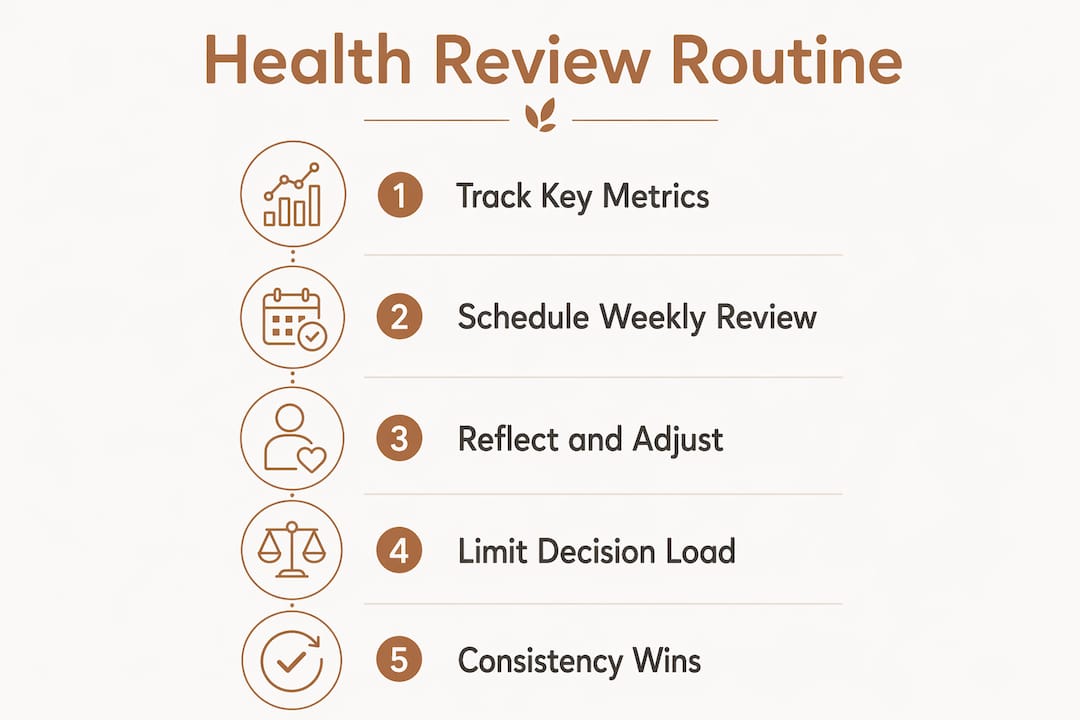
Habit stacking is the most reliable method. Connecting health tasks to existing cues, like checking your HRV summary while your morning coffee brews or reviewing your sleep score during your commute, turns health monitoring into daily infrastructure rather than an extra chore.
Here is a practical weekly structure that works within a demanding schedule:
- Morning check (2 minutes): Glance at your wearable's overnight summary. Note HRV, resting heart rate, and sleep score. No analysis needed. Just observe.
- Midday reset (1 minute): Log one lifestyle variable, such as water intake, stress level on a 1–5 scale, or whether you moved for 10 minutes. This context data makes weekly trends meaningful.
- Weekly review (10 minutes, Sunday evening): Pull up your app's weekly summary. Look for directional changes, not single-day anomalies. Did sleep quality drop mid-week? Did HRV trend down after Thursday? These patterns are your signal.
- Monthly check-in (20 minutes): Compare this month's averages to last month's. Identify one metric that improved and one that needs attention. Set one specific behavior change for the next 30 days.
- Quarterly lab review: Schedule bloodwork every three to four months and feed results into your integration platform. Lab data gives wearable trends biological context.
The weekly review is the most important step. Most professionals skip it because they wait until they have a full hour. Ten minutes is enough to catch a meaningful pattern and decide whether it warrants action.
Pro Tip: Set a recurring Sunday calendar block for your weekly health review. Treat it like a client meeting. Canceling it costs you the trend data you spent all week collecting.
Decision fatigue is the hidden enemy of consistent tracking. A 15-minute weekly prep window reduces overwhelm and improves nutritional habits by making healthy choices the default rather than the daily decision. The same logic applies to health data review. Scheduling it removes the friction of deciding when to do it.
What are the best practices for interpreting health trends quickly?
Interpreting health data well means knowing which signals to act on and which to ignore. Most professionals make the opposite mistake: they react to single-day readings and ignore week-long trends.
Raw health dashboards create data fatigue, while conversational AI querying of meta-insights enhances personalized understanding. That distinction matters. The goal is not to read your data. The goal is to understand what your data means for your specific life.
Four signals worth acting on:
- A five-day downward trend in HRV paired with poor sleep suggests your body is under stress load. Reduce training intensity and prioritize sleep before adding any new demands.
- A rising resting heart rate over seven days, with no change in exercise volume, often precedes illness by 48–72 hours. Use that window to cut alcohol, increase sleep, and reduce discretionary commitments.
- Consistent sleep under six hours correlates with impaired decision-making the following day. If your data shows this pattern, the fix is a schedule change, not a supplement.
- Body fat percentage trending upward over 60–90 days, even when daily weight looks stable, signals a body composition shift that warrants a nutrition review.
"Health is now viewed by successful consumers as a lens applied to every decision, not an isolated category. Continuous, small choices outperform sporadic workouts or one-off health interventions every time." Spate Wellness Economy Report, 2026
AI and social media influencers now shape diet, nutrition, and supplement choices more than traditional physicians, according to a march 2026 survey. That shift puts more interpretive responsibility on the individual. The safest approach: use AI tools to identify patterns and flag anomalies, but consult a physician before changing medications, supplements, or treatment plans based on trend data alone.
For a deeper look at how tracking data translates into behavior change, the health tracking and behavior change guide covers the psychological mechanisms behind sustainable habit formation.
How do you troubleshoot common barriers to consistent health trend analysis?
The three most common barriers are scattered data, decision fatigue, and unrealistic expectations during high-pressure periods. Each has a specific fix.
Scattered data happens when your wearable, your lab results, and your food log live in three separate apps. The solution is a single integration point. Choose one platform that pulls from all sources and commit to it for 90 days before evaluating whether it works.
Decision fatigue hits when your dashboard shows 40 metrics and you do not know which one to act on. Most people fail by trying to manage every health metric instead of focusing on the essential, high-impact signals tailored to their lives. Pick three metrics maximum for your weekly review. Add a fourth only when the first three feel automatic.
Unrealistic expectations during busy periods cause most professionals to abandon tracking entirely when life gets hard. The fix is a "minimum viable routine." During a high-pressure week, your only obligation is the two-minute morning check. That single data point keeps your trend line intact and your habit alive.
- Drop the weekly review before you drop the daily check-in.
- Use automated summaries and push notifications instead of manual log reviews during crunch periods.
- Adjust your goals downward during high-stress months rather than abandoning them. A realistic target you hit beats an ambitious one you skip.
- Know when to escalate. If a metric trends in a concerning direction for more than three weeks, that is a conversation for your doctor, not your app.
Passive wellness categories grew 46.7% year over year, reflecting a clear consumer preference for low-effort, high-return health interventions. That growth signals something important: the market is validating what busy professionals already know. The best health habit is the one that requires the least willpower to maintain.
Building a holistic health tracking system from the start reduces the scattered-data problem before it develops. Starting with an integrated setup is far easier than consolidating fragmented data later.
Key Takeaways
Busy professionals who focus on three to five high-impact health signals, review them on a fixed weekly schedule, and use integrated tools to surface plain-language summaries will consistently outperform those who track more but review less.
| Point | Details |
|---|---|
| Focus on fewer metrics | Track HRV, sleep quality, resting heart rate, and body composition. Ignore the rest. |
| Use habit stacking | Attach health reviews to existing cues like morning coffee or commute time. |
| Schedule the weekly review | A fixed 10-minute Sunday block preserves trend data and prevents reactive decisions. |
| Choose integrated tools | One platform that syncs wearables and labs beats three separate apps every time. |
| Adjust, do not abandon | During high-pressure weeks, maintain the daily check-in and drop everything else temporarily. |
What I have learned from watching busy professionals track their health
The professionals I have seen succeed at health trend analysis share one trait: they treat health monitoring like financial monitoring. They do not check their portfolio every hour, and they do not panic over a single bad day. They look at the trend line weekly and make one deliberate adjustment per month.
The ones who fail do the opposite. They download five apps in January, track 30 metrics for two weeks, get overwhelmed, and quit by February. The data was never the problem. The system was.
The counterintuitive truth is that less data, reviewed consistently, produces better health decisions than more data reviewed sporadically. A single metric tracked for 90 days tells you more than 20 metrics tracked for a week. Consistency creates the baseline. The baseline is what makes a trend visible.
My honest recommendation: start with body composition and sleep quality. Those two signals touch almost every other health outcome. Once you have 30 days of baseline data, add HRV. After 60 days, add resting heart rate. By month three, you will have a four-metric system that takes two minutes a day and tells you almost everything you need to know.
The goal is not perfect data. The goal is enough data, reviewed regularly, to catch problems early and confirm that what you are doing is working.
— Jacob
How Uvirello fits into a busy professional's health routine
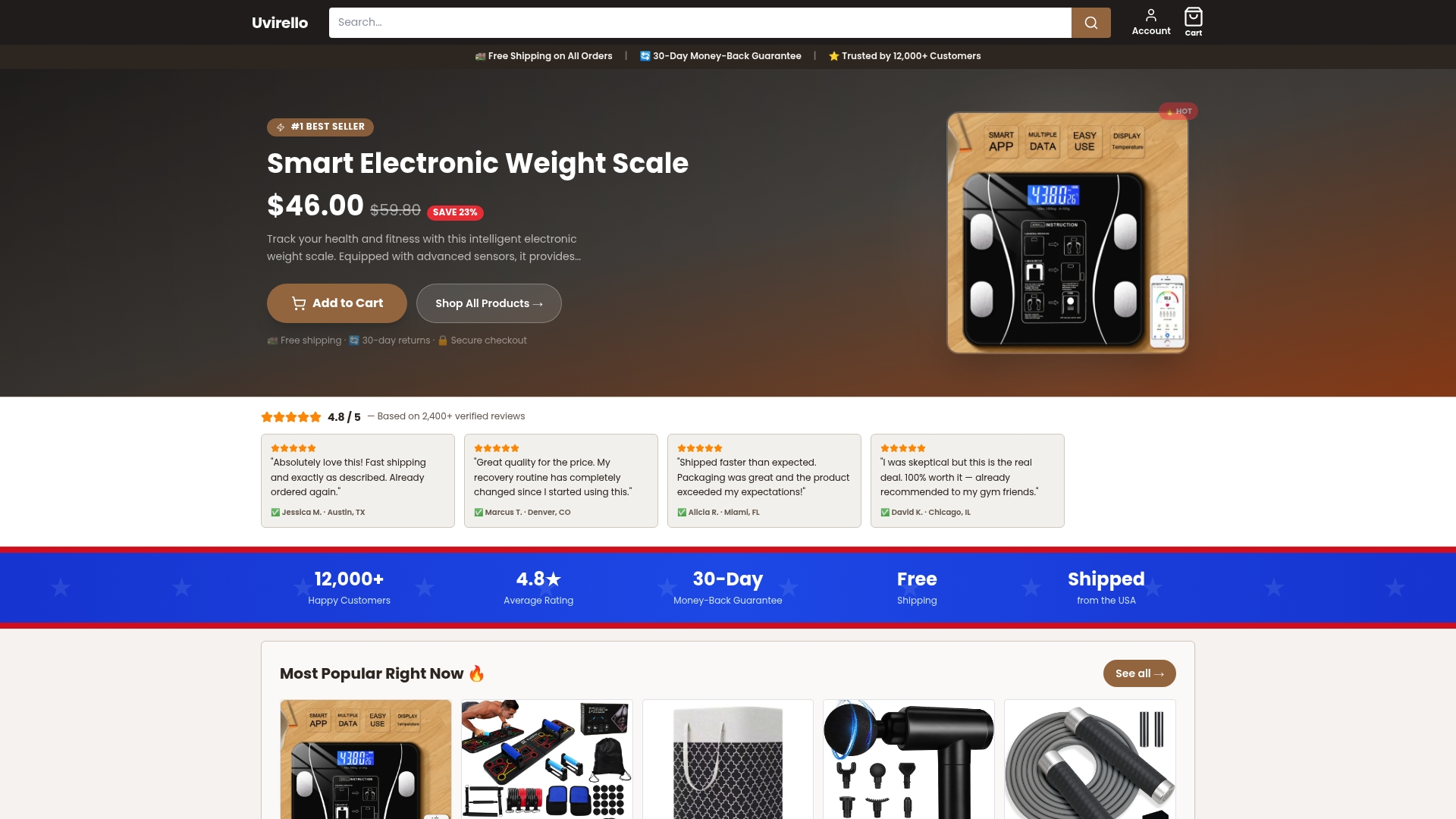
Uvirello's Smart Electronic Weight Scale gives busy professionals a direct window into body composition trends without adding complexity to their day. It measures body fat percentage, BMI, and related metrics using high-precision sensors, then delivers readings in a format that integrates cleanly into a weekly health review. Over 12,000 customers rate it 4.8 out of 5, and the feedback consistently points to one outcome: clearer, more confident health decisions. For professionals who want body composition data as part of a broader tracking system, the Uvirello Smart Scale is a practical starting point that delivers reliable numbers without the learning curve.
FAQ
What does health trend analysis mean for busy people?
Health trend analysis means tracking a small set of key body signals over weeks to spot patterns that guide wellness decisions. For busy professionals, it means choosing three to five metrics and reviewing them on a fixed weekly schedule rather than monitoring everything daily.
How long does it take to see meaningful health trends?
Most meaningful trends become visible after 30 days of consistent tracking. HRV and resting heart rate show directional patterns within two weeks, while body composition trends typically require 60–90 days to confirm.
What is the single most important metric to track first?
Sleep quality is the highest-leverage starting metric because it directly affects cognitive performance, stress response, and recovery. Most wearables report it automatically, requiring no manual input.
How do I avoid data fatigue when tracking health metrics?
Limit your active dashboard to three metrics maximum and use a platform that delivers weekly summaries rather than hourly data. Conversational AI tools explain correlations in plain language, which prevents the paralysis that raw dashboards create.
When should I consult a doctor instead of relying on trend data?
Consult a physician when any metric trends in a concerning direction for more than three consecutive weeks, or when your data suggests a pattern that does not respond to basic lifestyle adjustments like sleep, hydration, or reduced stress.