
Health neglect is defined as the gradual failure to monitor, respond to, or act on changes in your body before they become serious problems. Understanding why tracking prevents health neglect comes down to one mechanism: visibility. When you measure your health consistently, you create a feedback loop that forces honest, reality-based decisions instead of assumption-driven ones. A meta-analysis of 138 studies covering 19,951 people found that self-monitoring produces a medium effect size on goal attainment, improving adherence rates by 20–40%. That single finding explains more about preventive health than most wellness advice combined.
Why tracking prevents health neglect: the science of awareness
Health tracking, in clinical terms, falls under the category of self-monitoring, a behavioral technique where you record and review your own actions or physiological data to guide future behavior. The mechanism is not complicated. When you can see a number, you respond to it. When you cannot, you guess.

Behavioral science calls this phenomenon behavioral reactivity. The act of measuring something changes how you behave toward it. A person who logs their daily steps walks more than one who does not, not because the logging burns calories, but because the data creates accountability. Consumer activity trackers increase daily steps by roughly 950 and significantly boost moderate-to-vigorous physical activity through this visibility effect. That is not a trivial gain. Over a year, 950 extra steps per day adds up to a meaningful reduction in cardiovascular risk.
The difference between recorded tracking and mental noting is also significant. Mental notes fade, get distorted by mood, and rarely survive a stressful week. Written or digital records do not. Consistent, imperfect tracking still delivers results because the trend line matters far more than any single data point. Missing a Tuesday log does not erase the pattern built over 60 days.
Common metrics people track include:
- Steps and movement (daily activity levels)
- Resting heart rate (a reliable indicator of cardiovascular fitness and stress)
- Blood glucose (critical for diabetes prevention and management)
- Sleep duration and quality (linked to immune function, mood, and weight)
- Body composition metrics including BMI and body fat percentage
Pro Tip: Start with one or two metrics that directly connect to your current health goal. Tracking everything at once creates noise. Tracking one thing well creates insight.
How does health tracking enable early detection of chronic conditions?
Early detection is the clearest argument for why preventive health tracking is important. Most chronic conditions, including hypertension, type 2 diabetes, and atrial fibrillation, develop silently. People feel fine until they do not. Consistent monitoring catches the warning signs before symptoms appear.
Early detection through consistent monitoring can save up to 100,000 lives annually in the United States. That figure comes from research on blood pressure and glucose monitoring conducted before symptoms emerge. The implication is direct: people who track regularly give themselves a window to intervene. People who do not track have no such window.
Wearable devices have expanded this capability significantly. Smartwatches and fitness bands now detect asymptomatic conditions like hypertension and atrial fibrillation in people who feel completely healthy. The critical caveat is that wearables do not replace clinical assessments. Doctors recommend treating smartwatch alerts as triggers to schedule a professional consultation, not as diagnoses to act on independently.
"Wearables' alerts are best viewed as conversation starters with healthcare providers, not as definitive diagnoses." — Columbia University Irving Medical Center
The practical takeaway is this: your device flags an anomaly, you bring that data to your doctor, and your doctor interprets it in clinical context. That workflow is how tracking prevents neglect without creating panic. The device is a signal generator. The clinician is the interpreter.
Key conditions where early tracking has documented impact:
- Hypertension: Regular blood pressure monitoring catches elevated readings before organ damage begins
- Type 2 diabetes: Glucose tracking identifies pre-diabetic patterns years before diagnosis
- Atrial fibrillation: Heart rate irregularity alerts from wearables have prompted life-saving interventions
- Obesity-related risk: Body composition tracking reveals fat gain before weight alone signals a problem
What are the real benefits and pitfalls of health tracking?
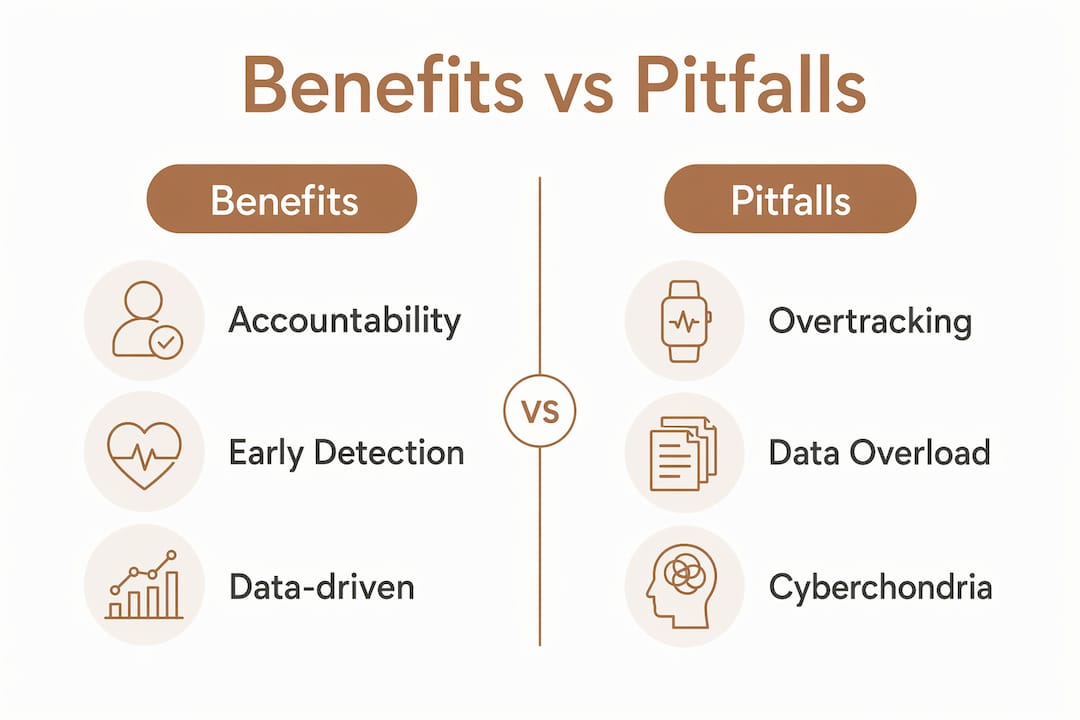
The benefits of tracking health are well-documented, but the pitfalls are equally real. Understanding both sides is what separates people who use tracking effectively from those who burn out or develop anxiety around their data.
The benefits worth knowing
Tracking functions as an accountability mirror, forcing reality-based planning rather than assumption-driven behavior. Most people significantly overestimate how active they are and underestimate how much they eat or how poorly they sleep. A tracker removes the guesswork. It also builds motivation through visible progress. Watching a resting heart rate drop over three months, or seeing body fat percentage decline, reinforces the behaviors that caused those changes.
Data-driven planning is another concrete benefit. When you know your sleep score drops after more than two glasses of wine, you make different choices. When you see your step count collapse every Thursday, you identify the pattern and address it. This is how tracking improves wellness at a practical level: it turns vague intentions into specific, adjustable behaviors.
The pitfalls that derail people
Overtracking causes a documented condition called cyberchondria, which is health anxiety driven by excessive data monitoring. Experts advise disabling non-critical notifications and limiting how often you check your metrics to prevent this. Checking your heart rate 20 times a day does not improve your heart health. It increases your cortisol.
Data overload is a related problem. When you track too many metrics simultaneously, the signal gets buried in noise. A single anomalous reading on one bad night can trigger disproportionate worry if you do not understand that trends matter more than single readings. One poor sleep score does not mean you have a disorder. A three-week downward trend might.
| Tracking approach | Benefit | Risk |
|---|---|---|
| Daily summary scores | Reduces cognitive load, shows trends | May mask short-term anomalies |
| Raw metric logging | High detail, useful for clinical review | Can trigger anxiety and misinterpretation |
| Automated wearable tracking | Passive, consistent, low effort | Alerts can cause unnecessary worry |
| Manual daily logging | High engagement, builds habit awareness | Time-intensive, prone to gaps |
Pro Tip: Set a single daily check-in time for your health data. Reviewing metrics once a day at the same time builds the habit without creating obsession.
How to build a sustainable health tracking routine
A tracking routine fails when it demands perfection. The never miss twice rule is the most practical framework for long-term consistency: missing one day does not break your habit, but missing two consecutive days starts a pattern of avoidance. Apply this rule and you remove the all-or-nothing thinking that kills most health habits.
Here is a practical framework for building a routine that lasts:
- Choose two to three core metrics that align with your specific health goal. Weight and body fat percentage for body composition. Resting heart rate and sleep for cardiovascular and recovery health. Blood glucose for metabolic health.
- Use automated tracking where possible. Passive data collection through a wearable or a connected scale like the Uvirello Smart Electronic Weight Scale removes the friction of manual logging. Friction kills habits.
- Review weekly summaries, not daily numbers. Shifting from raw data to interpretive summaries reduces cognitive load and prevents the anxiety that comes from reacting to normal daily fluctuations.
- Apply the 60 to 90 day rule. Research shows that tracking behavior evolves from an initial motivation boost into a maintenance phase around the 60–90 day mark. After that point, tracking shifts from motivating change to identifying anomalies and preventing relapse.
- Bring your data to medical appointments. A three-month trend in blood pressure, weight, or resting heart rate gives your doctor far more useful information than a single in-office reading. Use your tracking data as a clinical asset.
For people managing health across a household, family health tracking strategies offer additional structure for caregivers who monitor multiple people's metrics alongside their own.
Key Takeaways
Consistent health tracking prevents neglect by creating visible feedback loops that drive timely action, early detection, and sustained behavior change.
| Point | Details |
|---|---|
| Tracking creates accountability | Self-monitoring produces a 20–40% improvement in adherence to health goals. |
| Early detection saves lives | Consistent monitoring can prevent up to 100,000 deaths annually in the U.S. by catching conditions before symptoms appear. |
| Trends matter more than single readings | Focus on weekly summaries and long-term patterns rather than reacting to daily fluctuations. |
| Balance tracking with mental health | Disable non-critical notifications and limit daily check-ins to prevent data anxiety and cyberchondria. |
| The never miss twice rule sustains habits | Missing one day is normal; missing two consecutive days is where habit erosion begins. |
Why I think most people are tracking the wrong way
People come to health tracking with the right instinct and the wrong execution. They download an app, connect a device, and then spend the first two weeks checking their metrics every hour. Within a month, they either become anxious about every fluctuation or they burn out entirely and stop tracking altogether. Neither outcome serves their health.
The real value of tracking is not in the daily number. It is in the pattern you see over 90 days. I have watched people obsess over a single night of poor sleep while ignoring the fact that their resting heart rate had been climbing steadily for six weeks. That six-week trend was the story. The bad night was just noise.
The other mistake I see constantly is treating tracking as a replacement for clinical care. Your wearable can flag an irregular heartbeat. It cannot tell you whether that irregularity is benign or serious. That distinction requires a doctor. Tracking is a diagnostic mirror, not a diagnostic tool. Use it to see yourself clearly, then bring what you see to a professional who can interpret it.
The best tracking routine is the one you actually maintain. Start with weekly fitness tracking practices that fit your schedule, not someone else's ideal protocol. Imperfect, consistent tracking beats perfect, abandoned tracking every single time.
— Jacob
Uvirello: a smarter starting point for health tracking
Knowing what to track is one thing. Having a tool that makes tracking accurate and effortless is another.
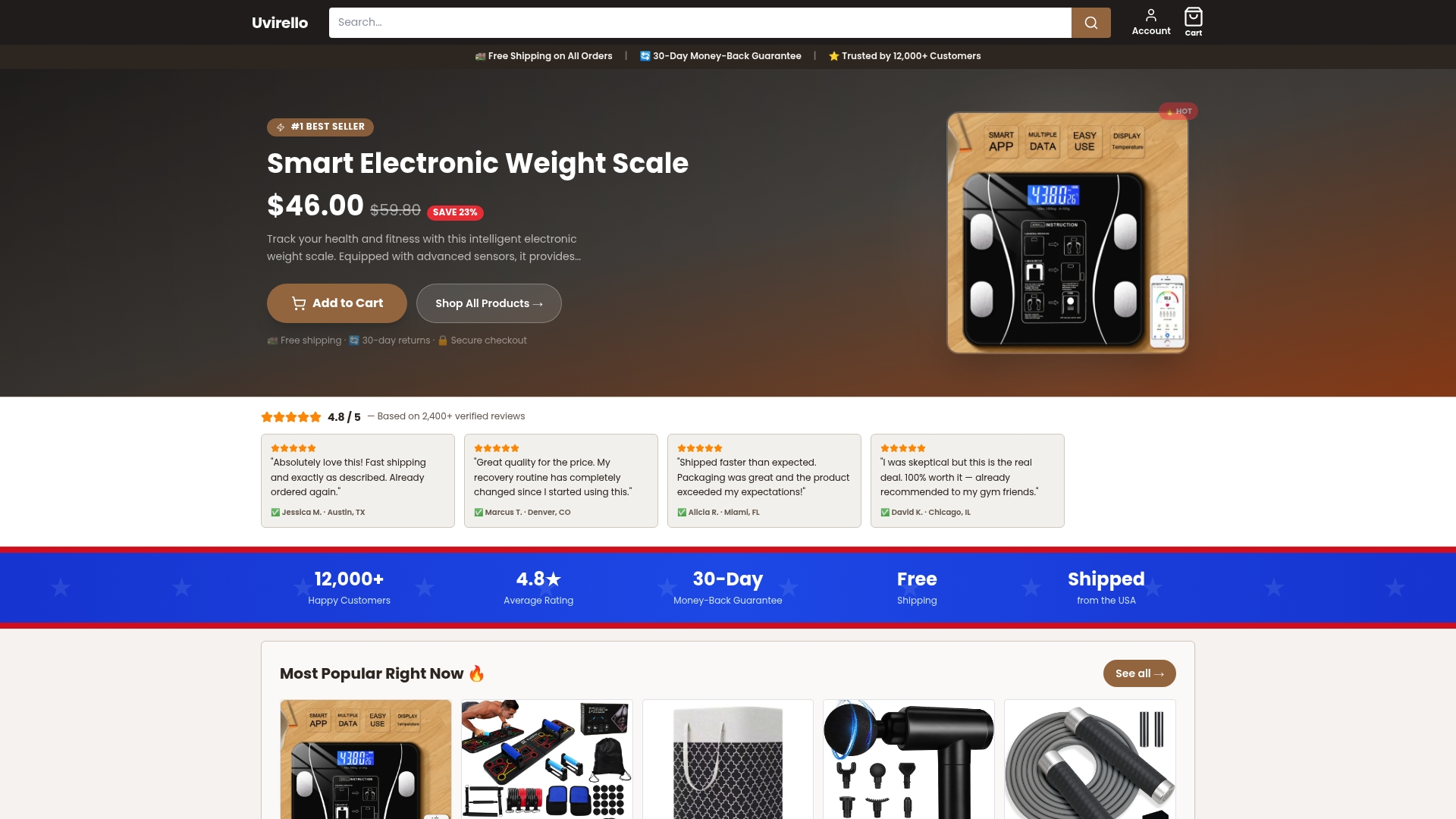
The Uvirello Smart Electronic Weight Scale goes beyond weight measurement. It delivers body composition metrics including body fat percentage and BMI, giving you the data points that matter most for long-term health monitoring. Over 12,000 customers have rated it 4.8 out of 5, citing the accuracy and ease of use as the reasons they actually stick with their tracking routines. When your tool is reliable and simple, the habit forms faster and lasts longer. That is the point.
FAQ
Why does tracking prevent health neglect?
Tracking creates a visible feedback loop that forces awareness of real health patterns. Without recorded data, people rely on assumptions that consistently underestimate risk.
How often should you monitor your health metrics?
A daily check-in for key metrics like weight or heart rate is sufficient for most people. Reviewing weekly summaries rather than reacting to individual readings reduces anxiety and improves decision-making.
Can wearables replace doctor visits for health monitoring?
Wearables detect patterns and flag anomalies but cannot replace clinical assessment. Doctors recommend using device alerts as prompts to schedule professional consultations, not as standalone diagnoses.
What is the biggest mistake people make when tracking health?
The most common mistake is focusing on single data points instead of trends. One poor reading rarely signals a problem. A consistent pattern over weeks is where the meaningful information lives.
How long does it take for health tracking to become a habit?
Research shows tracking transitions from a motivation tool to a maintenance habit around the 60–90 day mark. Applying the never miss twice rule during that period is the most effective way to reach that threshold.