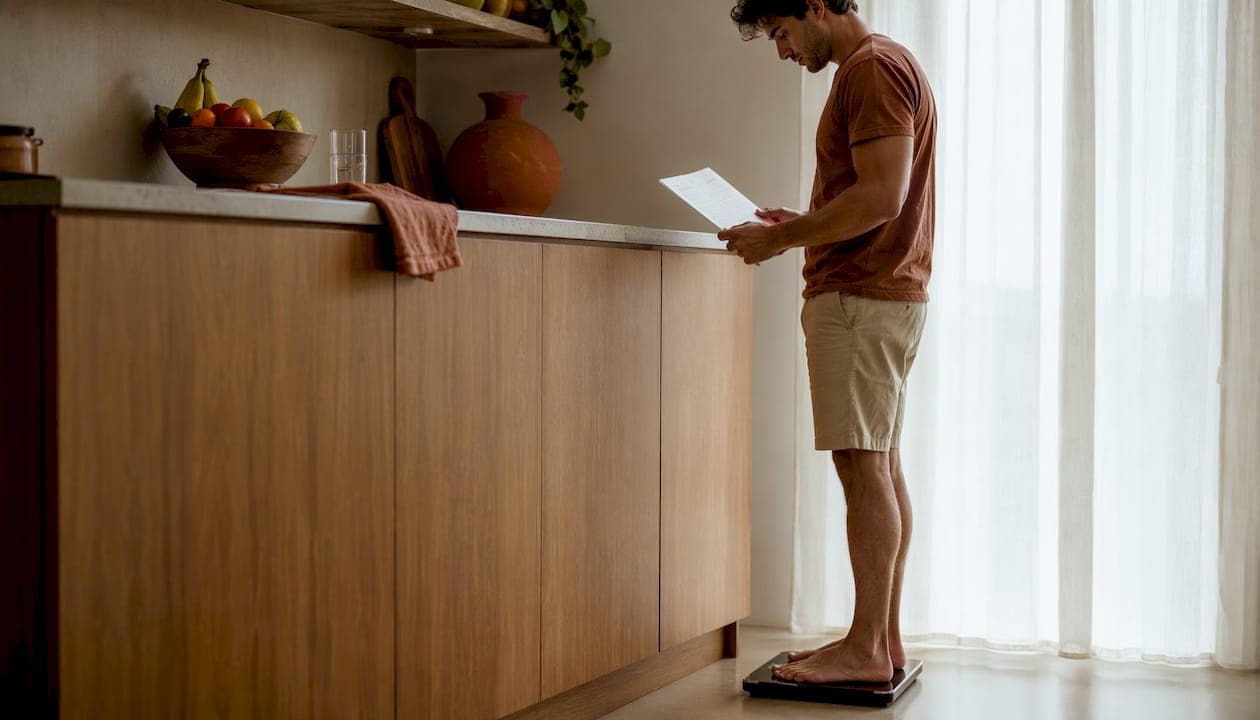
How scale data guides weight loss starts with one simple habit
Scale data works when you treat it as a feedback loop, not a report card. Step on the same scale every morning, after using the bathroom, before eating or drinking anything, and you immediately eliminate most of the variables that make readings look erratic. That single discipline turns a bathroom scale into a measurement instrument rather than a source of anxiety.
From there, the strategy comes down to three moves:
- Weigh daily, judge weekly. Log every reading, but base decisions on your 7-day average, not yesterday's number.
- Connect the dots. When your weekly average drops, ask what you did differently. When it stalls, look at sodium, sleep, and calorie creep before cutting harder.
- Use a smart scale. Automated syncing removes the friction of manual logging and keeps your data continuous, which is where the real signal lives.
- Pair weight with behavior. Scale data alone tells you what happened. Your food choices, activity, and sleep tell you why.
- Avoid the overreaction trap. A single high reading after a salty dinner is water retention, not fat gain. Reacting to it by skipping meals is the most common mistake people make.
Table of Contents
- What tools do you actually need to track weight data well?
- Why your weight jumps around and what that actually means
- How to read your scale data and actually change your behavior
- What the research actually says about smart scales and weight loss
- The Uvirello Smart Scale gives you data that actually moves the needle
- Key Takeaways
What tools do you actually need to track weight data well?
The scale itself matters more than most people admit. A basic bathroom scale with inconsistent sensors introduces noise that makes trend analysis unreliable. The Uvirello Smart Electronic Weight Scale goes beyond simple weight readings, measuring body fat percentage, BMI, and muscle mass through high-precision sensors. That body composition data gives you a fuller picture than a single number ever could, because tracking body composition reveals changes that the scale's total weight figure can hide, like muscle gain offsetting fat loss.
Beyond the scale itself:
- A trend visualization app. MyFitnessPal connects to smart scales and overlays weight data with calorie and macro logs, so you can see whether your eating patterns correlate with your trend line.
- Consistent conditions. Weighing at the same time, on the same surface, wearing the same amount of clothing keeps your data comparable day to day.
- A food scale. Portion estimation is notoriously inaccurate. A kitchen scale closes the gap between what you think you ate and what you actually ate.
- A fitness tracker. Step counts and active minutes give context to weight plateaus that calorie data alone can't explain.
Pro Tip: Never switch scales mid-program. Even a high-quality scale will read slightly differently from another model. Consistency within one device matters more than absolute accuracy across devices.
Why your weight jumps around and what that actually means
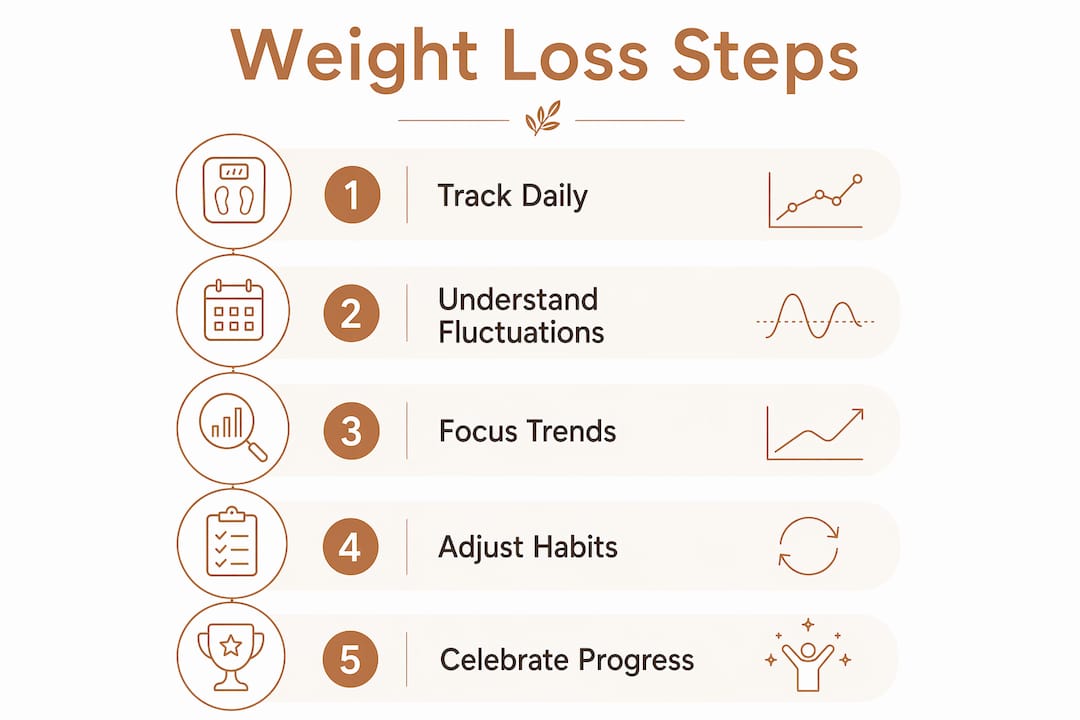
A 2–4 pound overnight swing is not fat. It is water, sodium, glycogen, and digestive contents, and it is completely normal. A salty dinner, an intense workout, a poor night of sleep, or even stress-related cortisol can shift the scale by that margin without any change in actual body fat.

The Cleveland Clinic and the American Heart Association both put realistic fat loss at roughly 0.5–1% of body weight per week, which works out to about 1–2 pounds for most adults. Faster drops in the first week or two are almost always water. Expecting linear daily progress is what turns normal fluctuations into discouragement.
A few biological realities worth knowing:
- Hydration is the biggest daily variable. Even mild dehydration can make you look lighter without any fat loss.
- Sodium causes water retention that can persist for 24–48 hours after a high-salt meal.
- Hormonal cycles cause predictable weight shifts of several pounds for women, independent of diet or exercise.
- Inflammation from a hard training session temporarily increases water retention in muscle tissue.
Daily weighing is also not right for everyone. People with a history of disordered eating may find that frequent weigh-ins increase anxiety rather than support progress. Weekly weighing, or skipping the scale entirely in favor of measurements and photos, can be a healthier approach for that group.
How to read your scale data and actually change your behavior
The weekly moving average is the most useful number your scale produces. When that average trends down over three or four consecutive weeks, you have real evidence that your current approach is working. When it flatlines for two weeks or more, that is the signal to make a change, not a single bad morning.
Practical steps for turning data into decisions:
- Identify the pattern first. A plateau after a vacation week points to calorie surplus. A plateau during a consistent training block might mean you need more protein or better sleep.
- Make one change at a time. Cutting 200 calories and adding three cardio sessions simultaneously makes it impossible to know which adjustment moved the needle.
- Give changes two weeks. The scale's weekly average needs at least 7–10 days of new data before a behavioral change shows up clearly in the trend.
- Separate emotion from analysis. Coach Ryan Baxter puts it plainly: weight is a feedback signal, not a personal judgment. Reading it that way is a skill, and it gets easier with practice.
Tracking trends rather than daily readings is also what smart scale data analysis is built for. The graph matters more than any single point on it.
What the research actually says about smart scales and weight loss
The evidence for daily self-weighing combined with feedback is strong. A clinical intervention study using a cellular-connected smart scale, web-based trend visualization, and weekly tailored emails produced an average weight loss of 6.13 kg over 6 months. Participants reported positive responses to daily weighing, and the approach required no regular face-to-face contact.
A separate 8-week trial using the same self-regulation framework produced 3.2 kg greater weight loss than the control group. The key was not the specific strategies participants tried, but the process of using scale data to test which behaviors actually worked for them individually.
Adherence is also significantly higher with automated tools. Users with cellular-connected smart scales weigh in three times more frequently and stay engaged with their programs nearly two months longer than those logging manually.
Pro Tip: Use your scale's trend graph, not just the number. Seeing a downward slope over 30 days is far more motivating than any single morning reading.
The Uvirello Smart Electronic Weight Scale carries a 4.8 out of 5 average rating from over 12,000 customers. Its body composition metrics, including body fat percentage and muscle mass, give users the kind of layered data that comprehensive progress tracking requires.
The Uvirello Smart Scale gives you data that actually moves the needle
Most scales tell you one number. The Uvirello Smart Electronic Weight Scale tells you what that number is made of.

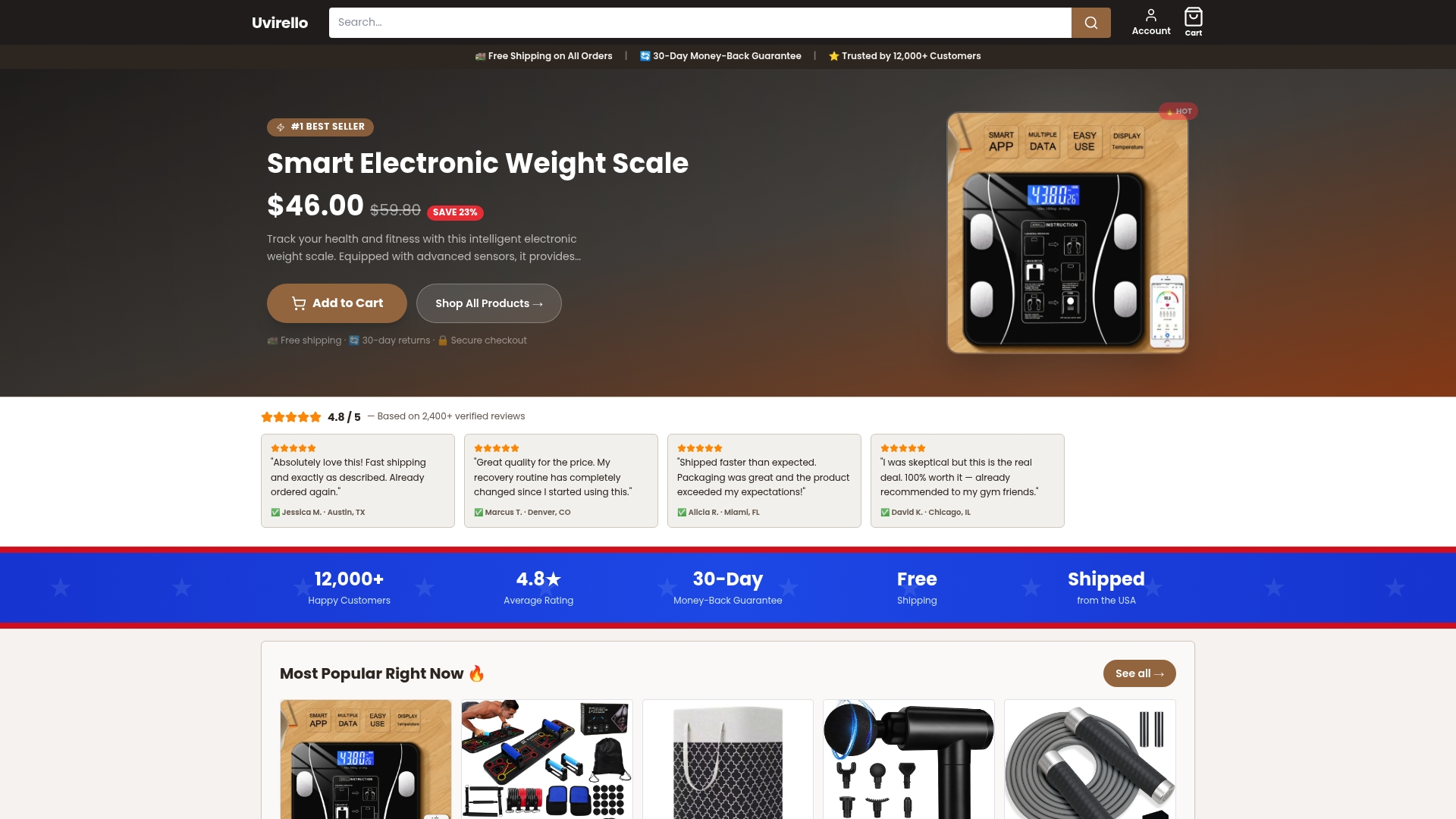
Body fat percentage, BMI, and muscle mass readings from high-precision sensors mean you can see a plateau for what it often is: fat loss masked by muscle gain. That distinction changes how you respond. Instead of cutting calories harder, you might add protein. Instead of more cardio, you might prioritize recovery. Over 12,000 customers rate it 4.8 out of 5, and the feedback consistently points to one thing: better data leads to smarter decisions. If you are ready to stop guessing and start reading your body's actual signals, explore the Uvirello scale and see what your numbers are really telling you.
Key Takeaways
Scale data guides weight loss most effectively when you focus on weekly trends rather than daily readings and use those trends to drive specific behavioral adjustments.
| Point | Details |
|---|---|
| Weigh daily, decide weekly | Base behavioral changes on your 7-day moving average, not any single morning reading. |
| Standardize conditions | Weigh every morning post-bathroom, before eating, on the same scale to keep data comparable. |
| Clinical evidence is strong | Daily self-weighing with feedback produced an average 6.13 kg loss over 6 months in a clinical study. |
| Body composition beats weight alone | Metrics like body fat percentage and muscle mass reveal progress the total weight number can hide. |
| Uvirello Smart Scale | Measures body fat, BMI, and muscle mass with high-precision sensors; rated 4.8/5 by over 12,000 users. |