
Daily weigh-ins are defined as the practice of stepping on a scale every morning to collect consistent body weight data over time. This practice reveals meaningful weight management patterns because it generates enough data points to separate true fat loss from normal physiological noise. A single weekly reading tells you almost nothing about what your body actually did that week. But seven readings in a row tell a story. Recent research confirms that daily weighers lose significantly more weight than those who weigh less often, and understanding why daily weigh-ins show patterns is the first step to using that data well.
Why daily weigh-ins show patterns better than weekly weigh-ins
The core reason daily weigh-ins produce clearer patterns is simple: more data points reduce the effect of any single bad reading. A weekly weigh-in captures one snapshot. If that snapshot happens to fall on a high-sodium day or after a hard workout, your entire week looks like a failure. Daily data smooths that problem out.
Least-squares regression of daily weights significantly reduces measurement error compared to standard two-point weight loss estimates. That means the math works better when you have more readings. A two-point estimate, such as comparing last Monday to this Monday, is highly vulnerable to random fluctuation on either end.

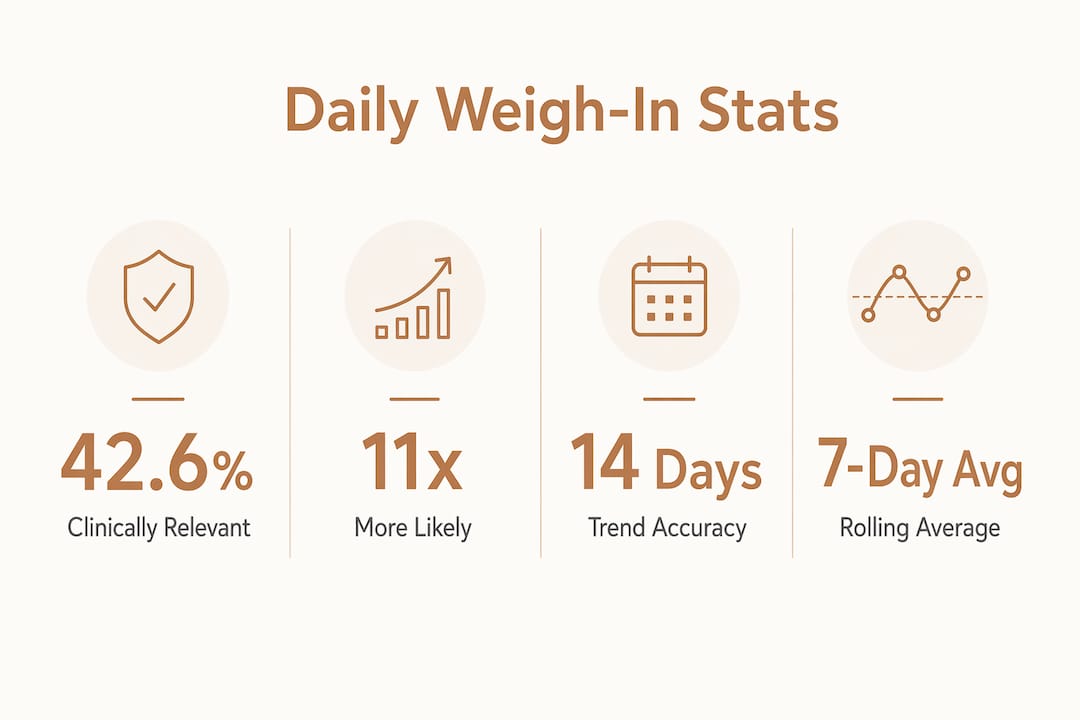
The behavioral evidence is equally strong. Daily weighers achieve clinically meaningful weight loss at a rate of 42.6% compared to just 6.8% in control groups. That gap is not explained by willpower alone. Frequent feedback creates a tighter loop between behavior and consequence, which drives better decisions. People who see their data every day learn faster what works for their body.
There is also a dose-response relationship at work. Patients who weigh at least weekly are 11 times more likely to lose 5% or more of their body weight than those who weigh less often. Daily weighing pushes that advantage further. The more consistently you collect data, the more accurately you can track weight loss progress over time.
What actually causes your weight to change day to day
Understanding weight fluctuations starts with one fact: your scale measures everything inside your body, not just fat. Water, food in your digestive tract, glycogen stored in muscle, and sodium all shift your number up and down without any change in actual body fat.
Individual daily readings fluctuate by 2 to 4 pounds due to sodium intake, glycogen, hydration, and hormonal cycles. A single high-sodium meal can add 1 to 3 pounds by the next morning through water retention alone. That number is not fat. It will disappear within 24 to 48 hours as your kidneys process the excess sodium.
Here are the most common drivers of daily weight swings:
- Hydration status. Even mild dehydration or overhydration shifts your reading by a pound or more.
- Glycogen storage. Each gram of glycogen holds roughly 3 grams of water. A high-carbohydrate day fills glycogen stores and temporarily raises your weight.
- Sodium intake. High-sodium meals pull water into your tissues, causing a visible scale spike the next morning.
- Digestive contents. Food and fluids in your gut add measurable weight until they are processed and eliminated.
- Hormonal cycles. Women experience predictable weight increases during the luteal phase due to water retention driven by progesterone.
- Exercise-induced inflammation. New intensive exercise causes scale stalls or temporary gains because micro-trauma to muscle fibers triggers fluid pooling for repair lasting several days.
The scale is essentially a low-resolution sensor capturing water and gut contents noise that is roughly ten times the size of the fat change signal. That ratio is the key insight. Fat loss is real but quiet. Water weight is loud and temporary. Skill in reading your scale comes from knowing which signal you are looking at.
Pro Tip: Weigh yourself first thing in the morning, after using the bathroom and before eating or drinking anything. This single habit removes the two largest sources of same-day variability and makes your data far more consistent.
How to read your daily data and find the real trend
Raw daily numbers are not the goal. The trend line is the goal. Reacting emotionally to a single reading is the most common mistake people make with daily weigh-ins, and it leads to abandoning a practice that is actually working.
The most reliable method for reading daily weight data is the 7-day rolling average. Add your last seven readings and divide by seven. Do this every day. The resulting number moves slowly and smoothly, filtering out the physiological noise that makes raw readings so frustrating. A 7-day rolling average smooths daily weigh-ins and reveals the underlying fat loss or gain trend by filtering out daily fluctuation.
Follow these steps to interpret your data accurately:
- Log every reading without judgment. Record the number even on days it spikes. Missing data breaks your trend line.
- Calculate a 7-day average weekly. Compare this week's average to last week's average, not today's number to yesterday's.
- Ignore single-day spikes above your trend. If your 7-day average is falling but today's reading jumped, that spike is almost certainly water or digestive contents.
- Look for direction over 2 to 4 weeks. Fat loss at a healthy rate of 0.5 to 1 pound per week is subtle. You need at least two weeks of data to confirm a real downward trend.
- Note what preceded any unusual reading. A spike after a restaurant meal is sodium. A spike after a hard leg day is inflammation. Labeling the cause removes the emotional sting.
Daily weighing builds familiarity with how your body responds to food, hydration, stress, and sleep. Over weeks, you stop being surprised by fluctuations because you recognize them. That familiarity is itself a form of progress.
Pro Tip: Many free apps and spreadsheet templates calculate rolling averages automatically. Logging your weight takes less than 30 seconds per day, and the visual trend line does the interpretation work for you.
Practical tips for making daily weigh-ins work for you
Daily weigh-ins work best when they become a low-effort habit rather than a high-stakes event. The goal is consistent data collection, not a daily performance review.
The best conditions for a reliable reading are consistent across every session. Step on the scale at the same time each morning, wearing the same amount of clothing (ideally none), after using the bathroom. Consistency in conditions is what makes your data comparable from day to day. Varying your timing by even a few hours introduces noise that undermines the trend.
- Pair weighing with another morning habit. Attaching it to brushing your teeth or making coffee removes the decision of whether to do it.
- Use a scale that tracks body composition metrics. Weight alone tells part of the story. Body fat percentage, muscle mass, and BMI give you a fuller picture of what is actually changing.
- Log your readings in one place. Whether you use a dedicated app or a simple spreadsheet, centralized data lets you see health trends clearly rather than trying to remember last week's number.
- Complement weight data with nutrition and activity logs. When you can see what you ate and how you moved alongside your weight data, patterns become obvious. A weight spike after a high-carbohydrate day stops feeling random.
- Recognize when daily weighing is not serving you. Daily weigh-ins can cause anxiety if you are not prepared for variability. If the scale consistently triggers distress rather than curiosity, weekly weigh-ins with trend tracking are a valid and effective alternative.
The mindset shift that makes daily weighing sustainable is treating the scale as a data collection device, not a judge. The number is information. What you do with that information is what matters. Health tracking motivates behavior change most effectively when the data feels neutral rather than threatening.
Key Takeaways
Daily weigh-ins reveal true weight loss trends because they generate enough data to separate fat loss signals from normal physiological noise, making them far more accurate than weekly or sporadic weighing.
| Point | Details |
|---|---|
| More data beats less data | Daily readings enable trend analysis that single weekly snapshots cannot provide. |
| Fluctuations are normal, not failures | Daily weight shifts of 2 to 4 pounds reflect water, sodium, and glycogen, not fat change. |
| Use rolling averages | A 7-day rolling average filters noise and reveals the real direction of your weight over time. |
| Consistency in conditions matters | Weigh at the same time, same state, every morning to keep your data comparable. |
| Mindset determines outcomes | Treating scale data as neutral information reduces anxiety and improves long-term adherence. |
What I've learned from years of watching weight data
The most counterintuitive thing about daily weigh-ins is that the days your number goes up are often the most useful. A spike after a salty dinner, a hard workout, or a poor night of sleep teaches you something specific about your body. That knowledge compounds over weeks and months into a real understanding of how you personally respond to lifestyle factors. No generic advice gives you that.
What I see most often is people abandoning daily weighing right when it starts working. They have three weeks of solid data, the trend is clearly downward, and then one bad reading sends them into a spiral. The data was telling a good story. They just stopped reading it.
The separation between data collection and emotional reaction is the actual skill here. Your weight on any given morning is not a verdict on your effort or your worth. It is a noisy signal from a body doing complex things. The trend over two to four weeks is the verdict. Learning to wait for the trend, rather than reacting to the noise, is what separates people who succeed with daily weighing from those who quit.
Consistency beats perfection every time. Missing a day does not ruin your data. Missing three weeks does. Show up, log the number, and let the trend do the work.
— Jacob
How Uvirello supports your daily weight tracking
Accurate daily weigh-ins depend on a scale you can trust to give you the same reading under the same conditions every time.
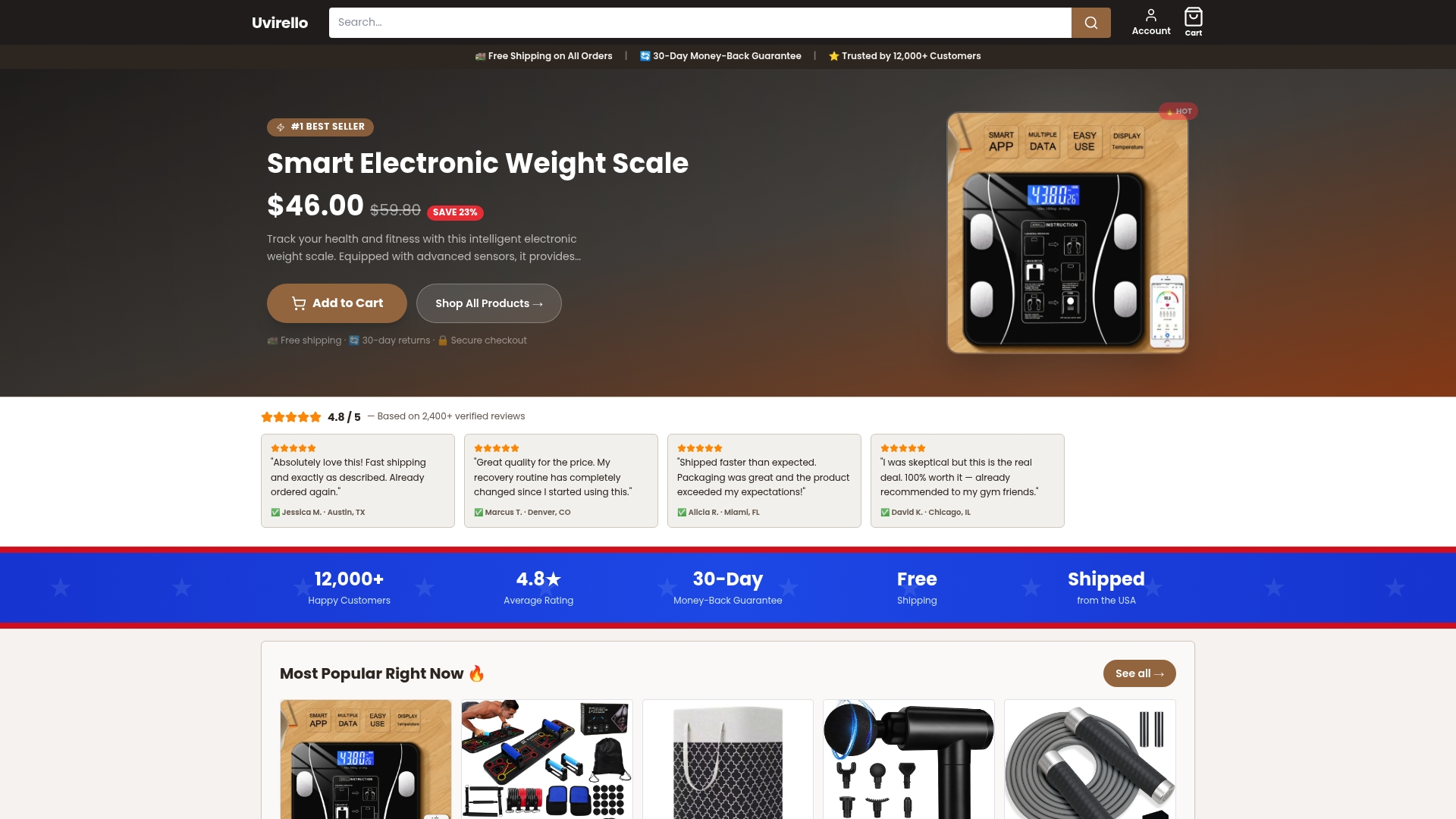
The Uvirello Smart Electronic Weight Scale goes beyond body weight to measure body fat percentage, BMI, and muscle mass, giving you the full picture that a single number cannot. With high-precision sensors and a design built for daily use, it removes the guesswork from data collection. Over 12,000 people have rated it 4.8 out of 5, and the most common feedback is that it changed how they think about progress. If you are ready to build a daily tracking habit that actually shows you results, Uvirello is the place to start.
FAQ
Why does my weight go up after a good day of eating?
A single high-sodium meal or a high-carbohydrate day causes water retention that can add 1 to 3 pounds overnight. This is not fat gain. It resolves within 24 to 48 hours as your body processes the excess sodium and glycogen.
How many days of data do I need to see a real trend?
At least 14 days of consistent readings gives you enough data to calculate a meaningful 7-day rolling average and compare two consecutive weeks. Four weeks of data is better for confirming a genuine fat loss trend.
Is daily weighing bad for your mental health?
Daily weighing can cause anxiety if you react to individual readings rather than trends. People who treat the scale as a data tool rather than a daily verdict generally find it motivating. If daily readings consistently cause distress, weekly weigh-ins with trend tracking are equally effective.
What is the best time to weigh yourself each day?
First thing in the morning, after using the bathroom and before eating or drinking, produces the most consistent readings. This timing removes the two largest sources of same-day variability: food and fluid intake.
Does exercise cause the scale to go up even when you are losing fat?
Yes. New or intense exercise triggers micro-trauma to muscle fibers, which causes fluid to pool in the tissue during repair. This temporary inflammation can stall or raise your scale weight for several days while fat loss continues underneath.