
Most consumer smart scales cap out around 400 pounds, or roughly 180 kilograms, with approximately 396 lb (180 kg) being a common published ceiling among mainstream brands. The practical rule: buy a scale rated noticeably above your heaviest expected weight, not right at it, since accuracy on body-composition metrics tends to slip as you approach the maximum. Weight readings themselves stay fairly dependable near the limit. Body fat and muscle mass numbers do not.
TL;DR:
- Most consumer smart scales have a maximum weight capacity between 330 and 440 pounds, but body composition accuracy declines near this limit.
- Readability is usually 0.1 to 0.2 pounds, and collecting consistent measurements requires weighing under the same conditions regularly.
- Body composition estimates become less reliable as weight approaches the scale's maximum capacity because of limitations in bioelectrical impedance analysis.
- Battery health, environmental factors, and proper placement significantly affect a scale’s real-world capacity and long-term accuracy.
- Choosing a scale with a capacity at least 10 to 20 percent higher than your maximum weight improves measurement reliability and lifespan.
Table of Contents
- Typical Weight Limits for Consumer Smart Scales, Explained
- Does a Scale's Weight Limit Affect Body-Composition Accuracy?
- What Else Changes a Scale's Real-World Capacity Over Time?
- How to Choose a Smart Scale When Weight Limit Matters
- What to Do If You're Near or Over Your Scale's Limit
- Uvirello's Take: Building for the Weight Range People Actually Live In
- Get a Scale Built for Accuracy at Your Actual Weight, Not the Average
- Sources
Typical Weight Limits for Consumer Smart Scales, Explained
The number printed on a scale's box or spec sheet usually refers to maximum capacity, and that figure varies more than shoppers expect. Some budget models top out around 330 lb (150 kg). Mid-range and premium smart scales commonly land between 396 and 440 lb (180 to 200 kg). Withings, for instance, lists a weighing range of roughly 5 to 180 kg, or 9 to 396 pounds, with 0.2 lb graduation(https://support.withings.com/hc/en-us/articles/360000508307-Body-What-is-the-weight-range-for-the-scale) on its Body line of scales, which is a fairly representative example of what a mainstream household smart scale can handle.
That top-line capacity number is only half the spec sheet story. The other half is readability, sometimes called resolution or graduation, which tells you how finely the scale divides its measurements. A scale might have a 440 lb capacity but only display results in 0.2 lb increments, which is plenty precise for tracking a five-pound loss over a month but not fine enough to catch a half-pound daily fluctuation. Higher-end models sometimes advertise 0.1 lb readability, though the practical difference between 0.1 and 0.2 lb rarely matters for anyone who isn't a competitive weigh-in athlete.
Capacity and readability get conflated constantly in marketing copy, and it's worth pulling them apart:
- Maximum capacity is the heaviest weight the scale is rated to measure safely and accurately, typically 330 to 440 lb (150 to 200 kg) for consumer models.
- Readability (resolution) is the smallest increment the display shows, usually 0.1 to 0.2 lb (0.05 to 0.1 kg).
- Minimum startup weight is the lightest weight needed to trigger the sensors, often somewhere between 5 and 11 lb (2 to 5 kg), which matters mainly for parents weighing small children or pets.
- Body-composition capacity sometimes differs from raw weight capacity. Some manufacturers cap bioelectrical impedance readings at a lower threshold than the scale's weight limit, so composition data may stop working before the number itself does.
When you're comparing specs, look past the headline capacity number and check whether the listing separates weight capacity from composition-metric capacity. Plenty of product pages bury that distinction in a footnote, and it's the detail that determines whether a heavier user gets full functionality or just a number on the display. General digital scale explainers note that bathroom scales in the 400 to 440 lb range represent the practical ceiling for most consumer hardware, meaning anyone regularly exceeding that should already be looking toward the medical and platform-scale category covered later here.
Manufacturers arrive at these capacity numbers through load testing on the sensor array, not through simulating how a scale performs after two years of daily use on a bathroom tile floor. That gap between lab-rated capacity and real-world capacity is small for most buyers, but it widens for anyone weighing in near the stated maximum on a regular basis. A scale rated for 400 lb that gets stepped on by a 395 lb person every morning is working at the edge of its design tolerance every single day, and edge-of-tolerance is exactly where measurement inconsistency shows up first.
Does a Scale's Weight Limit Affect Body-Composition Accuracy?
Yes, and the effect is larger than most shoppers assume. An observational study on consumer smart scales found that raw weight measurements were generally reliable, but body-composition readings like body fat percentage showed larger and less consistent errors, with those errors increasing as users approached a device's maximum capacity. The takeaway isn't that smart scales lie to you. It's that they get less precise about composition the closer you sit to their rated ceiling.
The numbers behind body-composition drift near capacity: peer-reviewed testing found weight measurement held up well across the tested range, while body-composition metrics, especially body fat percentage, diverged more sharply and less predictably as users neared the device's upper weight limit, according to the same observational accuracy study.
Here's why that happens. Most consumer smart scales calculate body fat, muscle mass, and water percentage using bioelectrical impedance analysis, or BIA. The scale sends a low-level electrical current up through one foot and down through the other, then measures how much resistance that current meets. Fat tissue resists the current more than muscle, which is mostly water. The scale's firmware runs that resistance number through an algorithm, along with your height, age, and sex, to estimate composition.
That algorithm was calibrated using a reference population, and reference populations skew toward the middle of the weight distribution. As body mass climbs toward the upper edge of what the scale was designed to handle, the assumptions baked into the algorithm start to stretch. Foot placement matters more. Hydration status matters more. Even the temperature of your feet on a given morning can shift the reading by a percentage point or two. None of that breaks the scale. It just means the composition number becomes an estimate with a wider margin of error, not a lab-grade measurement.
Clinical body-composition tools like DEXA scanning don't have this problem, because they measure tissue density directly with imaging rather than inferring it from electrical resistance. Radiology researchers have pointed out that DEXA outperforms BMI and impedance-based methods for precise fat-loss tracking, which is exactly why nobody should treat a home scale's body fat percentage as a clinical result. It's a trend tool, not a diagnostic one.
What should you actually trust at higher weights?
- Trust the weight number. It's the most mechanically simple measurement the scale takes, and it stays reliable across nearly the full rated capacity.
- Treat body fat percentage as directional, not absolute. A five-point swing between two readings taken minutes apart is common near a scale's upper capacity range, so don't panic over a single data point.
- Weigh at the same time, same conditions, every time. Consistency in when and how you step on the scale reduces the noise that BIA algorithms are most sensitive to.
- Track the trend line, not the daily number. Research on self-weighing behavior links daily weigh-ins to better long-term outcomes, and that benefit comes from spotting patterns over weeks, not from obsessing over any single reading.
If you need composition numbers precise enough for a medical decision, a home smart scale was never the right tool regardless of your weight. For everyone else, the practical fix is simple: buy comfortably above your current weight, and read the composition metrics as a compass, not a ruler.
What Else Changes a Scale's Real-World Capacity Over Time?
A scale's rated capacity assumes fresh batteries, a stable surface, and mild indoor conditions. Change any one of those variables and the effective performance can drift well before the hardware physically fails.
Battery chemistry and voltage stability matter more than most owners realize. The load cells inside a smart scale need a steady voltage to produce a consistent reading, and as batteries age, their output voltage sags. Component suppliers have documented that battery chemistry and environmental exposure directly influence how long a scale's power source lasts and how stable its readings remain over that lifespan. A scale running on batteries that are 80% depleted isn't going to overload, but it may start producing composition readings that jump around more than they should.
Temperature and humidity play a similar role. Bathrooms are, ironically, one of the worst environments for electronics: high humidity from showers, temperature swings, and condensation all shorten battery life and can affect sensor calibration over months of exposure. The same battery and environmental guidance that covers voltage stability also flags heat and moisture as accelerants for performance decline, which is why a scale that lived in a steamy bathroom for three years may behave differently than one kept in a bedroom.
Placement and posture affect accuracy independent of the scale's age. A scale sitting on carpet, an uneven tile, or a bath mat can register slightly different weights each time because the four load cells at the corners aren't bearing weight evenly. Standing with your weight shifted to one foot, or stepping on at an angle, introduces the same kind of inconsistency. None of this is a capacity issue, but it gets misdiagnosed as one when a reading looks off.
Long-term wear and overload damage are the more serious end of the spectrum. Load cells are metal strain gauges, and repeatedly loading them near or above their rated maximum causes microscopic fatigue over time, the same way a paper clip weakens after being bent back and forth. A single overload event might not break anything visible, but a pattern of daily use at 95% of rated capacity shortens the sensor's working life and can cause gradual drift in accuracy long before an outright failure.
Pro Tip: If your scale starts giving you a reading that seems off by a few pounds, don't assume it's broken. Swap the batteries first and re-weigh on a hard, level floor. Battery voltage drop and uneven surfaces cause the vast majority of what people mistake for sensor failure.
A little routine maintenance goes a long way here. Replace batteries proactively rather than waiting for a low-battery warning, keep the scale on a hard, level surface, and avoid storing it somewhere with heavy humidity swings. None of that adds capacity, but it protects the capacity you already paid for.

How to Choose a Smart Scale When Weight Limit Matters
If you're shopping specifically because a previous scale felt undersized, or because you know you're near the top of the typical consumer range, run through this before you buy:
- Add a real margin, not just enough to clear your current weight. The standard buyer guidance is to choose a capacity noticeably above your highest expected weight, generally 10 to 20% higher, so you're never operating at the edge of the sensor's rated range during normal use.
- Read the warranty language for overload exclusions. Most manufacturers void warranty coverage for damage caused by exceeding rated capacity, so know the number before you buy, not after something feels off.
- Check whether composition-metric capacity matches weight capacity. Some scales cap body-composition calculations below their maximum weight rating, so a 440 lb weight capacity doesn't guarantee body fat readings work at 400 lb.
- Prioritize platform size and a non-slip surface over raw capacity alone. A larger platform distributes weight more evenly across all four load cells, which tends to produce steadier readings regardless of body size.
- Look for specific technical language, not marketing adjectives. A listing that states graduation increments, sensor type, and BIA frequency tells you more than one that just promises "advanced" tracking.
- Consider a medical or platform scale if you're regularly near or above 440 lb. These are built with reinforced load cells rated for higher, more frequent loads, and they're the appropriate category once consumer-grade capacity stops being enough. A body composition guide can help you understand what those higher-capacity readings actually mean once you're tracking them.
The scale you buy should feel like it has room to spare, not like it's working at its limit every morning. That margin matters just as much for households with multiple users of different weights, where a multi-user setup needs to comfortably cover the heaviest person using it, not just the average.
What to Do If You're Near or Over Your Scale's Limit
Suspect your scale is struggling at the high end of its range, or worried you might have overloaded it? Work through these steps in order.
- Validate the reading against a known reference. Step on a calibrated scale elsewhere, at a gym or a doctor's office, and compare the numbers within the same hour. A gap of more than a pound or two suggests your home scale needs attention.
- Try a known weight test if you have one. Weighing a fixed object, like a 45 lb barbell plate, on both scales isolates whether the discrepancy is with your scale or with body positioning.
- Switch to a medical or platform scale for anything above roughly 440 lb. These are designed for higher, more frequent loads and don't carry the same accuracy caveats near their rated maximum.
- Stop using the device immediately if you hear a crack, feel instability, or see a cracked platform after a heavy load. Continuing to use a physically compromised scale risks both an inaccurate reading and a fall.
- Contact manufacturer support and document the incident if you suspect overload damage. Note the date, the approximate weight, and any visible damage before filing a warranty claim, since most manufacturers ask for this before honoring coverage.
Most "my scale is broken" situations turn out to be a battery or surface issue rather than genuine overload damage, so rule out the simple causes before assuming the worst.
Uvirello's Take: Building for the Weight Range People Actually Live In
Most smart scale marketing treats weight capacity as an afterthought, a number buried in the specs page below the app screenshots. That's backwards. Capacity is the single spec that determines whether every other feature on the box actually works for you, and Uvirello built its Smart Electronic Weight Scale with that priority front and center.
The sensors in the scale aren't just about squeezing out a decimal point of extra accuracy at average body weights. They're about keeping body fat percentage, BMI, and other composition metrics stable and trustworthy across a fuller range of body types, including fitness enthusiasts carrying real muscle mass on top of body fat, not just the narrow reference build most BIA algorithms were originally tuned around.

Firmware matters here more than most buyers realize. A scale's composition algorithm isn't fixed forever at the factory. Manufacturers that push firmware updates can refine those calculations over time as more usage data comes in, tightening accuracy at the ranges where early calibration tends to be weakest. That ongoing support, paired with a sleek design that doesn't feel like a piece of medical equipment in your bathroom, is a key feature for smart scales with many users finding consistent results over time.
None of that means every scale on the market is interchangeable once you're above 350 lb. It means the sensor quality and support behind the number matter as much as the number itself.
— Jacob
Get a Scale Built for Accuracy at Your Actual Weight, Not the Average
If you've read this far because you're tired of a scale that gets flaky readings the moment you approach its limit, the fix isn't more guesswork. It's picking hardware engineered to stay accurate across the range you actually weigh in.
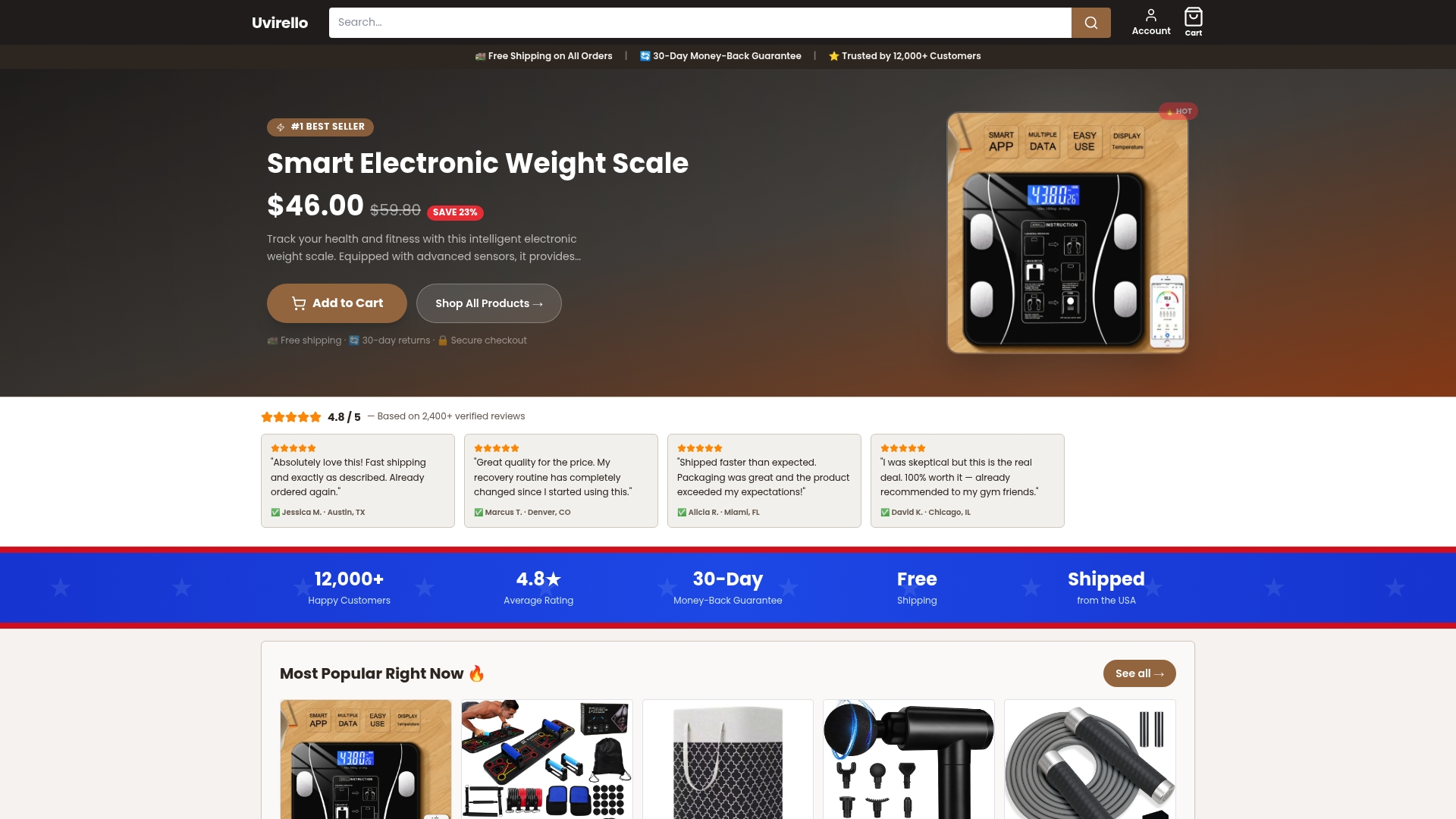
The Uvirello Smart Electronic Weight Scale pairs high-precision sensors with a full body-composition suite, body fat percentage, BMI, and more, so you're not stuck choosing between a scale that handles your weight and one that gives you useful health data. It's built with the sleek, straightforward interface fitness enthusiasts and anyone deep into a health journey actually want to look at every morning, and it's backed by more than 12,000 reviews averaging 4.8 out of 5 stars. If your current scale has been giving you inconsistent numbers, or you're simply ready for a scale that treats accuracy at higher weights as the default rather than the exception, check the Uvirello Smart Electronic Weight Scale and see the full spec sheet for yourself.
Sources
The claims in this guide draw on peer-reviewed research, manufacturer documentation, and independent technical explainers, listed here for anyone who wants to dig further:
- Accuracy of Smart Scales on Weight and Body Composition: Observational Study
- Digital Scale Meaning: What It Is, How It Works & When to Use It – San Diego Scale
- Scale Battery Life:What Determines How Long It Lasts - CHANGZHOU NEWTON FORCE WEIGHING SYSTEM CO.LTD