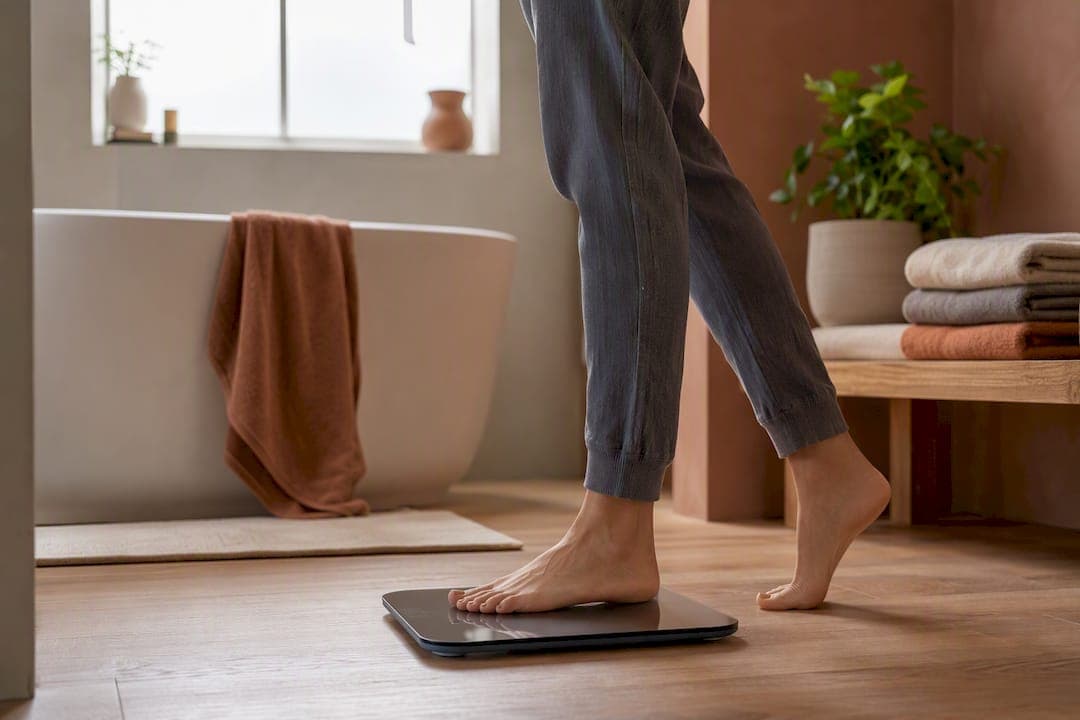
An app-connected smart scale is worth the counter space if you actually want to see progress, not just a number. It converts something you'd otherwise ignore, a single morning weigh-in into a trend line you can act on. The core payoff is automated logging that removes the friction of manual tracking, which in turn keeps you weighing in more consistently and gives you the pattern recognition that a single reading never will.
The main advantages break down as follows:
- Automated logging that eliminates spreadsheets and sticky notes
- Trend visibility across weight, body fat percentage, and BMI over weeks and months
- Higher adherence because the app does the remembering for you
- Coaching and app integration that turns raw numbers into a plan
- Multi-user support so a whole household can track separately
One caveat before you buy: these scales estimate body fat using a small electrical signal, and anyone with a pacemaker or implanted defibrillator should skip them entirely.
Key Takeaways
App-connected smart scales work because automated syncing removes tracking friction, and removing friction is what actually drives the consistency that produces visible progress.
| Point | Details |
|---|---|
| Trends beat single readings | Judge progress on a 7 to 14 day moving average, not any one morning's number. |
| Scales boost retention | Program members with a connected scale logged a notably longer period of consistent weigh-ins. |
| Calibrate your first week | Weigh barefoot, same time, same conditions, before food or exercise, for seven straight days. |
| Skip BIA if you have a pacemaker | The small electrical current used for body fat readings can interfere with implanted cardiac devices. |
| Uvirello fits the routine | The Smart Electronic Weight Scale pairs high-precision sensors and app sync for daily trend tracking. |
This article is general information, not a substitute for advice from a qualified doctor. Consult a qualified healthcare professional about your own circumstances before acting on anything here.
Table of Contents
- What App-Connected Health Device Benefits Actually Look Like Day to Day
- How BIA Scales Estimate Your Body Composition
- Building a Reliable Weigh-In Routine for Trend Data
- Why Accuracy Varies and Who Should Avoid BIA Scales
- Where Your Weight and Body Fat Data Actually Go
- Why Consistency Beats Precision Every Time
- Why Uvirello Is Built for This Exact Routine
- Sources
What App-Connected Health Device Benefits Actually Look Like Day to Day
The benefits of a connected scale aren't abstract. They show up in specific, repeatable ways once you've used one for a few weeks.
Motivation and habit formation come first. When a scale syncs automatically to your phone, you see a graph instead of a number. That shift matters more than it sounds. A static "184.2 lbs" tells you almost nothing on its own; a downward line over three weeks tells you the plan is working. Most people who quit tracking do it because logging feels tedious. Automatic sync removes that excuse.
Retention is where the evidence gets specific. In an observational study of an app-based digital health program, members given a connected scale weighed in significantly more often than members without one, with substantially higher logged weigh-ins over six months and notably longer engagement, driven by nothing more than removing the step of manually entering a number, illustrating how digital signage drives gym member retention through enhanced engagement.
- Fewer taps mean fewer skipped days
- Skipped days are the leading cause of program dropout
- A scale that logs itself removes the single biggest point of friction
Actionable insight is the next layer. A basic scale tells you that you lost three pounds. A connected one tells you whether that was fat or muscle, which changes what you do next. If body fat percentage is dropping while lean mass holds steady, your program is working as intended. If both are falling together, it might be time to add protein or dial back cardio volume, an adjustment tracking trends over single readings makes obvious that a bathroom scale alone never could.
Automation extends beyond the scale itself. Once your data syncs to a phone, it usually flows onward to Apple Health, Google Fit, or a coaching platform, which means you stop re-entering numbers into three different apps. For anyone juggling a fitness tracker, a nutrition app, and a coach's dashboard, that single sync point saves real time every week and keeps the whole ecosystem working from the same numbers.
How BIA Scales Estimate Your Body Composition
Consumer smart scales use bioelectrical impedance analysis, or BIA. The scale sends a low, imperceptible electrical current up through one foot and back down through the other, then measures how much resistance that current meets. Fat tissue resists the current more than muscle, which is mostly water, so the resistance value becomes the raw input for an estimate.
That raw resistance number alone isn't enough. The scale's app combines it with the age, height, sex, and sometimes activity level you enter during setup, then runs the whole thing through a proprietary formula to output body fat percentage, lean mass, and BMI.
- Weight is a direct, high-confidence measurement, no algorithm involved
- Body fat percentage is a moderate-confidence estimate built on assumptions about your body
- Protein and bone mass are the least reliable figures a consumer scale produces
Brand-to-brand variation is common because each manufacturer uses its own formula, so the same body can produce different body fat readings on two different scales. That's exactly why the number on any single day matters less than the direction it's moving over time.
Building a Reliable Weigh-In Routine for Trend Data
Getting useful trend data out of a smart scale isn't complicated, but it does require consistency. Follow this sequence for your first week and keep it going indefinitely:
- Weigh in at the same time every day, ideally first thing in the morning after using the bathroom and before eating or drinking.
- Stand barefoot on a hard, level floor. Carpet and uneven surfaces throw off the impedance reading.
- Skip heavy exercise, alcohol, and large meals for 12 hours beforehand. All three shift hydration levels enough to swing your body fat estimate.
- Log every day for at least a week, then start looking at a 7 to 14 day moving average instead of daily numbers.
- Sync the scale to Apple Health or Google Fit so your weight and body composition data live alongside your steps, workouts, and sleep in one place.
Pro Tip: Ignore any single-day swing bigger than a pound or two. That's almost always water weight, not fat gained or lost overnight.
Following this protocol for even one week gives you a real baseline instead of a guess.
Why Accuracy Varies and Who Should Avoid BIA Scales
No consumer BIA scale is a lab instrument, and setting the right expectation upfront saves you from chasing noise. Body fat estimates commonly vary by roughly 2 to 5 percent depending on hydration, time of day, and even how recently you exercised. That's not a flaw unique to one brand. It's a limitation of the technology itself.
- Dehydration tends to make you appear fatter than you are
- Overhydration tends to make you appear leaner than you are
- Exercising within a few hours of weighing in skews readings in either direction
- Different brands' algorithms will not agree with each other on the same body
Clinical experts describe at-home body-composition scales as reasonably accurate for tracking trends, but note they fall short of clinical tools like DEXA scans for precise measurement. Use one to watch direction, not to diagnose.
The safety note matters more than the accuracy caveat for some readers. Harvard Health advises that anyone with a pacemaker or implantable defibrillator should not step on a BIA-enabled scale, since the device passes a small current through the body that could interfere with implanted electronics. If that applies to you, stick to a standard weight-only scale and talk to your cardiologist before using any impedance-based device. If you need precise body composition numbers for medical reasons, a DEXA scan at a clinic is the better tool.
Where Your Weight and Body Fat Data Actually Go
Every reading your scale takes travels a specific path: from the scale to your phone's app over Bluetooth, then usually up to that company's cloud server so your history survives a phone upgrade or app reinstall. That's convenient, but it means a company you may never interact with directly is holding months or years of your biometric history.
Before you enable long-term syncing, check a few settings:
- Whether the app stores data locally by default or backs everything up to the cloud automatically
- Whether you can export or fully delete your history if you switch devices or apps
- Whether the app shares data with third parties for advertising or research, and whether you can opt out
- Whether the connection to the scale and the cloud backup use encryption
The upside of that cloud connection is real: syncing to Apple Health, Google Fit, or a coaching platform means a trainer or coach can see your objective weigh-in pattern without you texting them a screenshot every week, which is exactly the kind of low-friction data-sharing that makes personalized coaching stick.
Why Consistency Beats Precision Every Time
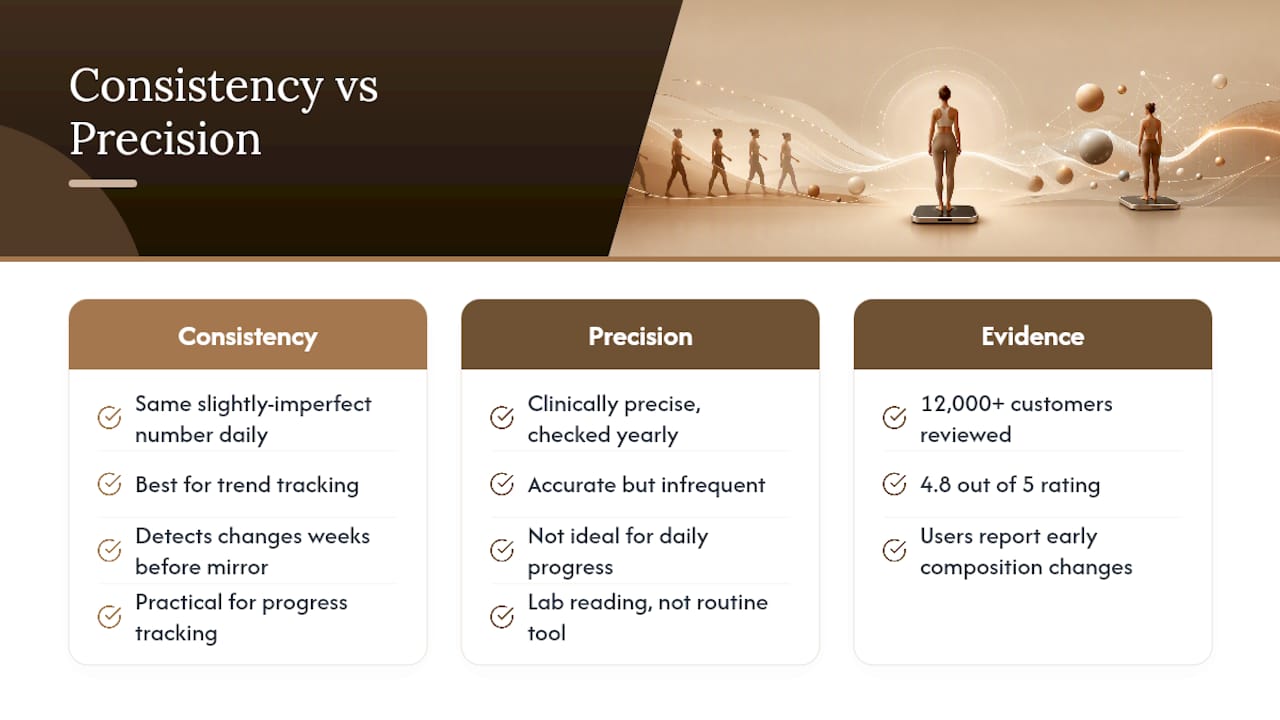
The biggest misconception I see fitness enthusiasts carry into their first smart scale purchase is that they're buying a lab-grade instrument. They're not. They're buying a consistency machine. A scale that gives you the same slightly-imperfect number every single day, under the same conditions, is more useful than a clinically precise reading you get once a year at a checkup.
That's the whole logic behind trend tracking, and it's why The Smart Electronic Weight Scale has built a following among people serious about progress: over 12,000 customers have rated it 4.8 out of 5, and the pattern in those reviews is consistent. People notice changes in body composition weeks before the bathroom mirror shows anything. Set your expectations around trends, not perfection, and the tool earns its place on your bathroom floor.
— Jacob
Why Uvirello Is Built for This Exact Routine
Everything in this guide, the calibration week, the moving averages, the app syncing, works best with hardware built to support it, and that's precisely where Uvirello's Smart Electronic Weight Scale earns its place.
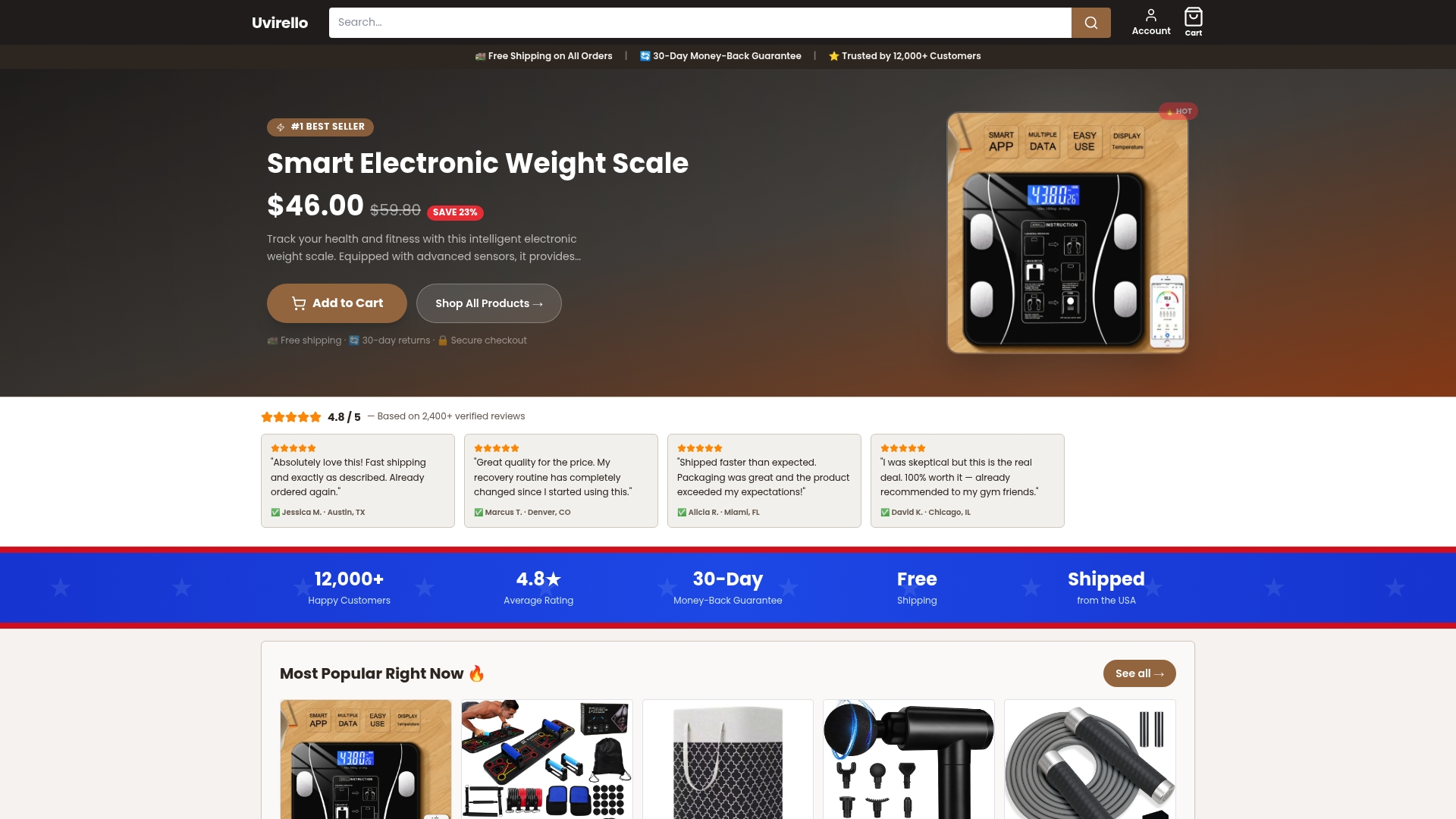
The scale pairs high-precision sensors with a sleek, uncluttered design, so it fits into a bathroom instead of looking like lab equipment, while still delivering the body fat percentage, BMI, and additional composition metrics that make trend tracking meaningful. Its app handles the syncing, the smoothing, and the history so you're not manually logging anything, which is exactly the friction-removal that keeps people on track. Over 12,000 customers have rated it 4.8 out of 5, and the interface is built for the same first-week calibration protocol covered above: consistent readings, clear trend lines, and privacy settings you control rather than guess at. If you're ready to turn daily numbers into a real progress story, order The Smart Electronic Weight Scale and start your first calibration week this week.
Sources
- Are Body Fat Scales Accurate? | Houston Methodist On Health
- The Effects of Providing a Connected Scale in an App-Based Digital Health Program: Cross-sectional Examination - PMC
- Device of the month: Body-weight scale - Harvard Health
- How do smart scales measure body composition, and how accurate are they? | Live Science