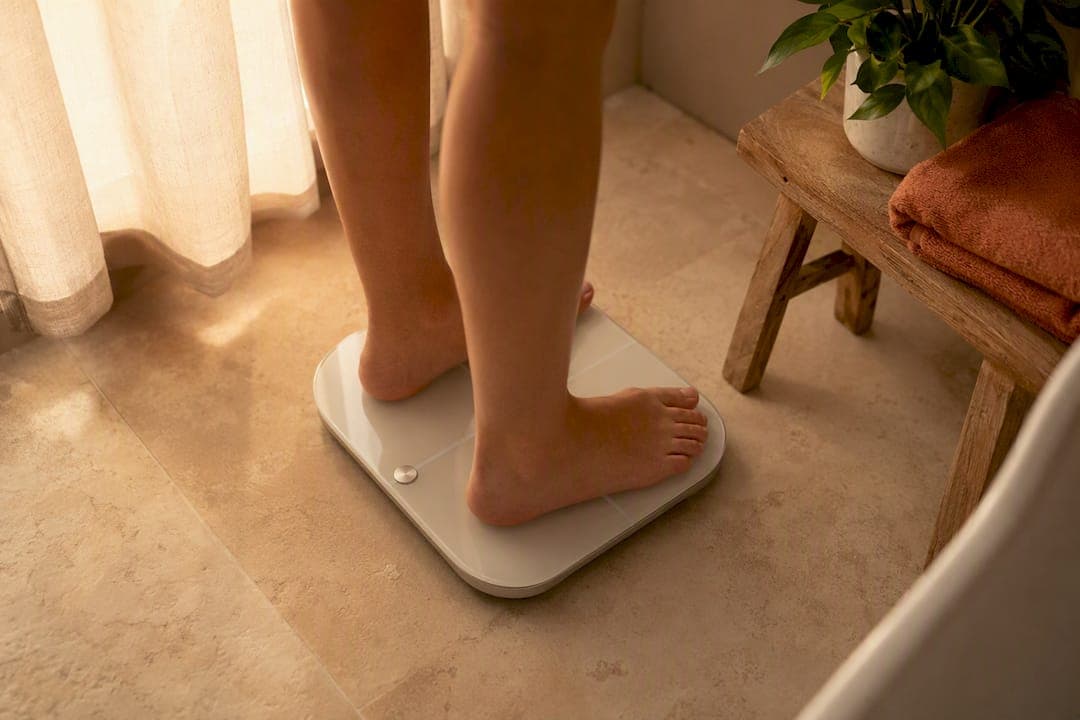
The fastest way to use health data for smarter decisions is a short, repeatable measurement protocol paired with weekly trend analysis, not obsessing over any single number on the display. A smart scale spits out weight, body fat percentage, muscle mass, and more, but those numbers only become useful once you strip out the noise and read the direction they're moving.
Here's the routine that makes the data trustworthy:
- Weigh in the same way every time: morning, after using the bathroom, before eating or drinking.
- Track one primary metric: body fat percentage over a rolling 4 to 6 week window, not day to day.
- Set a decision trigger: when that trend crosses a meaningful threshold, adjust calories, protein, or training. Don't react to a single reading.
A scale reading is a data point. A scale trend is a decision tool. Treat them differently and the numbers finally start working for you.
Pro Tip: Log your reading in the same app every time so the trend line builds automatically. If you're shopping for a device, the Smart Electronic Weight Scale is built around this exact workflow, from consistent sensor calibration to app-based history tracking. Check the product details if you want a scale designed for this kind of tracking from day one.
Key Takeaways
Reliable fitness decisions come from tracking body fat percentage trends over 4 to 6 weeks under consistent conditions, not from reacting to any single scale reading.
| Point | Details |
|---|---|
| Follow a fixed protocol | Weigh at the same time, post void, before eating, to keep readings comparable. |
| Track trends, not days | Use a 7 to 14 day rolling average instead of reacting to daily fluctuations. |
| Remember the hydration effect | A 2% drop in body water can shift body fat readings by 3 to 4 percentage points. |
| Act on sustained shifts | Adjust calories, protein, or training after 4 to 6 weeks of consistent directional change. |
| Combine with other measures | Pair scale data with waist circumference, photos, and strength numbers before acting. |
| Choose a consistent tool | The Smart Electronic Weight Scale supports this exact protocol with app-based trend logging. |
Table of Contents
- How Does a Smart Scale Measure Body Composition?
- What Throws Off Your Smart Scale Readings?
- What's the Best Way to Weigh Yourself for Accurate Trends?
- When Should a Trend Actually Change What You Do?
- What Other Measurements Should You Track Alongside the Scale?
- What's the Right Mindset for Long-Term Tracking?
- Why the Smart Electronic Weight Scale Fits This Exact Protocol
- Frequently Asked Questions
- Sources
How Does a Smart Scale Measure Body Composition?
Most smart scales use bioelectrical impedance analysis, or BIA. A faint, imperceptible electrical current runs from one footpad through your body and back. Fat tissue resists that current more than muscle, which is mostly water, so the scale measures resistance and runs it through an algorithm to estimate what's fat and what's lean mass.
That single mechanism produces several readouts, and each one means something different:
- Weight: the only truly direct measurement the scale takes.
- Body fat percentage: an estimate of what portion of your weight is fat tissue.
- Muscle mass: an estimate of lean tissue, including muscle.
- Body water: your estimated hydration level, which also affects every other reading.
- Visceral fat score: a rough indicator of fat stored around your organs, a marker tied to metabolic risk.
- BMI: a simple height-to-weight ratio that says nothing about what your weight is made of.
Body composition matters more than BMI for anyone actually training, since BMI can't tell a bodybuilder from someone carrying excess fat at the same height and weight.
These are estimates, not lab measurements. DEXA scanning is the clinical reference standard for body composition, but it's expensive and impractical for weekly check-ins. Your smart scale fills that gap between clinical visits.
What Throws Off Your Smart Scale Readings?
Body composition scales are sensitive instruments reacting to a moving target: you. Several everyday factors shift the current's path through your body and skew the estimate, sometimes dramatically.
The biggest variables:
- Hydration level at the moment you step on
- Time of day (you're measurably different in the morning versus after dinner)
- Recent exercise or alcohol, both of which shift fluid balance
- Menstrual cycle phase, which affects water retention
- Foot placement and skin contact, especially on two-point scales that only read through your feet versus four-point models that also use handgrips
Here's the number worth memorizing: a roughly 2% drop in body water can shift your body-fat percentage reading by 3 to 4 percentage points. That's not a rounding error. It's enough to make you think you gained fat overnight when you actually just skipped water before bed.
One dehydrated morning after a salty dinner can wipe out two weeks of real progress, at least on paper. The fix isn't a better scale. It's a better protocol.
A few safety notes matter here too. BIA scales send a small electrical current through the body, so anyone with a pacemaker or implanted defibrillator should skip them, and pregnant women are generally advised to use standard weight-only scales instead. Most manufacturers also set minimum age limits, since BIA algorithms are calibrated on adult body composition data.
What's the Best Way to Weigh Yourself for Accurate Trends?
Consistency beats precision. A slightly imperfect protocol you repeat exactly the same way every time will give you cleaner data than a "perfect" measurement taken under random conditions.
- Pick a fixed day and time, ideally the same morning each week.
- Weigh first thing after waking, after using the bathroom, before eating or drinking anything.
- Skip intense exercise in the 12 hours beforehand, since muscle micro-tears and fluid shifts distort the reading.
- Wear the same amount of clothing (or none) every session.
- Take 2 to 3 readings back to back if your device seems noisy, and average them.
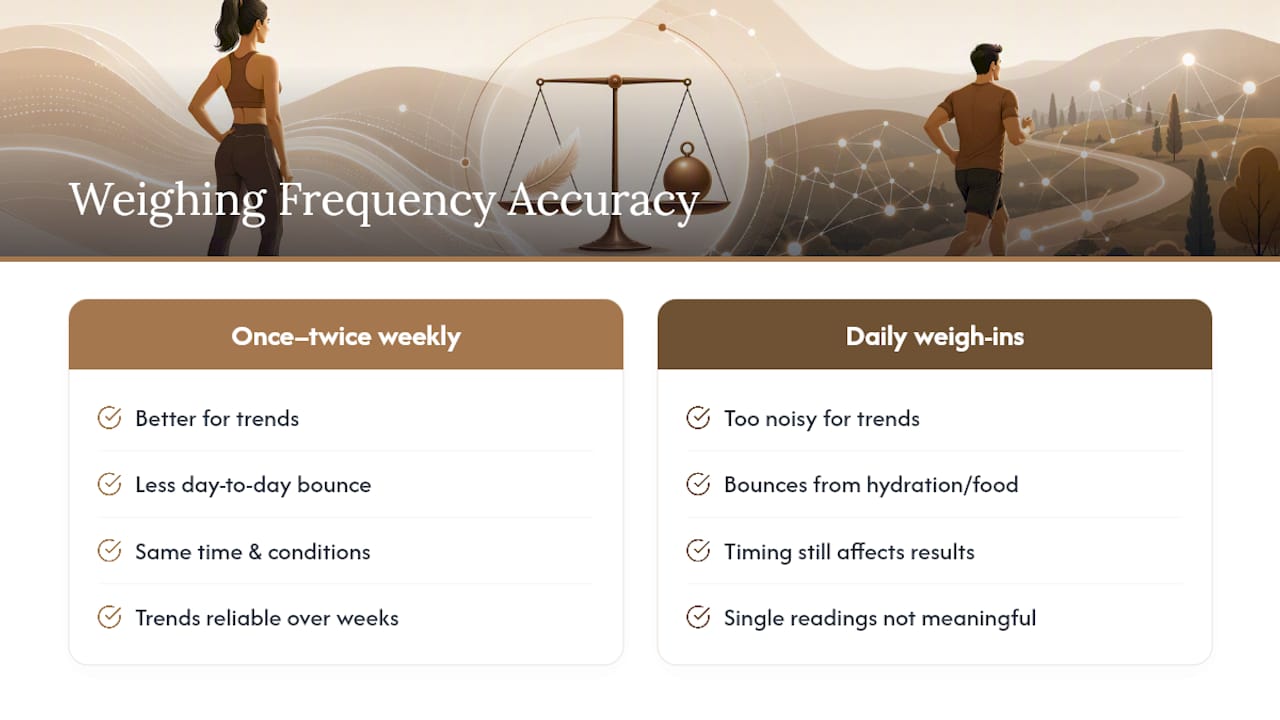
On frequency: weigh weekly or twice weekly, not daily. Daily numbers bounce around too much to mean anything on their own. What matters is the 7 to 14 day rolling average, which smooths out the noise from sodium intake, sleep quality, and hormonal shifts.
Log more than the number. Note context: how you slept, whether you traveled, if you're sick, where you are in your cycle. A spreadsheet works fine, or use the scale's companion app if it tracks history automatically, which makes spotting real trends far easier than scrolling through raw numbers.
Pro Tip: Skip the scale entirely on travel days and the morning after a heavy training session. The reading won't reflect anything real, and a bad data point is worse than a missing one.
Pro Tip: If you got sick, traveled internationally, or drank more than usual the night before, mark that in your log instead of deleting the reading. Context turns an outlier into useful information later.
When Should a Trend Actually Change What You Do?
This is where the data earns its keep. Different goals call for prioritizing different metrics.
- Fat loss: watch the body fat percentage trend line above all else. Scale weight can stay flat while fat percentage drops if you're also building muscle.
- Muscle gain: track muscle mass alongside actual strength numbers in the gym. The scale alone can't confirm you're getting stronger.
- Recomposition: watch both together. Falling body fat percentage with stable or rising muscle mass is the signature of recomposition working, even when total weight barely moves.
Turn the trend into a decision using rough timelines:
- No meaningful change after 4 to 6 weeks: your calorie deficit or surplus probably needs adjusting, typically by 10 to 15%.
- Body fat percentage climbing while muscle mass is flat: reassess total calorie intake before touching training volume.
- Muscle mass stagnant despite consistent training: look at protein intake first. Most active adults need more than they think.
- Body fat percentage drops 3 to 4 percentage points over 6 weeks: that's a real signal, not noise. If it's happening faster than intended, ease the deficit slightly to protect muscle.
A single bad morning reading is noise. The same direction holding for a month is a decision.
If a trend moves the wrong way for more than 8 to 12 weeks despite consistent effort, or if you notice symptoms like unusual fatigue, hair loss, or irregular cycles alongside the numbers, that's the point to loop in a registered dietitian or physician rather than adjusting the plan yourself again. Apps that sync your scale data can also flag these longer patterns automatically, which is worth exploring if you want AI-assisted analysis layered on top of your raw numbers.
What Other Measurements Should You Track Alongside the Scale?
Scale data gets more trustworthy when it's not the only evidence you're weighing. A few simple, low-cost measures catch things BIA misses entirely.
- Waist circumference, measured at the navel with a soft tape, correlates directly with visceral fat risk and doesn't care about hydration swings.
- Progress photos, taken in the same lighting and pose monthly, show shape changes the scale can't quantify.
- Strength numbers in your main lifts confirm whether muscle mass gains are real.
- Clothing fit and resting energy levels are blunt but honest signals.
When these disagree with the scale, trust the physical evidence first. A shrinking waistline with a stalled body fat percentage reading usually means the scale is off that week, not that your body is misbehaving. Pair the two consistently and you'll catch trends earlier than the scale alone would show.
What's the Right Mindset for Long-Term Tracking?
Keep the protocol boring and the review schedule fixed. Check trends weekly, not daily, and let the rolling average do the interpreting for you instead of your mood. The scale is a guide, not a judge; a bad morning number means nothing next to six weeks of consistent direction. Pair it with one non-scale win each week, whether that's a strength PR or a looser waistband, and you'll stay grounded in what's actually changing.

Why the Smart Electronic Weight Scale Fits This Exact Protocol
You just read the protocol that makes smart-scale data useful: consistent conditions, weekly trends, and clear decision triggers. Uvirello's Smart Electronic Weight Scale is built around that same discipline. Its high-precision sensors are designed for the four-point contact accuracy that matters most for reliable body fat and water readings, and the companion app logs every session automatically so your rolling averages build themselves instead of living in a notebook.
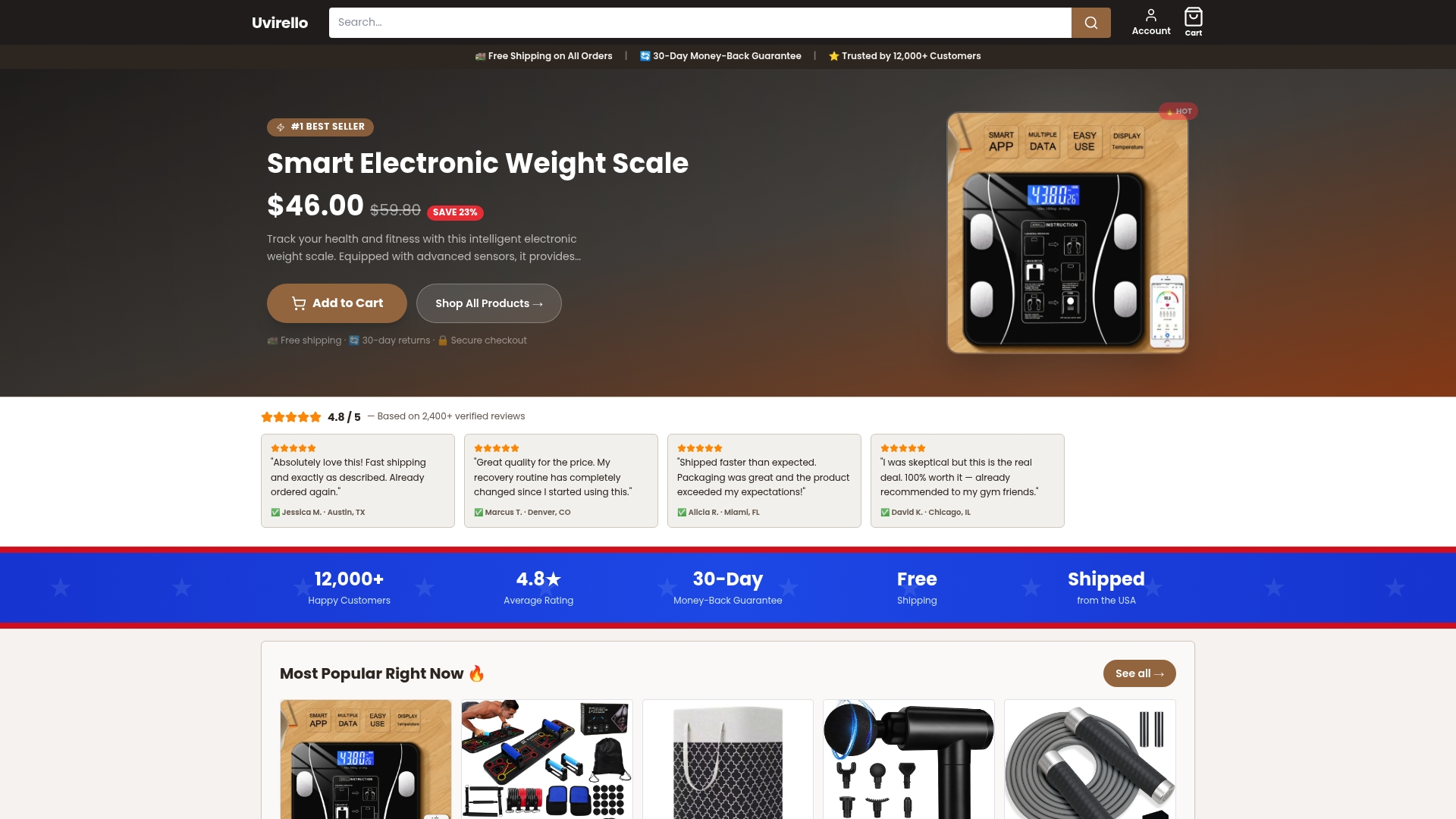
The features line up directly with what you need: consistent morning tracking, body fat and water trend history, and automatic syncing so you can spot a real 4 to 6 week shift instead of guessing from memory. Over 12,000 customers rate it 4.8 out of 5, a signal that the sensors and app hold up under the kind of daily use this protocol requires.
Your data stays tied to your personal profile, with account-level privacy controls so your body composition history isn't something you have to think twice about logging. If you're ready to put a real protocol behind your numbers, check out the Smart Electronic Weight Scale and start your first trend line this week.
Frequently Asked Questions
How often should I weigh myself for accurate trend data? Once or twice a week, at the same time under the same conditions, works better than daily weigh-ins. Daily numbers bounce too much from hydration and food timing to mean much on their own.
Can I trust my smart scale's body fat percentage number? Treat the absolute number loosely since consumer BIA devices typically run in a ±3 to 8% accuracy range compared to DEXA. The trend over several weeks is far more reliable than any single reading.
Is it safe to use a smart scale if I have a pacemaker? No. BIA scales send a small electrical current through your body, and manufacturers generally advise against use with pacemakers, defibrillators, or during pregnancy.
What should I do if my body fat percentage isn't moving? Give it 4 to 6 weeks before adjusting anything, since short-term fluctuations are normal. If the trend genuinely stalls after that window, revisit your calorie intake or protein levels before changing your training.
Should I combine scale data with other measurements? Yes. Waist circumference, progress photos, and strength numbers all catch changes the scale alone can miss, especially during body recomposition when total weight barely shifts.
This article is general information, not a substitute for advice from a qualified doctor. Consult a qualified healthcare professional about your own circumstances before acting on anything here.
Sources
- Bioelectrical impedance analysis (BIA) hydration sensitivity (PMC7144212)
- Are body composition scales accurate? | Houston Methodist
- Body composition metrics (consumer BIA estimates) | Wearable Wellness Guide