
Combining health metrics with your productivity schedule is defined as the practice of mapping biometric data, including heart rate variability (HRV), sleep quality, and body composition, directly onto your work calendar to align tasks with your body's actual capacity. People who do this reclaim an average of 6.4 deep work hours weekly within the first month. That number reflects a structural shift, not a motivational one. The biometric scheduling framework treats your calendar as a health document, not just a task list. When you treat both together, performance and well-being improve at the same time.
How to combine health metrics with your productivity schedule
The core principle is simple: your body is not equally capable throughout the day. Humans are typically at peak cognitive performance only 10–15% of a 168-hour week, but adaptive routines built around biometric data can extend that window to over 40%. That gap represents hours of focused output most people leave on the table every week. The biometric scheduling framework closes that gap by matching your hardest work to your strongest hours.
Calendar health scoring is the industry term for this practice. A calendar health score evaluates meeting density, protected focus blocks, back-to-back load, and context switching, then assigns a weekly grade from 0 to 100. Scores above 75 indicate low burnout risk. Scores below 50 signal a schedule that is actively working against you.

What health metrics matter most for your work schedule?
Not every metric deserves equal attention. The ones that most directly affect cognitive output are HRV, sleep quality, and circadian rhythm alignment. HRV measures the variation between heartbeats and reflects your nervous system's readiness for stress. A low HRV reading on a Monday morning tells you to schedule creative or strategic work later in the week, not first thing.
Sleep quality goes beyond hours logged. Deep sleep and REM cycles determine how well your brain consolidates information and manages emotional regulation. Both affect decision quality at work. Circadian rhythm alignment means scheduling your most demanding tasks during your personal peak window, which for most people falls in the late morning.
Key metrics worth tracking for health tracking for productivity:
- HRV: Daily readiness indicator; low values signal recovery days
- Sleep debt: Cumulative deficit that compounds cognitive impairment
- Resting heart rate: Trend-based marker of cardiovascular and stress load
- Body composition: Body fat percentage and BMI influence energy metabolism and stamina
- Step count and movement: Sedentary hours correlate with afternoon energy crashes
Trend tracking beats single readings every time. One bad night of sleep is noise. Five consecutive nights of poor sleep is a signal that should reshape your schedule for the week. Practitioners who track health trends over time make better scheduling decisions than those who react to daily fluctuations.
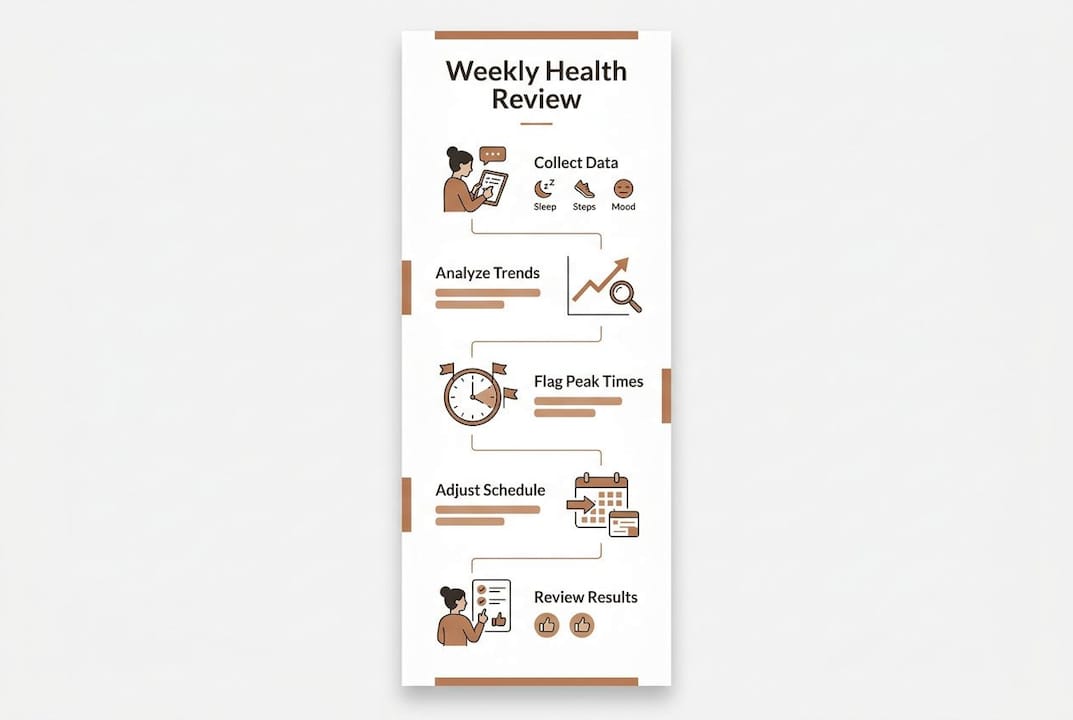
Pro Tip: Set a weekly review of your biometric trends every Sunday. Use that data to flag your two or three highest-capacity days before the week starts, then protect those days for deep work.
What tools help you integrate health data with your calendar?
The right tool depends on your budget, privacy preferences, and how much customization you want. Calendar health scoring platforms like skdul.ai assign a weekly score based on your actual schedule structure. They flag overloaded days, suggest reschedules, and protect focus blocks automatically. A score above 75 means your schedule supports sustained output. Below 50 means burnout is likely without changes.
For people who want full control over their data, open-source health intelligence engines offer a compelling path. A personal health intelligence engine integrating wearables, biomarkers, and habits can be built for under $300 using open-source frameworks. That cost covers hardware and setup, not ongoing fees. Self-hosting your health data locally with SQLite or JSON storage avoids black-box commercial algorithms and gives you complete customization over how metrics are weighted and displayed.
Wearable devices feed the system. Garmin devices export detailed HRV and sleep stage data. Apple Health aggregates data from multiple sources into one place. Oura Ring focuses specifically on readiness scores and recovery. Each platform has different export formats, so check compatibility with your scheduling tool before committing.
| Tool category | Best for | Key data provided |
|---|---|---|
| Calendar health platforms | Schedule scoring and focus protection | Meeting load, context switching, focus blocks |
| Open-source engines | Privacy-first, custom weighting | HRV, sleep, habits, biomarkers |
| Wearable devices | Continuous biometric capture | HRV, sleep stages, resting heart rate |
| Body composition scales | Metabolic and fitness baseline | BMI, body fat percentage, muscle mass |
Pro Tip: Start with one wearable and one calendar tool before adding more. Adding too many data sources at once makes it hard to identify which metric is actually driving your performance changes.
How to build a daily schedule aligned to your health metrics
A biometric scheduling approach follows five clear steps. Each step builds on the last, and skipping any one of them reduces the system's accuracy.
-
Assess your baseline. Spend two weeks logging HRV, sleep quality, and energy levels without changing anything. This gives you a personal baseline, not a population average. Your peak window may differ from the textbook late-morning model.
-
Identify your biological peaks and troughs. Look for patterns across your two-week log. Most people have a primary peak in the late morning, a trough after lunch, and a secondary peak in the late afternoon. Mark these on your calendar as recurring time blocks.
-
Schedule deep work during peak windows. Deep work includes writing, analysis, coding, and strategic planning. These tasks require the most cognitive resources. Advanced productivity scheduling frameworks place deep work blocks during biological peaks and protect them from meetings.
-
Add buffer and recovery periods. Schedule shallow tasks, email, and administrative work during trough periods. Build 10-minute movement breaks between focus blocks. Recovery is not wasted time. It is what makes the next peak window possible.
-
Review and adjust weekly. Check your calendar health score at the end of each week. If your score dropped, identify which days were overloaded and reschedule accordingly. This iterative loop is what separates a static schedule from a dynamic health-aligned plan.
Your body composition data also plays a role here. Body fat percentage and BMI affect your baseline energy levels and metabolic rate. People carrying excess body fat often report more pronounced afternoon energy crashes. Tracking these metrics over time with a body composition scale gives you a longer-term view of how your physical health shapes your daily capacity.
Common challenges when combining wellness and productivity planning
The most common mistake is trying to optimize everything at once. Optimization burnout arises from tracking too many variables simultaneously. The fix is to focus on one anchor metric for 2–4 weeks before adding another. HRV or sleep debt works well as a starting anchor because both directly predict next-day cognitive performance.
Data overload is the second pitfall. When you track eight metrics daily, interpreting the combined signal becomes its own cognitive task. That defeats the purpose. Limit your active dashboard to three metrics at any given time and rotate others in as needed.
Common challenges and their solutions:
- Inconsistent data collection: Use automatic wearable sync instead of manual logging to remove friction
- Rigid schedules that ignore life disruptions: Build one "flex block" per day that can absorb unexpected demands
- Privacy concerns: Self-host your data locally or choose platforms with clear data ownership policies
- Motivation dips: Tie your schedule review to a weekly habit you already do, like a Sunday evening meal
Balancing flexibility with consistency is harder than it sounds. A schedule that works perfectly on paper fails when a sick child, a late meeting, or a bad night disrupts the plan. The solution is to treat your schedule as a default, not a rule. When disruptions happen, return to the default the next day rather than abandoning the system entirely.
"Moving beyond binary health states to a continuum-based model allows schedules to adapt dynamically to daily cognitive capacities. The goal is not a perfect schedule. The goal is a schedule that recovers quickly from imperfection."
Privacy deserves direct attention. If you use a commercial platform, read the data sharing terms before connecting your wearables. Many platforms aggregate anonymized user data for product improvement. If that concerns you, a local open-source setup gives you full control without third-party access.
Key Takeaways
Combining health metrics with your productivity schedule is the most direct path to sustained high performance without burnout.
| Point | Details |
|---|---|
| Start with a baseline | Track HRV, sleep, and energy for two weeks before changing your schedule. |
| Use calendar health scoring | Scores above 75 indicate low burnout risk; below 50 requires immediate restructuring. |
| Match tasks to biology | Schedule deep work during peak windows and recovery tasks during troughs. |
| Focus on one anchor metric | Avoid tracking everything at once; start with HRV or sleep debt for 2–4 weeks. |
| Review weekly, not daily | Trend data over 7 days gives more reliable scheduling signals than single readings. |
What I've learned from building a biometric schedule
I spent the first three months of biometric scheduling obsessing over daily HRV numbers. Every dip sent me into a spiral of adjustments. The schedule changed so often it stopped being a schedule. The turning point came when I shifted to weekly trend reviews instead of daily reactions. That single change made the whole system feel sustainable.
The other thing nobody tells you is how much your calendar structure affects your health metrics, not just the other way around. A week packed with back-to-back meetings tanks your HRV by Thursday regardless of how well you slept. Protecting two or three uninterrupted focus blocks per day is as important as any supplement or sleep protocol. Calendar health deserves the same attention as biometric health for cognitive endurance and burnout prevention.
The social and professional pressure to be available constantly is the biggest threat to this system. Blocking your peak hours for deep work will feel uncomfortable at first. Colleagues will notice. Hold the boundary anyway. The output quality during those protected hours will eventually speak for itself. Making the system enjoyable matters too. Treat your weekly review as a planning ritual, not a performance audit. Curiosity about your own data keeps the habit alive far longer than discipline alone.
— Jacob
Uvirello and the data behind your daily performance
Accurate body composition data is the foundation of any serious health and productivity integration. The Uvirello Smart Electronic Weight Scale measures body fat percentage, BMI, and muscle mass with high-precision sensors, giving you the baseline metrics that feed directly into your scheduling decisions. Over 12,000 people have rated it 4.8 out of 5, and users consistently report that the body composition insights changed how they structure their training and recovery days.
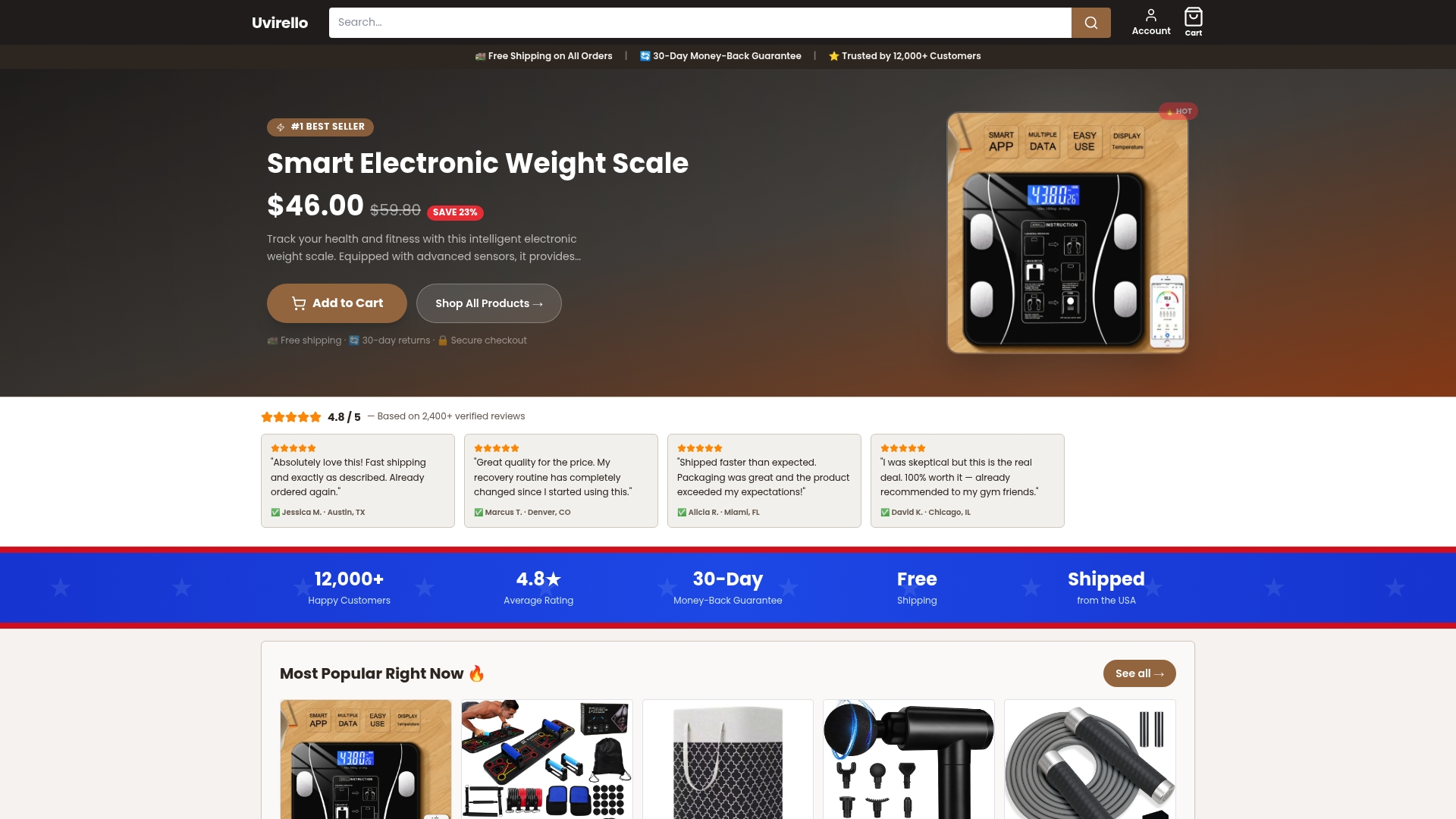
When you know your body fat trend over four weeks, you can connect that data to your energy patterns and adjust your schedule accordingly. Uvirello pairs naturally with wearable devices and open-source health engines to give you a complete picture of your physical readiness. For anyone building a fitness tracking workflow around productivity, body composition is the metric that ties everything together.
FAQ
What is a calendar health score?
A calendar health score is a weekly grade from 0 to 100 that evaluates meeting density, focus blocks, and context switching in your schedule. Scores above 75 indicate low burnout risk, while scores below 50 signal a high-stress schedule that needs restructuring.
Which health metric should I track first for productivity?
HRV is the best starting point because it directly reflects your nervous system's readiness for cognitive and physical stress. Track it daily for two weeks to establish your personal baseline before adding other metrics.
How do I measure the health impact on my work schedule?
Compare your weekly output quality and energy levels against your biometric data from the same period. Practitioners who use trend-based recovery metrics over 7-day windows make more accurate scheduling adjustments than those reacting to single-day readings.
Can I integrate health metrics into my schedule without expensive tools?
A personal health intelligence engine using open-source frameworks and a wearable device can be built for under $300. Local data storage with SQLite or JSON keeps costs low and gives you full control over your health data.
How often should I adjust my productivity schedule based on health data?
Adjust your schedule weekly, not daily. Daily fluctuations in metrics like HRV are often noise. A 7-day trend review gives you a reliable signal and prevents over-correction that destabilizes your routine.