
Your essential baseline measurements are body weight, waist circumference, resting heart rate (RHR), blood pressure, body composition (body fat percentage), one aerobic test, one strength test, and a basic mobility screen. According to Mayo Clinic's fitness assessment guidance, establishing these numbers turns guesswork into motivation and gives you realistic goals to aim for.
- Trusted protocols: Mayo Clinic and the American College of Sports Medicine (ACSM) both recommend standardized baseline assessments before starting any new program.
- Practical starting tool: A smart scale like the Uvirello Smart Electronic Weight Scale captures weight and body composition in one step, making it a natural anchor for your first session.
Your next action: Schedule one standardized morning testing session this week, run through each measurement in order, and record every value plus your testing conditions in a simple template.
Key Takeaways
A reliable fitness baseline requires standardized conditions, at least five core metrics, and a retest plan, not expensive equipment.
| Point | Details |
|---|---|
| Core metrics to capture | Measure weight, waist, RHR, blood pressure, one aerobic test, and one strength test in a single morning session. |
| Standardize every condition | Record time of day, sleep, meal timing, and clothing at every session so retests compare fairly. |
| Use rolling averages | A seven-day wearable average for steps is more reliable than any single-day reading for activity baselines. |
| Retest on a schedule | Check weight, waist, and RHR every 4–6 weeks; run a full body composition retest every 12 weeks. |
| Uvirello for body composition | The Uvirello Smart Electronic Weight Scale measures body fat percentage and BMI at home, syncing to Apple Health and Google Fit for long-term trend tracking. |
Table of Contents
- Which measurements matter and why each helps you track progress
- How to measure each metric accurately at home
- How to complete your baseline in one morning session
- How to turn your baseline numbers into realistic goals
- Safety checks and when to stop or see a clinician
- Which tools do you actually need for a solid baseline?
- Sources
Which measurements matter and why each helps you track progress
Not every metric deserves equal attention at the start. Knowing which ones to prioritize saves time and keeps you from drowning in data.
Must-do measurements give you the clearest signal of change over time:
- Body weight tracks overall mass change and is the easiest daily reference point.
- Waist circumference is a direct marker of metabolic risk, more informative than weight alone for health outcomes.
- Resting heart rate reflects cardiovascular fitness; as aerobic capacity improves, RHR typically drops.
- One aerobic test (a 1.5-mile run or a 10-minute walk with HR recorded) gives you a functional fitness snapshot.
- One strength test (push-ups to failure or a timed plank) establishes your muscular endurance baseline.
Nice-to-have: Body composition via a smart scale or bioelectrical impedance analysis (BIA) device. Tracking body fat percentage alongside weight tells you whether you're losing fat or muscle, which weight alone cannot answer.
Optional or pro-level: DXA scanning, VO2max testing, and resting metabolic rate (RMR) measurement. A Foundation Fitness Assessment at UC Davis Sports Medicine combines all three for a clinical-grade baseline, but these require a lab and are rarely necessary for beginners.
The practical reason to track each metric: waist circumference flags metabolic risk early, RHR tracks cardiovascular adaptation week to week, and body composition separates fat loss from muscle loss when the scale barely moves. These three together give you a picture that goes well beyond weight tracking.
How to measure each metric accurately at home
Protocols matter more than equipment. A cheap tape measure used consistently beats an expensive device used carelessly.
Weight and body composition
Weigh yourself first thing in the morning, after using the bathroom, before eating or drinking, and in minimal clothing. The Uvirello Smart Electronic Weight Scale uses high-precision BIA sensors to measure body fat percentage and BMI alongside weight. Step on it with bare feet, stand still, and let it complete the reading. One caveat: consumer BIA is affected by hydration status. A single reading can shift by a few percentage points depending on how much water you drank the night before, so always measure under the same conditions and track the trend, not the daily number.
Resting heart rate
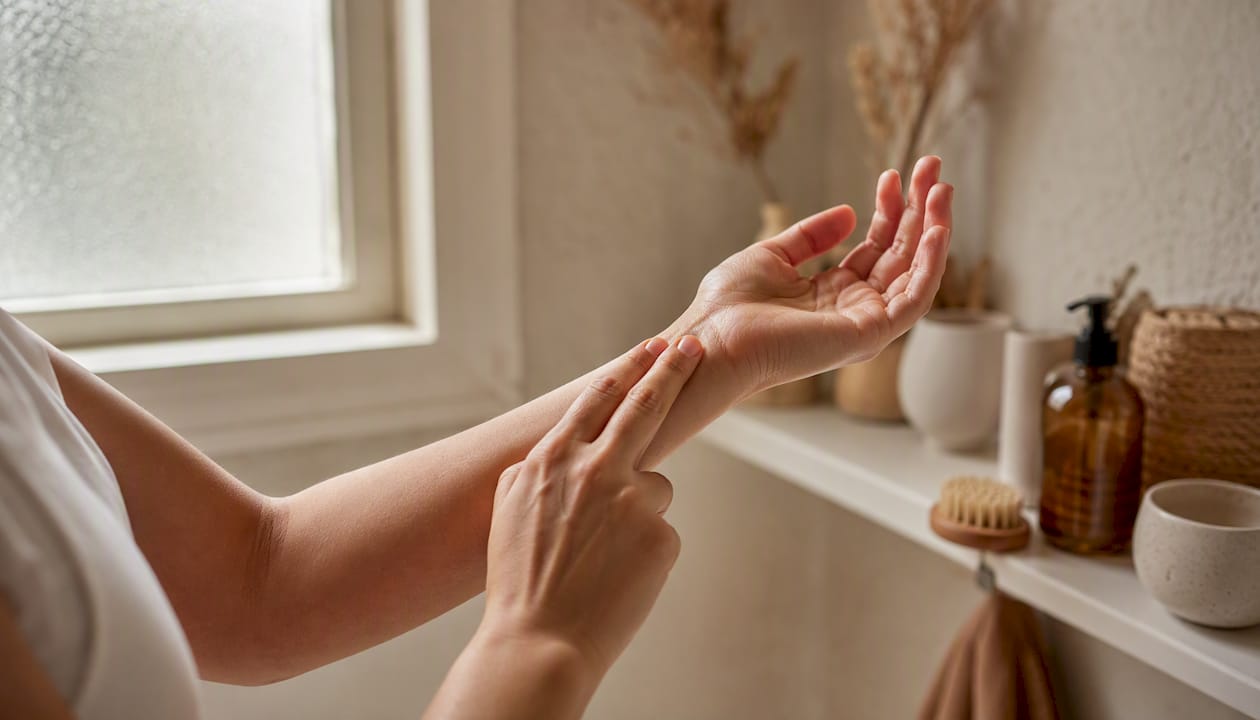
INTERLIVE's 2025 scoping review recommends using nocturnal or true resting HR where possible, because it gives the lowest and most physiologically stable reading for an individual. If you wear a fitness tracker overnight, check the lowest HR recorded during sleep. Without a wearable, measure manually: lie still for five minutes after waking, then count your pulse at your wrist for 60 seconds. Repeat on three consecutive mornings and average the results.
Blood pressure
Sit quietly for five minutes before measuring. Keep your arm at heart level, cuff on bare skin two finger-widths above the elbow crease. Take two readings, one minute apart, and record the average. A home cuff works fine for baseline purposes; pharmacy cuffs are acceptable but less consistent.
Waist circumference
Measure at the narrowest point between your lower ribs and hip bones, or at the navel if there is no clear narrowing. Exhale normally before measuring. Do not pull the tape tight. Record to the nearest 0.5 cm or 0.25 inch.
Aerobic and strength tests
For aerobic capacity, a 1.5-mile timed run is the standard field test. If running is not yet feasible, a 10-minute brisk walk with HR recorded at the end is a valid starting alternative. For strength, count push-ups to failure with good form, or hold a forearm plank and record the time. For flexibility, a simple sit-and-reach gives you a mobility reference point.
Run aerobic tests after resting vitals but before strength tests. Fatigue from strength work will inflate your aerobic HR and distort the result.
Device accuracy note: Wearable sensors each carry tradeoffs. Accelerometers reliably count steps; PPG-based HR estimates drift under heavy motion. GPS adds location accuracy but drains battery. Research comparing smartphones and Fitbit devices found moderate average agreement but wide individual variability, so pick one device and stick with it rather than switching between platforms between retests.
Pro Tip: For step and activity baselines, collect at least seven full days of wearable data and divide total steps by seven. A seven-day average is far more reliable than any single day.
How to complete your baseline in one morning session
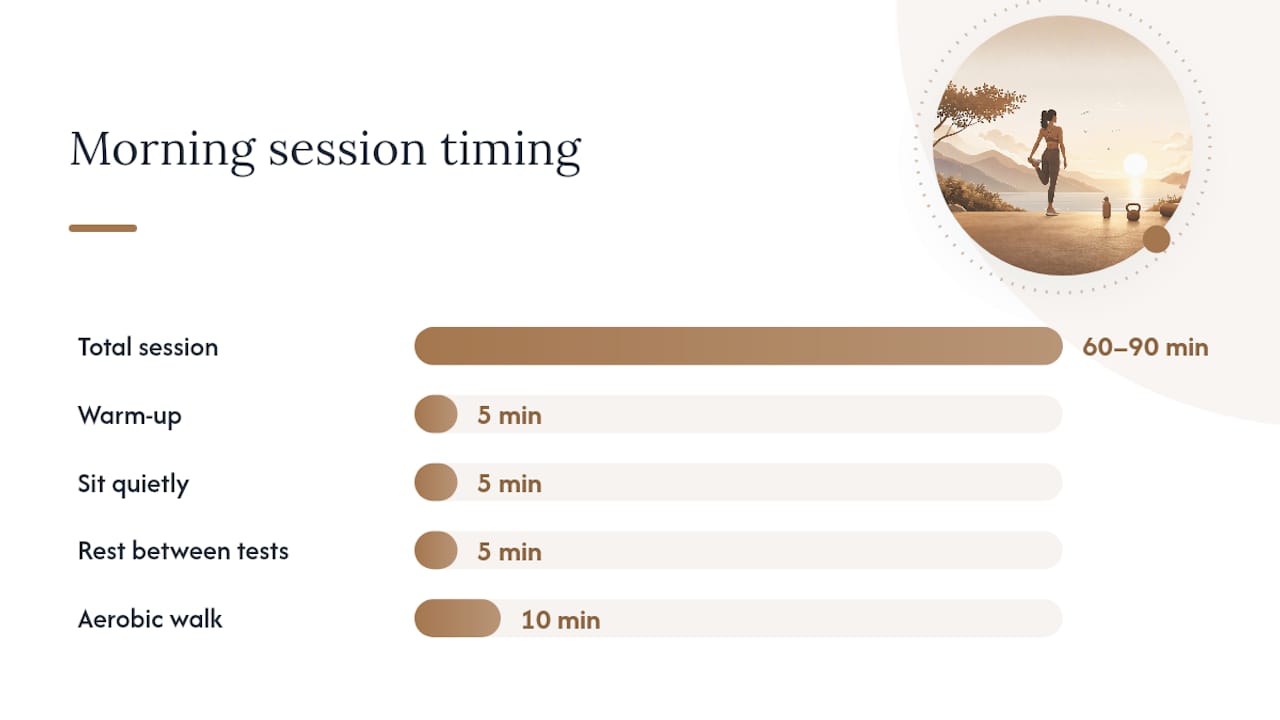
The whole protocol fits into 60–90 minutes if you prepare the night before.
Preparation checklist (the night before and morning of):
- Sleep at least seven hours.
- Avoid alcohol and intense exercise for 24 hours before testing.
- Fast for two to four hours before the session (water is fine).
- Wear the same clothing each time you retest.
- Place your scale on a hard, flat surface, not carpet.
- Charge your wearable and blood pressure cuff.
Testing order (morning of):
- Wake, use the bathroom, and drink a small glass of water.
- Sit quietly for five minutes, then measure blood pressure (two readings, one minute apart).
- Measure RHR manually or check overnight wearable data.
- Step on the scale for weight and body composition.
- Measure waist circumference.
- Complete a five-minute standardized warm-up (light walking, arm circles, leg swings).
- Run the aerobic test (1.5-mile run or 10-minute walk with HR recorded).
- Rest five minutes, then complete push-ups to failure and a timed plank.
- Finish with a sit-and-reach flexibility test.
- Record every value and note conditions (time, sleep quality, meal timing).
| Metric | Your value | Test conditions |
|---|---|---|
| Body weight | ___ | Time, clothing |
| Body fat % | ___ | Scale, hydration |
| Waist circumference | ___ | Tape position |
| Resting heart rate | ___ | Method used |
| Blood pressure | ___ / ___ | Cuff, arm, reps |
| Aerobic test result | ___ | Test type, distance |
| Push-ups (to failure) | ___ | Form standard |
| Plank hold | ___ sec | Start position |
| Sit-and-reach | ___ | Warm-up done? |
Copy this table into a spreadsheet or print it. The conditions column is as important as the numbers.
How to turn your baseline numbers into realistic goals
Raw numbers mean little without context. The first thing to understand is the difference between daily noise and a real change.
Body weight can shift by 1–2 lbs in a single day from water, food, and digestion. RHR varies by a few beats depending on sleep quality and stress. Neither of those shifts is a fitness signal. A meaningful change in weight or body composition typically takes 8–12 weeks to emerge clearly. RHR improvements from aerobic training often appear within four to six weeks.
Setting SMART goals from your baseline:
- Reduce waist circumference steadily over several weeks (specific, measurable, tied to a metabolic marker).
- Improve 1.5-mile time by 90 seconds over 10 weeks (specific, tied to aerobic test).
- Add several push-ups to your baseline count over a short timeframe (strength-specific).
Retest timing:
- Every 4–6 weeks: weight, waist, RHR, push-ups, plank.
- Every 7–10 days: rolling average of daily steps from wearable data.
- Every 12 weeks: full body composition retest and aerobic test.
Use rolling averages rather than single readings for weight and activity data. A week's average smooths out the noise that makes daily numbers misleading. Personal trainer assessment guidelines suggest a full reassessment every 8–12 weeks, with lighter progress checks every 4–6 weeks, depending on your goals.
Safety checks and when to stop or see a clinician
Before any fitness testing, run through this pre-screen list. If you answer yes to any item, consult a clinician before completing the aerobic or strength tests.
- Do you have known heart disease, a recent heart attack, or a heart condition your doctor monitors?
- Have you experienced chest pain during physical activity in the past month?
- Do you have uncontrolled high blood pressure (above 160/100 mmHg at rest)?
- Have you fainted or lost consciousness during or after exercise?
- Do you have a bone, joint, or muscle problem that physical activity could worsen?
Stop testing immediately and seek medical attention if you experience:
- Chest pain, tightness, or pressure during any test.
- Dizziness, lightheadedness, or near-fainting.
- Severe shortness of breath out of proportion to effort.
- Heart palpitations that feel irregular or alarming.
Pro Tip: When syncing health data from your scale or wearable to Apple Health or Google Fit, review each app's privacy settings before connecting. Limit data sharing to the platforms you actively use, and back up your baseline log to a personal spreadsheet as a second copy.
Which tools do you actually need for a solid baseline?
You do not need a lab or an expensive kit. Three items cover the full protocol: a smart scale, a blood pressure cuff, and a tape measure. A wearable is helpful but not required for the first session.
Selection criteria that matter:
- Repeatability: Does the device give consistent readings under the same conditions? This matters more than raw accuracy for tracking progress.
- Documented validation or clear specifications: Look for devices that publish their sensor specs or have been independently tested.
- Reliable sync and backup: Cloud sync to Apple Health or Google Fit protects your data and makes trend analysis easier.
Practical picks by budget:
- Entry-level: A basic arm blood pressure cuff, a fabric tape measure, and the Uvirello Smart Electronic Weight Scale. The Uvirello scale measures body weight, body fat percentage, and BMI with high-precision sensors, syncs with health apps, and fits neatly into the single-session protocol above. Over 12,000 customers rate it 4.8 out of 5, which reflects consistent real-world performance.
- Mid-range addition: A wrist or chest-strap HR monitor that reports reliable resting and active HR. Useful for aerobic tests and overnight RHR tracking.
- Lab-grade (optional): DXA for body composition, RMR testing, and a clinical VO2max test when you want a deeper clinical baseline.
Pro Tip: Before buying any wearable, check whether it reports raw sensor data or only processed estimates. Processed estimates vary by algorithm and can shift between firmware updates, which makes long-term trend comparison unreliable. A device that shows raw step counts and raw HR values gives you a more stable baseline.
For a deeper look at how sensor combinations affect accuracy, the precision sensor guide on the Uvirello blog breaks down accelerometers, PPG, and gyroscopes in plain language.
What consistent baseline testing actually does for your progress
Most people who abandon a fitness program do so within the first six weeks, often because they cannot see progress. The numbers feel flat, motivation drops, and the program changes. What I've observed consistently is that people who start with a documented baseline behave differently. They have something concrete to compare against, so a two-beat drop in RHR or a centimeter off the waist feels real and earned rather than imagined.
The protocols in this guide are not complicated. What makes them work is the standardization: same time, same conditions, same device, every retest. That consistency is what separates a meaningful data point from noise. A baseline is not a judgment of where you are. It is the starting coordinate that makes every future measurement meaningful.
The Uvirello Smart Electronic Weight Scale fits right into this protocol
Body composition is the metric most beginners undertrack, and it is the one that changes most meaningfully in the first 12 weeks of a new program. The Uvirello Smart Electronic Weight Scale captures body fat percentage, BMI, and weight in a single morning weigh-in, syncing directly to Apple Health and Google Fit so your baseline data is backed up and ready to compare at every retest.
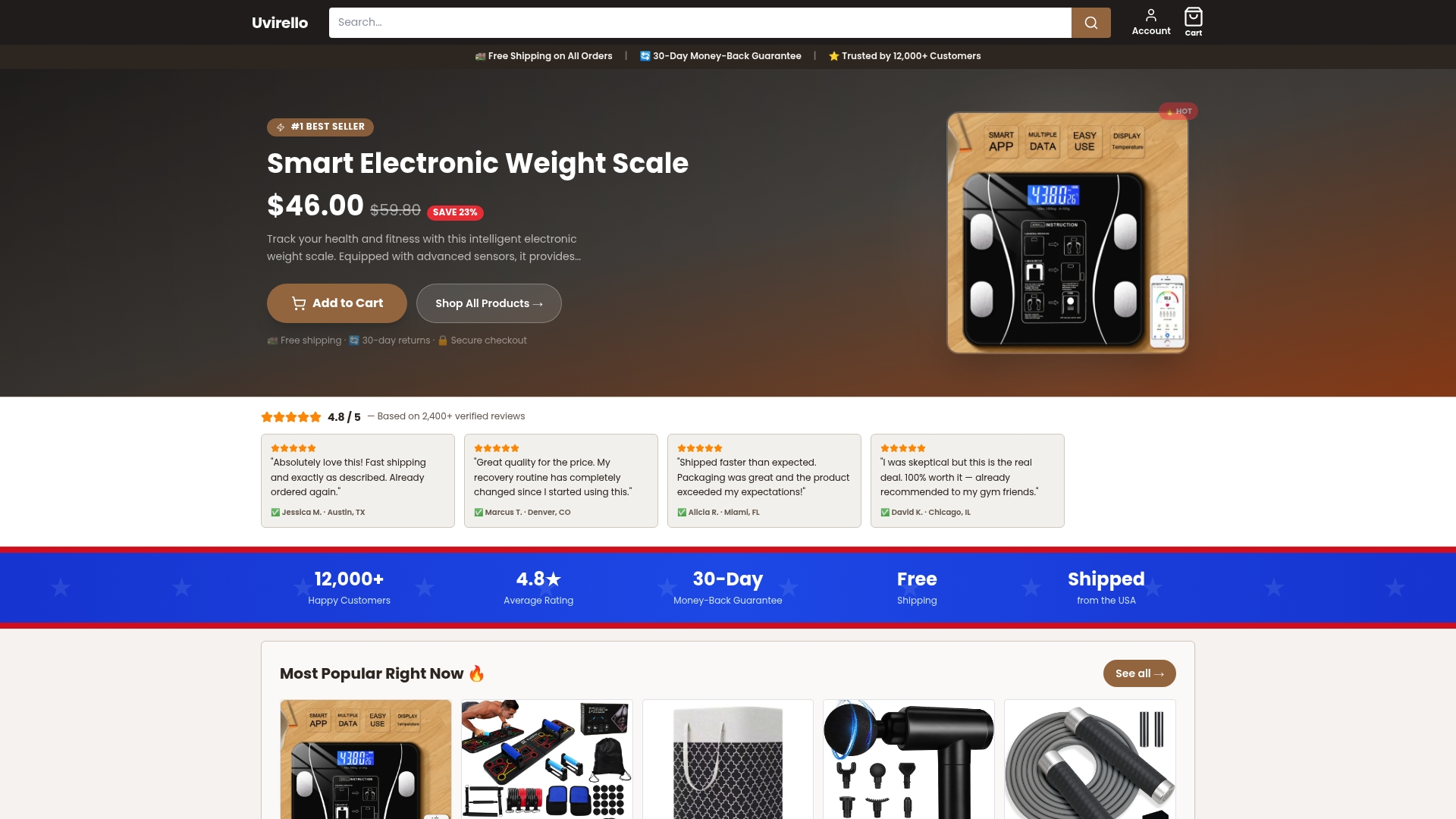
It slots into the single-session protocol at step four, takes under a minute, and gives you the body composition data that a standard bathroom scale simply cannot provide. With high-precision sensors and a 4.8-star rating from over 12,000 customers, it is built for exactly the kind of consistent, repeatable measurement this guide depends on.
Ready to anchor your baseline with accurate body composition data? See the Uvirello Smart Electronic Weight Scale and get started with your first session.
Sources
- How fit are you? See how you measure up — Mayo Clinic
- Wearable sensors and their tradeoffs — PMC
- Fitness assessment — UC Davis Sports Medicine
- Recommendations for profiling free-living physical activity on the basis of heart rate — INTERLIVE/Scoping review (2025)
This article is general information, not a substitute for advice from a qualified doctor. Consult a qualified healthcare professional about your own circumstances before acting on anything here.