
Most day-to-day weight swings come down to water, food volume, and waste — not sudden changes in body fat. Your scale is measuring everything inside you at that moment: the sodium from last night's dinner, the glycogen your muscles stored after a carb-heavy meal, the water your body is holding onto, and whatever hasn't made it through your digestive tract yet. Longer-term shifts are a different story, driven by hormones, medications, and sustained calorie imbalance.
The Cleveland Clinic confirms that adult body weight commonly fluctuates 2–5 pounds in a single day from these short-term factors alone. The top causes, at a glance:
- Sodium and water retention
- Carbohydrate intake and glycogen storage
- Meal volume and gut contents
- Exercise and post-workout inflammation
- Menstrual cycle and hormonal shifts
- Sleep quality and cortisol levels
- Alcohol intake
- Medications and medical conditions
- Gastrointestinal issues (bloating, constipation)
- Sustained calorie imbalance over weeks
Key Takeaways
Daily weight swings of a few pounds are normal and almost always reflect water, food volume, and waste — not changes in body fat.
| Point | Details |
|---|---|
| Normal daily range | Body weight typically fluctuates by a few pounds per day from water, glycogen, and gut contents. |
| Top short-term drivers | Sodium, carbohydrate intake, meal volume, alcohol, and poor sleep cause most day-to-day spikes. |
| Weighing routine | Weigh every morning after voiding, before eating, on the same scale, and track a 7-day average. |
| When to see a doctor | Seek care if you lose or gain more than 5% of body weight in a month without explanation. |
| Uvirello scale | Uvirello's body-composition metrics help distinguish fluid-driven spikes from true fat or muscle change. |
Table of Contents
- How much daily weight change is actually normal?
- Short-term causes that make your scale jump overnight
- Longer-term causes that reflect real changes in body mass
- Medications and medical conditions that commonly change weight
- When scale changes should prompt a doctor visit
- How to weigh yourself so the numbers actually mean something
- How a smart body-composition scale helps you interpret fluctuations
- How gastrointestinal issues affect your scale reading
- What the scale is really telling you (and what it isn't)
- Uvirello helps you track what actually matters
- Sources
How much daily weight change is actually normal?
The 2–5 pound daily range is well-established clinical guidance, but understanding why those pounds appear and disappear makes it far less alarming. Gaining one pound of actual fat requires roughly a 3,500-calorie surplus above your maintenance needs. No single meal does that. What you're seeing on the scale after a big dinner is water, glycogen, and undigested food — all of it temporary.
Here's a concrete example: eat a high-sodium pasta dinner with bread, and your body stores the extra carbohydrates as glycogen. Research published on PubMed shows that each gram of glycogen binds approximately 3–4 grams of water. Add the sodium-driven fluid retention and the physical weight of the food still in your gut, and a 3–4 pound overnight spike is completely physiologically normal. By the next morning, after voiding and before eating, most of that is already gone.
Verywell Health notes that daily variation of 2–4 pounds is common guidance, with factors including water retention, food intake, exercise, and menstrual cycle changes all contributing. The takeaway: a single weigh-in tells you almost nothing meaningful about your actual body composition.
Short-term causes that make your scale jump overnight
These are the everyday, reversible reasons your number moves between Monday and Tuesday. None of them represent true fat gain or loss.
1. Sodium and water retention
Sodium is probably the single biggest short-term driver of scale spikes. Healthline explains that higher sodium intake causes the body to retain extra water, and reducing sodium typically brings that retained fluid back down. A single restaurant meal can contain 1,200–1,500 mg of sodium compared to roughly 400–600 mg in a typical home-cooked meal. That difference shows up on the scale the next morning.
2. Carbohydrate intake and glycogen storage
Every gram of glycogen your muscles and liver store pulls 3–4 grams of water along with it. A high-carb day — pasta, rice, bread, fruit — can add several pounds of water weight within hours. Cut carbs sharply the next day and that water releases just as fast. This is why low-carb diets produce dramatic early scale drops: it's mostly glycogen water leaving, not fat.
3. Meal volume and gut contents
Food has physical weight. A large meal with high fiber content sits in your digestive tract for hours, and that weight registers on the scale until elimination. Late-night eating means more gut contents are present during your morning weigh-in. Delayed digestion and constipation keep that meal weight in your system longer, temporarily pushing the number up.
4. Exercise effects
A hard workout dehydrates you through sweat, which can drop your weight by a pound or two immediately after. But within 24–48 hours, the picture reverses: muscles experiencing micro-damage from resistance training retain fluid as part of the repair process, and your body restores glycogen stores (with their bound water) if you eat carbohydrates post-workout. Tracking exercise and gym data around workouts helps you understand these post-exercise fluctuations rather than misread them as fat gain.

5. Alcohol intake
Alcohol initially acts as a diuretic, causing short-term dehydration that can lower your weight temporarily. Then comes the rebound: your body retains water as it recovers, and the NIAAA notes that alcohol also increases appetite and adds calories directly. The day-after scale number often reflects both the rebound fluid retention and the extra food consumed while drinking.
6. Sleep and cortisol
Research published in PMC shows that sleep deprivation raises ghrelin (the hunger hormone) and lowers leptin (the satiety hormone), with adults advised to get 7–9 hours nightly to support hormonal balance. Poor sleep also elevates cortisol, which promotes fluid retention and can increase appetite the following day. A bad night's sleep won't add fat, but it will nudge your scale up and make it harder to eat at maintenance.
Pro Tip: Log your sodium intake, alcohol consumption, and sleep quality alongside your daily weigh-in for two weeks. Patterns emerge fast — most people can identify their personal top two or three spike triggers within that window.
Longer-term causes that reflect real changes in body mass
When weight shifts persist over weeks or months, something more sustained is driving it. These causes reflect actual changes in fat, muscle, or fluid that warrant attention.
The NIDDK is clear that weight is shaped by lifestyle, environment, medicines, health conditions, and genetics working together — rarely a single factor in isolation.
A slow, persistent upward or downward trend over 4–6 weeks, without an obvious behavioral explanation, is the signal worth investigating. Daily noise obscures it; a weekly average reveals it.
Key longer-term drivers include:
- Sustained calorie imbalance: A consistent surplus or deficit of 500 calories per day produces roughly one pound of fat change per week. This is the mechanism behind true weight gain and loss.
- Hypothyroidism: An underactive thyroid slows metabolism and often causes gradual weight gain, fatigue, and fluid retention.
- Hyperthyroidism: The opposite — an overactive thyroid accelerates metabolism, causing unintended weight loss.
- PCOS (polycystic ovary syndrome): Insulin resistance associated with PCOS makes weight gain easier and loss harder, particularly around the abdomen.
- Cushing's syndrome: Excess cortisol from adrenal or pituitary dysfunction causes characteristic fat redistribution and weight gain.
- Age-related muscle loss (sarcopenia): After roughly age 30, muscle mass declines gradually without resistance training. Less muscle means a slower resting metabolism.
- Menopause: Hormonal shifts redistribute fat toward the abdomen and slow metabolic rate.
- Chronic sleep deprivation and prolonged stress: Both sustain elevated cortisol and disrupted hunger hormones over time, contributing to gradual gain.
- Long-term medication use: Covered in detail in the next section.
Medications and medical conditions that commonly change weight
If your weight has shifted without a clear behavioral reason, a medication or underlying condition may be the cause. This is more common than most people realize.
Medications associated with weight gain:
- Certain antidepressants (particularly SSRIs like paroxetine and tricyclics)
- Antipsychotics (olanzapine, clozapine)
- Corticosteroids (prednisone, hydrocortisone)
- Some diabetes medications (insulin, sulfonylureas, thiazolidinediones)
- Beta-blockers (metoprolol, atenolol)
- Some anticonvulsants (valproate, gabapentin)
Medications associated with weight loss:
- Stimulants (amphetamines used for ADHD)
- GLP-1 receptor agonists (semaglutide, liraglutide) when prescribed for diabetes or obesity
- Some diabetes medications (metformin, SGLT-2 inhibitors)
Conditions linked to weight gain:
- Hypothyroidism, Cushing's syndrome, PCOS
- Heart failure and kidney disease (fluid/edema accumulation)
- Depression and anxiety (behavioral and hormonal effects)
Conditions linked to weight loss:
- Hyperthyroidism, uncontrolled type 1 diabetes
- Cancers, particularly gastrointestinal and hematologic
- Inflammatory bowel disease (Crohn's, ulcerative colitis)
- Celiac disease, malabsorption syndromes
Never adjust or stop a prescription medication because of weight concerns without discussing it with your prescribing clinician first. Many alternatives exist, and the underlying condition being treated matters.
When scale changes should prompt a doctor visit
Most weight fluctuations are benign. A few patterns are not.
The Mayo Clinic recommends clinical evaluation when weight changes are sudden, persistent, or accompanied by other symptoms. Specific red flags:
- Unexplained loss or gain of more than 5% of body weight within one month (for a 160-pound person, that's about 8 pounds)
- Persistent upward or downward trend over several weeks with no clear behavioral explanation
- Swelling in the legs, ankles, or abdomen (possible heart, kidney, or liver involvement)
- Fatigue, cold intolerance, hair loss, or constipation alongside weight gain (possible hypothyroidism)
- Unexplained weight loss with increased appetite, heat intolerance, or rapid heartbeat (possible hyperthyroidism)
- Shortness of breath, especially when lying flat (possible heart failure)
- Night sweats, fever, or persistent gastrointestinal symptoms with weight loss (possible malignancy or infection)
When a clinician evaluates unexplained weight change, early steps typically include a thyroid panel (TSH, free T4), a basic metabolic panel, a complete blood count, and a medication review. The American Thyroid Association notes that thyroid function assessment is a standard early step when weight change is persistent and unexplained.
How to weigh yourself so the numbers actually mean something
Consistency matters more than frequency. A weigh-in taken at random times under random conditions is nearly useless for tracking trends.
A reliable routine:
- Weigh first thing in the morning, after using the bathroom and before eating or drinking
- Use the same scale, on the same surface, every time
- Wear minimal clothing or none
- Avoid weighing the day after heavy alcohol, a very high-sodium meal, or an unusually intense workout — those readings are outliers, not trends
The most useful metric isn't any single reading; it's a 7-day rolling average. Tracking trends rather than single readings filters out the daily noise and shows you the actual direction your weight is moving. Most smart scale apps calculate this automatically.
Pro Tip: Note three things alongside each weigh-in: sodium (high/normal), sleep quality (good/poor), and exercise from the day before. After two weeks, you'll see exactly which variables move your number and by how much — which makes the scale a tool instead of a source of anxiety.
How a smart body-composition scale helps you interpret fluctuations
A standard bathroom scale gives you one number. A smart body-composition scale gives you context.
Most smart scales use bioelectrical impedance analysis (BIA) to estimate body fat percentage, muscle mass, and sometimes hydration level alongside weight. That extra data matters when you're trying to separate a fluid-driven spike from a real change in body composition. If your weight goes up two pounds but your estimated body fat percentage stays flat, the scale is telling you it's water — not fat.
Practical uses for composition data:
- Spotting fluid spikes: A jump in weight with stable or lower body fat percentage points to water retention, not tissue change.
- Tracking weekly trends: Body fat percentage trends over 4–6 weeks reveal whether a calorie approach is actually working.
- Pairing with behavior logs: Combining scale metrics with notes on sodium, sleep, and exercise turns raw numbers into body composition insights you can act on.
BIA readings are sensitive to hydration state, so the consistency rules above matter even more for composition metrics.
Pro Tip: Take body-composition readings at the same time as your weight — morning, post-void, pre-meal. Avoid readings immediately after exercise or a shower; both alter skin conductivity and skew the impedance measurement.
How gastrointestinal issues affect your scale reading
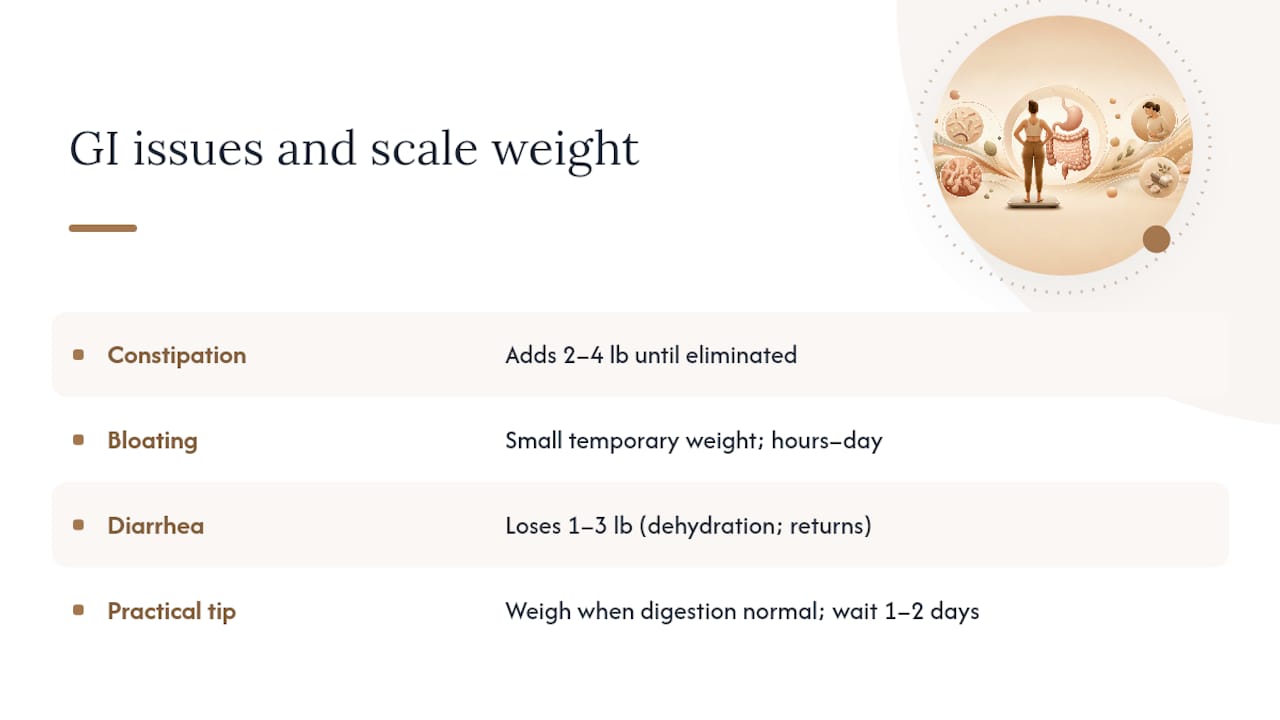
Bloating, constipation, and diarrhea each move the scale in predictable ways, and none of them represent fat change.
Constipation keeps stool in the colon longer than normal, adding physical weight that won't clear until elimination. For some people, constipation can account for 2–4 pounds of scale weight that disappears after a bowel movement. High-fiber diets help long-term, but in the short term, a sudden increase in fiber also causes gas and bloating that temporarily adds to the reading.
Bloating from gas, fermentation of certain foods (beans, cruciferous vegetables, artificial sweeteners), or food intolerances inflates the abdomen visually and adds a small amount of scale weight from the gas and retained fluid. It resolves within hours to a day for most people.
Diarrhea does the opposite: rapid fluid loss can drop your weight by 1–3 pounds quickly. That drop is dehydration, not fat loss, and the weight returns as soon as you rehydrate. Chronic diarrhea from conditions like irritable bowel syndrome or inflammatory bowel disease can contribute to longer-term weight loss through malabsorption, which is a different mechanism entirely and worth discussing with a clinician.
The practical point: weigh yourself when your digestive system is in its normal state. After a bout of constipation or diarrhea, give yourself a day or two before treating the reading as representative.
What the scale is really telling you (and what it isn't)
The conventional advice is to "not obsess over the scale." That's half right. The problem isn't weighing yourself — it's treating a single number as a verdict.
What most people miss is that the scale is actually a fluid meter on most days. It measures everything: the water your kidneys haven't processed yet, the food still moving through your gut, the glycogen your muscles loaded after yesterday's run. Fat change is slow and quiet underneath all that noise. A 3-pound spike after a salty dinner isn't a setback — it's your kidneys doing their job.
The more useful habit is treating your scale like a weather station rather than a report card. Log daily, calculate a weekly average, and look for the direction of travel over 3–4 weeks. That's where the real signal lives. Pair it with notes on sodium, sleep, and exercise, and you'll understand your own patterns better than most people ever do.
Uvirello helps you track what actually matters
Knowing the causes of weight fluctuation is one thing. Having a tool that helps you see through the daily noise is another.
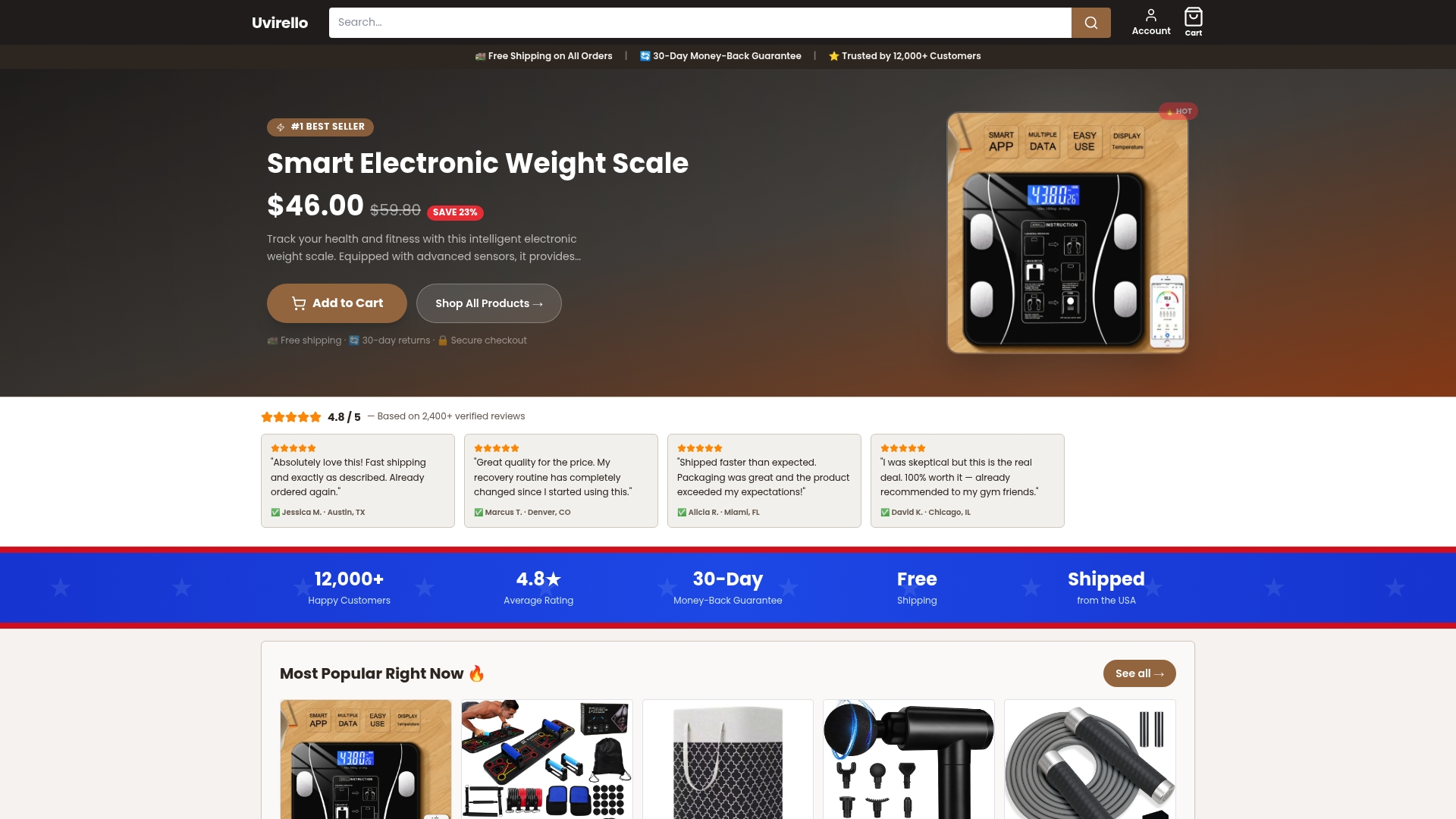
The Uvirello Smart Electronic Weight Scale measures body fat percentage, BMI, and additional composition metrics alongside weight, using high-precision sensors designed for consistent, reliable readings. When your weight jumps two pounds overnight, Uvirello's composition data tells you whether it's water or something worth tracking. Over 12,000 customers rate it 4.8 out of 5, and the app's trend view makes the 7-day rolling average effortless to follow. If you're serious about understanding your body rather than reacting to daily numbers, check out the Uvirello scale and see how body-composition tracking changes the way you read your results.
Sources
- Weight Fluctuations
- Glycogen and water binding (PubMed)
- Sleep and metabolic hormones (PMC)
- Factors affecting weight and health (NIDDK)
- Causes of unexplained weight loss (Mayo Clinic)
This article is general information, not a substitute for advice from a qualified doctor. Consult a qualified healthcare professional about your own circumstances before acting on anything here.