
Consistent morning habits measurably improve blood pressure, glucose regulation, body composition trends, sleep quality, mood, and resting heart rate — and you can track every one of those changes. The strongest evidence comes from a 2026 All of Us Research Program analysis of nearly 15,000 participants: people who exercised habitually in the morning showed significantly lower odds of coronary artery disease (OR 0.69), type 2 diabetes (OR 0.70), hypertension (OR 0.82), hyperlipidemia (OR 0.79), and obesity (OR 0.65) compared with those who exercised later in the day. Those associations held regardless of total activity volume. For tracking body composition trends alongside those changes, the Uvirello Smart Electronic Weight Scale gives you body fat percentage, BMI, and daily trend data in one place.
Table of Contents
- How morning routines affect specific health metrics, according to research
- Which health metrics to track and how to measure them reliably
- How to design an evidence-based morning routine that fits your schedule
- A simple tracking protocol with realistic timelines for change
- Common barriers to a morning routine and how to work around them
- Key Takeaways
- Why measurable habits beat miracle claims
- The Uvirello Smart Electronic Weight Scale fits naturally into this routine
- Selected sources and further reading
How morning routines affect specific health metrics, according to research
The habit-to-metric connections are clearer than most people expect. Here is what the evidence actually shows:
| Metric | Direction of change | Evidence strength |
|---|---|---|
| Blood pressure | Decreases with morning exercise | Strong (All of Us cohort; cardiologist guidance) |
| Glucose regulation | Improves with protein/fiber breakfast | Moderate–strong (nutrition reviews) |
| Body composition | Favorable trends with consistent exercise + breakfast | Moderate (long-term observational) |
| Sleep quality | Improves with consistent wake time + morning light | Strong (chronobiology literature) |
| Mood / alertness | Improves with light, movement, hydration | Moderate |
| Resting HR / HRV | Improves with regular morning exercise | Moderate |
Morning exercise appears to work partly through diurnal metabolic variation. Small human trials cited in the All of Us preprint found that aerobic exercise at 8:00–9:00 AM produced greater reductions in systolic blood pressure and fasting insulin than an identical afternoon session. The lowest coronary artery disease risk in the dataset clustered between 7:00 and 8:00 AM.
Morning light does something different. Short outdoor light exposure suppresses melatonin, triggers a serotonin rise, and advances your circadian phase, which translates into faster sleep onset at night and sharper morning alertness. The mechanism is well-established in chronobiology; the practical implication is that 10–15 minutes outside within an hour of waking costs almost nothing.
On breakfast: a nutrient-dense breakfast rich in protein and fiber is linked to reduced all-cause mortality risk, better satiety, and lower long-term risk of type 2 diabetes and obesity. Protein also modulates the cortisol awakening response, which peaks in the first 30–45 minutes after waking.
"If you set yourself up and you start your day properly, you start off feeling good, you feel organized." — Kamalyn Kaur, psychotherapist, AP News
Hydration is the lowest-effort lever. Drinking 16–20 ounces of water shortly after waking corrects mild overnight dehydration and produces modest but near-immediate improvements in mood and alertness.
Which health metrics to track and how to measure them reliably
Tracking six metrics gives you a complete picture without overwhelming your morning.
Primary metrics:
- Resting blood pressure — measure seated after 5 minutes of rest, before caffeine
- Body weight and body fat percentage — use a smart scale under consistent conditions (after voiding, before eating)
- Fasting glucose — finger-stick or continuous glucose monitor (CGM) if available; postprandial glucose 2 hours after breakfast as a proxy
- Resting heart rate and HRV — take on waking, before caffeine, using a wearable or phone app
- Sleep duration and efficiency — log with a consistent wearable or app
- Daily mood and alertness — a 1–5 self-rating takes 10 seconds and catches patterns your devices miss
Measurement protocol for reliable data:
- Measure at the same time each morning, in the same order.
- Take blood pressure twice and average the readings.
- Step on your scale after voiding and before breakfast.
- Log RHR/HRV before reaching for your phone.
- Record sleep data immediately on waking while the app syncs.
- Note mood and alertness as a single number in a notes app or paper log.
Single readings are noisy. Tracking trends rather than isolated numbers is what reveals whether your routine is working. Weekly averages smooth out the day-to-day variation caused by stress, hydration, and sleep debt. The Uvirello Smart Electronic Weight Scale supports multi-user profiles and stores trend data, so you can see body composition moving in the right direction across weeks rather than fixating on a single morning number.
Pro Tip: Fitness metrics beyond weight — RHR, HRV, and sleep efficiency — often show improvement weeks before body composition shifts. Track them from day one.
How to design an evidence-based morning routine that fits your schedule
Three time budgets, one framework. Pick the one that fits your life right now.
Core elements (all three routines share these):
- Fixed wake time (same within 30 minutes on weekends)
- Water before anything else
- Light exposure within the first hour
- Some form of movement
- Protein and fiber at breakfast
- Caffeine delayed 60–90 minutes after waking when feasible
5–10 minute minimalist routine Wake, drink water, step outside for 5 minutes of light and a short walk. Eat a high-protein breakfast (eggs, Greek yogurt, or a protein shake with fruit). This targets alertness, mood, and glucose regulation. It is the right starting point for anyone currently doing nothing.
20–30 minute balanced routine Add 15–20 minutes of moderate movement (brisk walk, bodyweight circuit, or cycling). Eat breakfast with intention. This routine starts producing measurable resting HR and sleep quality changes within 2–4 weeks.

45–60 minute performance routine Structured workout (strength or cardio), 10–15 minutes of outdoor light, a full protein-and-fiber breakfast, and 5–10 minutes of planning or low-friction mindfulness before opening email. This is where you expect to see BP, glucose, and body composition trends move over 8–12 weeks.
Starting with one consistent change — light or five minutes of movement — is more likely to produce lasting results than an ambitious routine abandoned in three weeks. Shift workers and late chronotypes should align their routine with their natural wake window rather than forcing an early clock time; the benefit comes from aligning with your chronotype, not from waking at 5:00 AM specifically.
Pro Tip: Morning routines reduce decision fatigue by automating low-stakes choices. Lay out your workout clothes, prep breakfast ingredients, and set your scale on the bathroom floor the night before. Friction is the enemy of consistency.
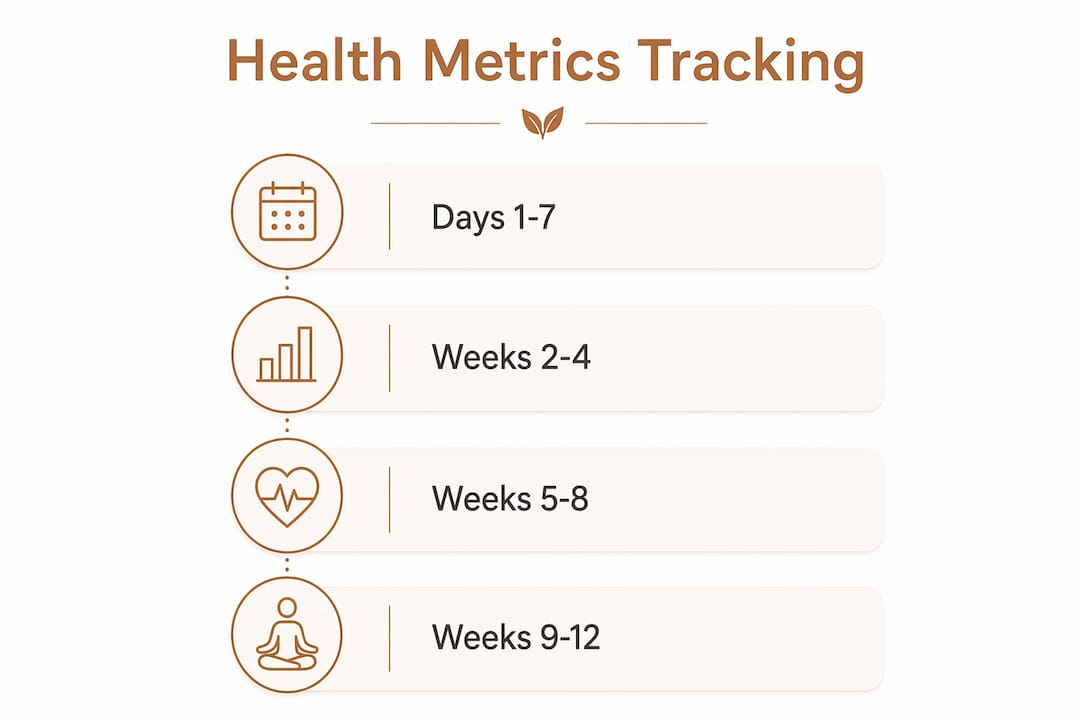
A simple tracking protocol with realistic timelines for change
Step-by-step protocol:
- Baseline week: Collect daily measures before changing anything. This is your reference point.
- Week 1: Implement your chosen routine. Log adherence (did you do it? yes/no).
- Week 4 check-in: Average your daily readings for the week. Look for direction, not magnitude.
- Week 8 check-in: Compare 7-day averages to baseline. Expect resting HR and sleep to show clear trends by now.
- Week 12 check-in: Body composition and BP trends should be visible if adherence has been consistent.
Typical timelines for measurable change:
| Metric | Typical window |
|---|---|
| Alertness and sleep onset | Days 1–7 |
| Resting heart rate | 2–4 weeks |
| Sleep consolidation | 2–4 weeks |
| Mood stability | 2–6 weeks |
| Blood pressure | 4–8 weeks |
| Glucose regulation | 4–8 weeks |
| Body composition trends | 8–12 weeks |
Use rolling 7-day averages rather than daily readings to judge progress. Require consistent direction across at least two metrics before concluding the routine is working. If you see sustained high blood pressure readings, symptomatic low blood sugar, or irregular heart rhythms, contact a clinician before continuing.
Common barriers to a morning routine and how to work around them
Barrier → quick fix:
- Sleep debt: Prioritize sleep duration over an earlier wake time. A 6:30 AM routine on 8 hours beats a 5:30 AM routine on 5 hours, every time.
- Variable work schedule: Anchor your routine to wake time, not clock time. The sequence matters more than the hour.
- Caregiving duties: Compress to the 5–10 minute minimalist version. Water, light through a window, and a protein breakfast still move the needle.
- Low motivation: Attach the new habit to something you already do. Put the scale next to the toilet. Leave the water glass on the nightstand. Reduce the decision to zero.
- Forced early rising causing fatigue: Waking earlier than your chronotype supports can worsen sleep quality and daytime function. If you feel worse after two weeks, shift the wake time 30 minutes later.
Pro Tip: Missing one day does not break a routine. Missing three in a row usually does. Give yourself one free pass per week, built in, so a single bad morning does not become an excuse to quit.
Analyzing health trends with a busy schedule is possible with five minutes of logging per day. Automated tracking via a smart scale and wearable cuts that to under two minutes.
Key Takeaways
Consistent morning habits produce measurable improvements across six health metrics, with the strongest evidence for cardiometabolic outcomes from morning exercise and circadian benefits from outdoor light exposure.
| Point | Details |
|---|---|
| Morning exercise timing matters | The All of Us study (n ≈ 15,000) found morning exercisers had coronary artery disease odds ratio of 0.69 vs. daytime exercisers. |
| Start with one habit | Light exposure or 5 minutes of movement is enough to begin seeing measurable changes in alertness and sleep. |
| Track trends, not single readings | Weekly averages of RHR, BP, and body composition reveal progress that daily numbers obscure. |
| Expect gradual timelines | Alertness shifts in days; body composition trends take 8–12 weeks of consistent effort. |
| Uvirello Smart Electronic Weight Scale | Tracks body fat percentage and BMI daily, supporting the trend-based approach this guide recommends. |
Why measurable habits beat miracle claims
The loudest voices in wellness tend to promise dramatic transformations from elaborate protocols. What the research actually shows is more boring and more reliable: small, repeatable actions done consistently produce real, trackable changes in real health numbers.
The All of Us data is a good example of why specificity matters. It is not just "exercise is good." It is that exercising in the morning, between 7:00 and 8:00 AM specifically, is associated with the lowest coronary artery disease odds in a dataset of nearly 15,000 people monitored for a full year. That level of granularity is only possible because of wearable data. It changes the advice from "move more" to "move earlier."
The same logic applies to tracking. A single weight reading tells you almost nothing. A 12-week trend line on body fat percentage tells you whether your breakfast and movement habits are actually working. Simple tools make that visible without requiring a clinical setting or a personal trainer.
The Uvirello Smart Electronic Weight Scale fits naturally into this routine
If you are going to track body composition trends, the measurement tool matters. The Uvirello Smart Electronic Weight Scale measures body fat percentage and BMI alongside weight, giving you the data points that actually reflect metabolic change rather than just fluid shifts.
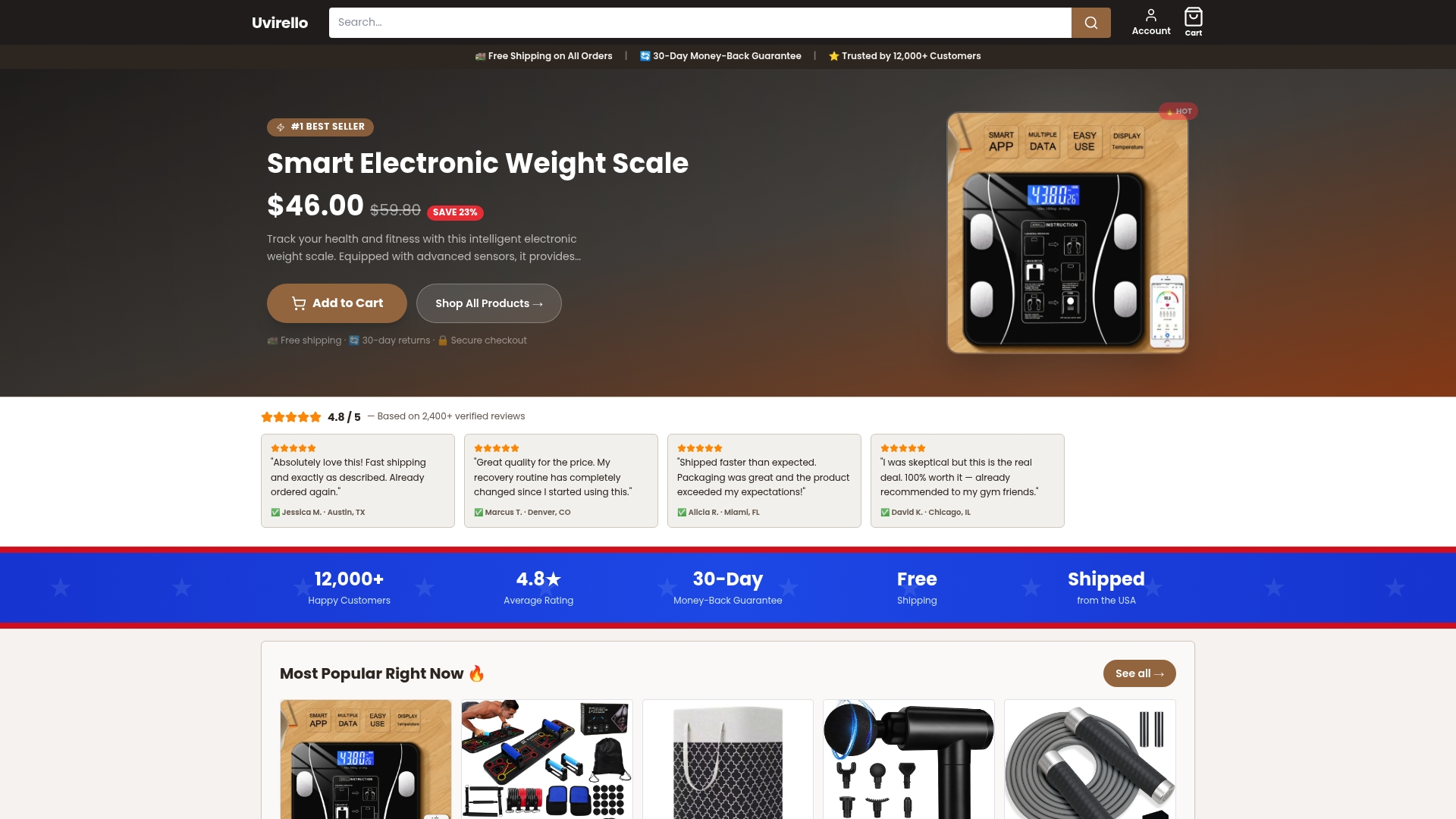
The protocol is straightforward: weigh every morning after voiding and before breakfast, under the same conditions each day. Sync the data to your app and review weekly averages rather than individual readings. Over 12,000 reviewers have rated it 4.8 out of 5, which reflects how consistently it performs in real home-use conditions. For anyone building the kind of evidence-based routine this guide describes, having a reliable body composition baseline from day one means you can actually see whether the habits are moving the numbers. Visit uvirello.com to check current availability and get started with your baseline week.
This article is general health information, not medical advice. Confirm any significant health changes or concerns with a qualified clinician.
Selected sources and further reading
- All of Us Research Program — cardiometabolic health and exercise timing (preprint, 2026) — Primary source for the morning exercise odds ratios cited throughout this guide.
- News-Medical — Early morning workouts may improve cardiometabolic health — Accessible summary of the All of Us findings presented at ACC.26.
- American Heart Association — How to establish a wake-up routine — AHA guidance on sleep, wake timing, light, movement, and breakfast.
- AP News — A morning routine can set you on the path to a better day — Behavioral science perspective on decision fatigue and routine structure.
- The Sunrise Digest — Morning routine science — Covers light exposure, hydration, and movement evidence in one place.
- ScienceFocus — The perfect morning routine: science-backed habits — Nutrition literature summary on protein/fiber breakfasts and metabolic outcomes.
- Simply Psychology — Morning routines and mental health — Chronotype and sleep duration research; useful for troubleshooting early-rising advice.
- The Guardian — How to build a happy, healthy morning routine — Behavior-change expert guidance on starting small and sustaining habits.
- Times of India — Morning habits that improve heart health — Cardiologist recommendations on movement and breakfast for cardiovascular health.
- Uvirello — Smart Electronic Weight Scale — Product reference for body composition tracking used in this guide.