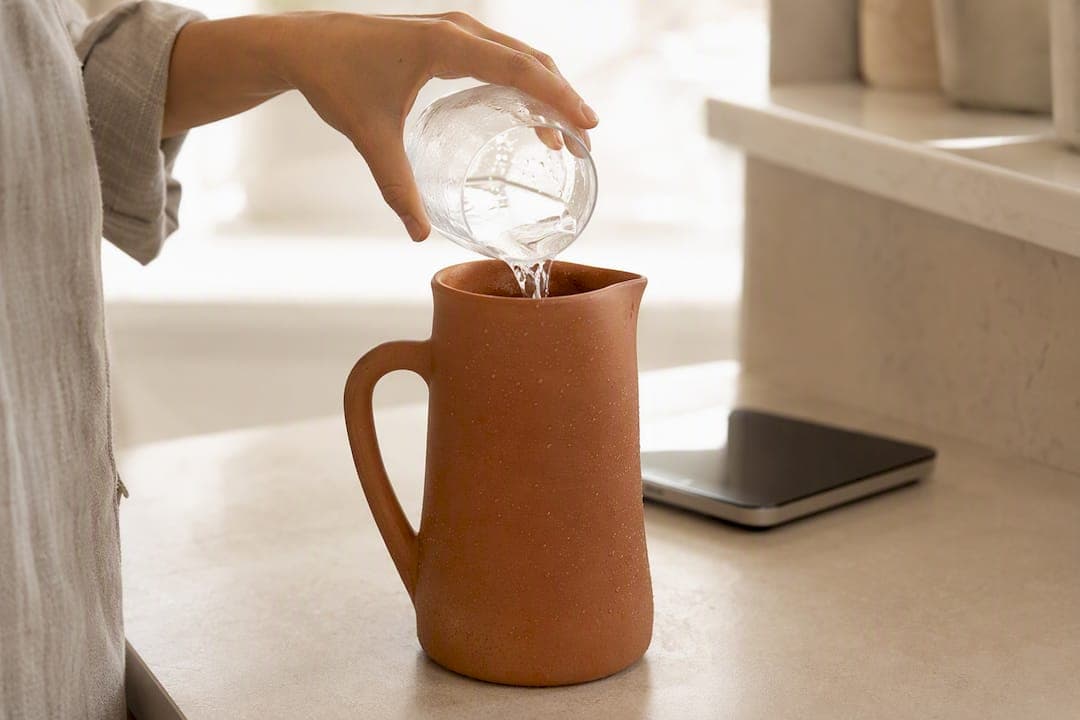
Drinking water changes what your scale or BIA device reads far more than it changes your actual fat mass. A moderate amount of water intake can shift measured body fat within minutes, mostly by diluting or expanding body water pools that bioelectrical impedance and DXA both interpret as tissue. The fix is simple: measure at the same time, after voiding, before eating or drinking anything.
TL;DR:
- Hydration levels can significantly impact body fat readings on BIA, DXA, and scales, with water intake shifting measurements within minutes.
- A moderate water load can add weight to DXA scans and cause noticeable fluctuations in BIA estimations, without actual fat change.
- Chronic low hydration may promote fat synthesis through cellular stress pathways, but human evidence for long-term fat gain remains inconclusive.
- Consistent measurement timing, post-voiding, and accounting for hydration and activity are essential for tracking true body composition trends.
- Drinking water supports fat loss indirectly by improving exercise capacity and reducing overeating, rather than directly burning fat.
Table of Contents
- How Hydration Affects Body Fat Readings on BIA, DXA, and Scales
- Can Chronic Dehydration Actually Cause Fat Gain?
- What's the Best Way to Measure Body Fat Consistently?
- Does Drinking Water Actually Help You Lose Fat?
- How Precision Scales Cut Through Hydration Noise
- A Practical Checklist for Reading Your Own Numbers
- A Smart Scale Built for Consistent Tracking
- Sources
How Hydration Affects Body Fat Readings on BIA, DXA, and Scales
The gap between "your body fat changed" and "your hydration changed" is smaller than most trackers realize, and the research on this is more precise than you might expect.
A DXA study measuring acute water ingestion had participants drink a moderate amount of water immediately before a scan, which raised total mass and lean mass, and slightly decreased percent body fat, without actual fat tissue changes. Nothing about anyone's actual fat tissue changed in those few minutes. The water added mass, DXA's density-based tissue classification counted most of that added mass as lean, and the fat percentage math shifted accordingly because the denominator moved.
BIA devices are considerably twitchier. A randomized crossover trial on acute fluid intake and bioelectrical impedance found that controlled fluid interventions measurably altered extracellular water and shifted body fat mass estimates within the same testing session. That's because BIA doesn't measure fat directly. It measures how easily an electrical current passes through your body, then estimates total body water and, from that, fat versus lean tissue. Add water, and the current's path changes even though nothing about your fat cells does.
BIA sensitivity comes down to physics, not biology. Impedance readings depend heavily on the ratio of extracellular to intracellular water. Factors like water intake, sodium consumption, or exercise can shift that ratio enough to swing a home BIA scale's fat percentage noticeably, something a BMC Public Health analysis of hydration and body composition also ties to broader sex and age differences in water distribution.
Here's how the three common methods actually classify what they're seeing:
- BIA scales measure electrical resistance and infer total body water, then estimate fat and lean mass from that. Most sensitive to short-term fluid shifts.
- DXA scans classify tissue by density using X-ray attenuation. Less reactive to water than BIA, but still measurably affected by a fluid bolus right before scanning.
- Bathroom scales just weigh total mass. They can't distinguish fat from water at all, so a 0.5 kg jump after a big glass of water is just water.
Quick numbers to remember: A moderate amount of water can add mass and shift DXA-measured body fat modestly. On a sensitive BIA scale, fluid intake or dietary sodium can move the readout by a noticeable percentage, reflecting hydration status rather than fat changes.
The practical rule: if your body fat reading moves more than a point between two mornings and you haven't changed your training or diet, look at what you drank, ate, or how much you sweated first. Real fat loss doesn't happen overnight. Water redistribution does.
Can Chronic Dehydration Actually Cause Fat Gain?
Short-term water drinking mostly plays tricks on your scale.
A mechanistic study published in Nature Communications found that hypertonic stress, the cellular dehydration that happens when water availability drops, directly triggers intracellular lipid synthesis. In mice, water restriction increased fat mass within about a day, even in pair-feeding designs where calorie intake was matched between hydrated and water-restricted groups. That detail matters: it means the fat gain wasn't simply from eating more. Something at the cellular level shifted the mice's metabolism toward storing lipid rather than burning it.

The proposed mechanism runs through a protein called NFAT5, which helps cells sense and respond to osmotic stress. Under sustained low hydration, this pathway appears to push cells toward lipid synthesis and away from normal mitochondrial fat oxidation. A mini-review on hydration and weight loss adds a complementary angle, tying increased water intake to reduced feeding behavior and increased lipolysis in some human and rodent studies, alongside signaling systems involving the renin-angiotensin system, angiotensin II, and atrial natriuretic peptide, all of which interact with fluid balance and fat metabolism in ways researchers are still mapping.
Here's what the current evidence does and doesn't support:
- Rodent models show water restriction can increase fat mass independent of calorie intake within a single day.
- The RAS/AngII and ANP pathways plausibly connect hydration status to lipolysis and mitochondrial activity, but the human data on this chain is sparse.
- No large human randomized controlled trial has confirmed that chronic mild dehydration causes measurable long-term fat gain in free-living people.
- Most human evidence linking hydration to weight is short-term, appetite-focused, and modest in effect size.
Mice are not people, and a 24-hour water restriction protocol in a lab is nothing like the mild, chronic under-hydration a lot of adults live with day to day. The mechanism is biologically plausible and worth taking seriously, but it hasn't been proven at the scale or duration that would let anyone say "drink more water and you'll burn fat." What it does support is a more modest claim: staying reasonably hydrated is one variable your metabolism cares about, and letting hydration slide chronically low probably isn't neutral.
What's the Best Way to Measure Body Fat Consistently?
If hydration swings can move your reading by a point or more overnight, the fix isn't a better formula. It's a better routine.
Here's a protocol that removes most of the noise:
- Measure first thing in the morning, after using the bathroom and before eating or drinking anything.
- Wear the same amount of clothing every time, ideally minimal, since clothing weight adds a small but real variable.
- Use the same device on the same flat surface. Switching between a BIA scale and a clinical DXA scan will give you two different numbers that aren't directly comparable.
- Skip measurement days after heavy exercise or high-sodium meals, since both alter extracellular water and can throw off a BIA reading for 12 to 24 hours.
- Log context alongside the number, including your last drink, last meal, and whether you trained the day before.
Different tools need slightly different prep. BIA scales are the most hydration-sensitive of the bunch, so avoid testing right after a workout, a sauna session, or a particularly salty dinner. If you're heading in for a DXA scan, follow your clinic's fasting and voiding instructions closely. Skip a large water bolus in the hour before your appointment, since the DXA data above shows even 500 mL is enough to shift lean mass readings. For a smart home scale, the fix is even simpler: log body water percentage changes alongside your weigh-ins so you can tell a hydration blip from a genuine trend at a glance.
A methodology note on measurement timing backs this up directly: recording context like time of day, last fluid intake, exercise, and sodium consumption alongside each reading is what lets you correctly interpret an outlier instead of panicking over it.
Pro Tip: Don't trust a single reading, ever. Look at a rolling 7-day average instead of any one morning's number. A single high or low day almost always reflects hydration, sodium, or gut contents, not a real shift in fat mass.
One outlier day means nothing. A number that holds steady or trends in one direction across two or three weeks is the one worth acting on.
Does Drinking Water Actually Help You Lose Fat?
Water isn't a fat burner. What it does is remove friction from the things that actually drive fat loss, which is a more useful way to think about it than looking for a direct metabolic effect.
Harvard Health's review of pre-meal water and weight loss found modest evidence that drinking water before meals can reduce how much people eat, and some short-term trials link this to slightly better weight outcomes. But the same review is clear that this is an appetite effect, not a metabolic one. Nothing about water itself is dissolving fat cells.
WebMD's explainer on water and weight loss reinforces the same point from a different angle: water supports the metabolic processes your liver and kidneys run constantly, and staying hydrated improves exercise capacity, both of which indirectly support fat loss. Neither source claims water burns fat on its own, and treating it that way sets people up for disappointment.
Where hydration genuinely pulls its weight for anyone trying to lose fat:
- Better hydration supports longer, harder workouts, which burns more calories over time.
- Pre-meal water can blunt overeating, especially at dinner when hunger cues get noisy.
- Adequate fluid intake supports digestion and, indirectly, sleep quality, both of which affect appetite regulation the next day.
- Confusing thirst for hunger is common; drinking water first can cut unnecessary snacking.
None of this replaces an energy deficit or consistent exercise. Hydration is a supporting variable, not the mechanism. Drink water because it makes everything else in your fat loss plan work a little better, not because you expect the number on the scale to drop from the glass alone.
How Precision Scales Cut Through Hydration Noise
A scale that reads to a tenth of a percent is only useful if you trust the trend it shows you, not any single morning's snapshot.
Uvirello's Smart Electronic Weight Scale uses high-precision sensors designed to minimize the kind of random measurement noise that makes people distrust body composition tracking altogether. The goal isn't to eliminate hydration's effect on a single reading, since no device can do that. It's to make your trend line reliable enough that a hydration blip doesn't look like a fat loss failure.
A workflow that actually works looks like this:
- Weigh at the same time every morning, after voiding, before drinking anything.
- Log hydration events, workouts, and high-sodium meals in the connected app so outlier days make sense later.
- Flag any day you also get a clinical DXA or BIA scan, so you can compare methods without confusing yourself.
- Review an 8 to 12 week baseline instead of week-to-week swings, since tracking body composition beats tracking weight alone precisely because trends smooth out daily noise.
Over 12,000 people using the scale report an average rating of 4.8 out of 5, largely because the app-connected tracking experience turns scattered daily numbers into a pattern they can actually act on, rather than a source of daily anxiety.
A Practical Checklist for Reading Your Own Numbers
A few habits separate people who trust their body composition data from people who get thrown off by it every week.
Do this: measure at the same time, after voiding, before eating or drinking. Don't do this: weigh yourself right after a workout, a salty meal, or a long flight and treat the number as truth. Do log hydration and exercise context next to every reading. Don't panic over a single day's swing, especially anything under two percentage points on a BIA device.
One useful pattern shows up often in consistent trackers: someone measures daily for eight weeks using the same morning routine, sees their BIA-derived fat percentage bounce around by a point most days, but watches the 7-day rolling average drift down steadily. The daily noise was hydration. The eight-week trend was real.
— Jacob
A Smart Scale Built for Consistent Tracking
If hydration swings make your daily numbers hard to trust, the fix isn't guessing harder. It's using a scale built to keep noise low and context visible, so you can actually see your trend instead of chasing every fluctuation.
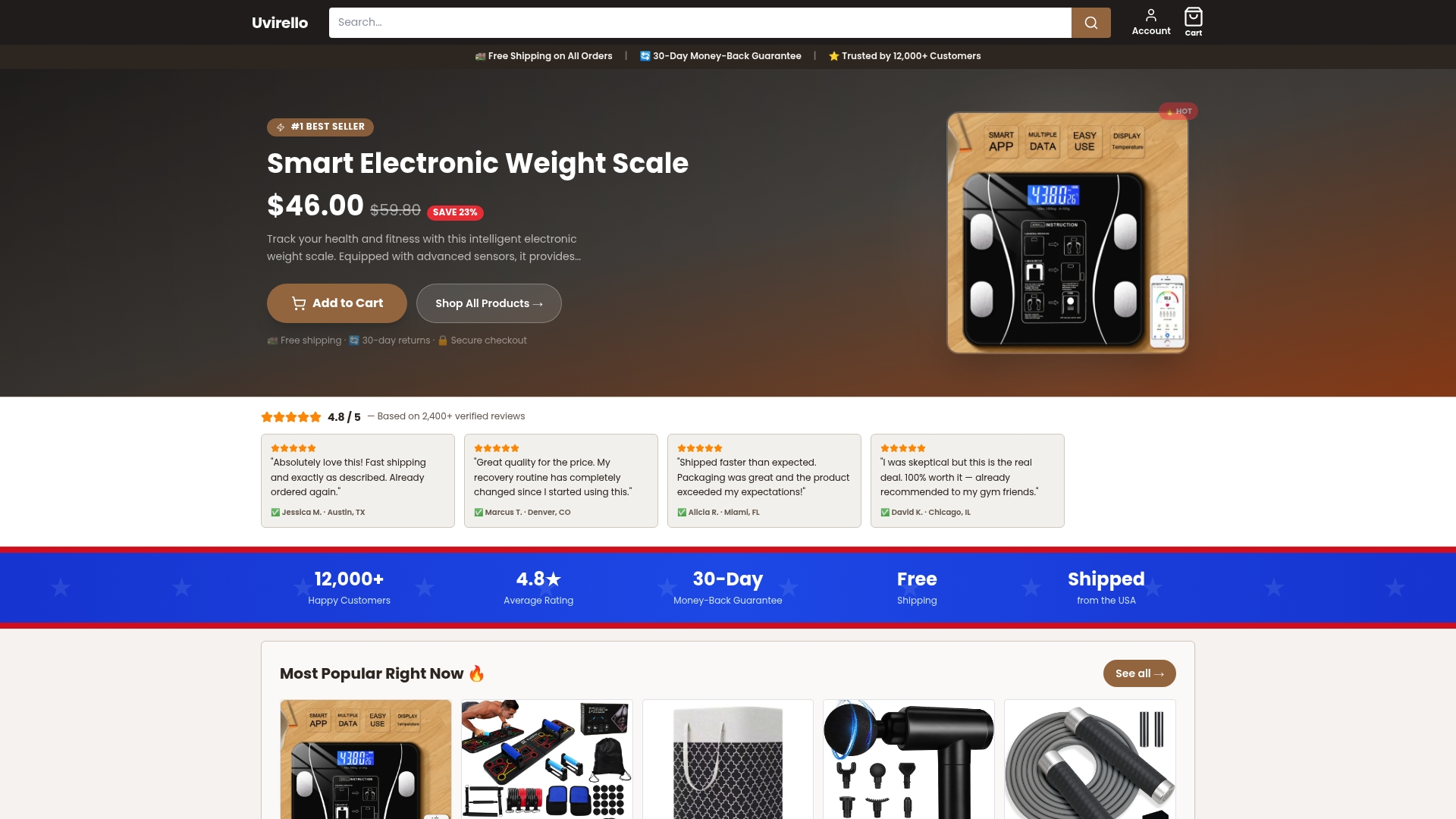
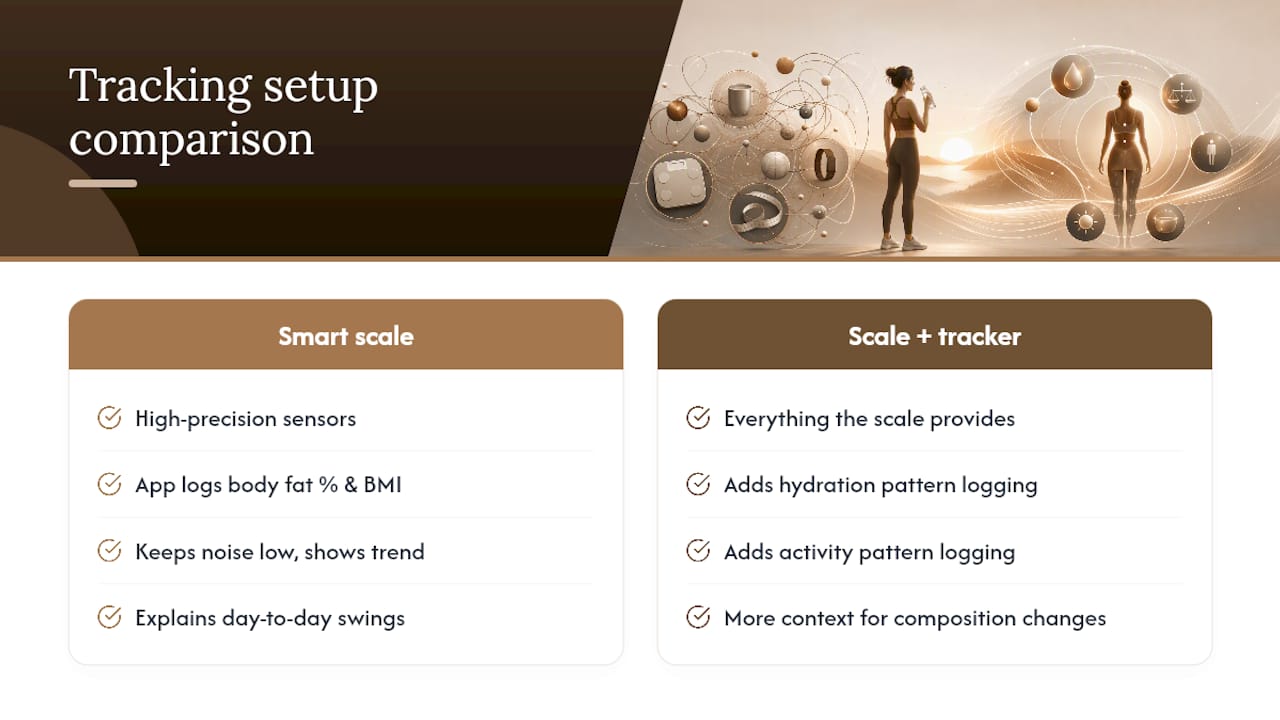
Uvirello's Smart Electronic Weight Scale pairs high-precision sensors with an app that logs body fat percentage, BMI, and other composition metrics alongside the context that actually explains day-to-day swings. Instead of wondering whether last night's dinner or this morning's coffee threw off your reading, you get a trend you can actually act on. Pairing a scale with an activity tracker, like VOLTRA AIR, adds another layer of context by logging hydration and activity patterns that show up in your body composition data over time.
If you're tired of numbers that don't make sense day to day, check out the Smart Electronic Weight Scale and start building a baseline that actually reflects your progress.
This article is general information, not a substitute for advice from a qualified doctor. Consult a qualified healthcare professional about your own circumstances before acting on anything here.
Sources
- Acute fluid intake impacts assessment of body composition via bioelectrical impedance analysis (randomized crossover pilot trial)
- Dehydration promotes intracellular lipid synthesis and accumulation (Nature Communications)
- Does drinking water before meals really help you lose weight? - Harvard Health